
Why AI struggles with organizational knowledge
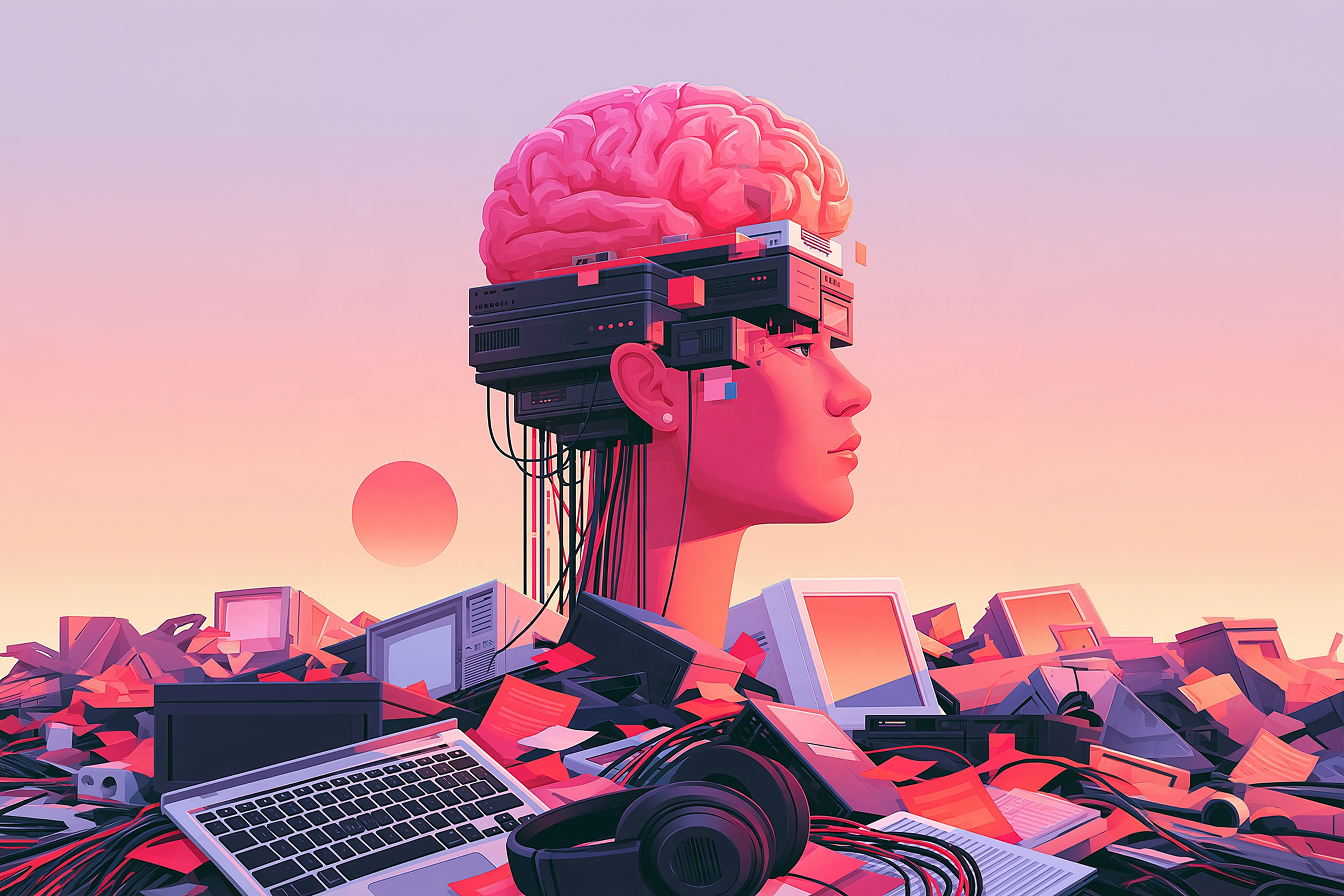


One of the most surprising things about AI is that it isn't introducing a new organizational problem.
It's exposing an old one.
For years, employees have struggled to find information at work. Policies live in one system, process documentation lives somewhere else, project decisions are buried in meetings, and the most useful knowledge often exists only in conversations between colleagues.
The difference was that humans became remarkably good at working around it.
When we couldn't find an answer, we knew who to ask. When documentation was out of date, we learned which version to trust. When systems were confusing, we developed shortcuts. Work carried on.
AI doesn't have the benefit of that institutional instinct.
It sees the organization exactly as it exists, not as employees have learned to navigate it.
And that's creating a fascinating realization for many leaders: AI isn't struggling because it's incapable of understanding the business. It's struggling because, in many organizations, the business itself isn't particularly easy to understand.
💡 Read: The looming AI knowledge crisis
The difference between information and organizational knowledge
Many organizations assume they have a knowledge problem because they don't have enough information.
In reality, most have the opposite issue.
They have accumulated information for decades.
Every project, policy, process change, town hall, workshop, acquisition, restructuring, and transformation program leaves behind documents, presentations, meeting notes, and communications. Over time, organizations become incredibly efficient at creating information.
They're often far less effective at maintaining it.
This creates a subtle but important distinction between information and knowledge.
Information is something that exists. Knowledge is something people can confidently use.
An old process document, a forgotten SharePoint page, and a policy that hasn't been reviewed in three years are all information. But they're not necessarily knowledge. In some cases, they're actually creating confusion rather than reducing it.
Humans learn to compensate for this. AI doesn't.
💡Read: How to make AI really boring (& why that’s a good thing)
When AI is asked a question, it doesn't know that "everyone uses the newer version" or that "nobody looks at that page anymore". It works from the information it has access to, which means the quality of its answers is heavily influenced by the quality of the organization's knowledge environment.
Organizations have spent years outsourcing memory to people
Perhaps the biggest challenge is that many businesses don't really store knowledge in systems. They store it in people.
Every organization has individuals who seem to know everything.
They know which policy applies. They know who owns a process. They know why a decision was made two years ago. They know which document is current and which one should probably have been deleted long ago.
These people often become the unofficial operating system of the organization.
The problem is that organizational knowledge stored in people doesn't scale particularly well.
People change teams. People go on leave. People leave the company entirely.
Historically this was frustrating. In an AI-driven workplace, it becomes much more significant. AI can only work with knowledge that has been captured, structured, and maintained. If critical knowledge exists primarily in people's heads, there's very little for AI to learn from.
This is one reason why some AI initiatives underperform expectations. Organizations assume they're sitting on decades of accumulated organizational knowledge. They later discover they're actually sitting on decades of accumulated organizational information.
Those aren't the same thing.
AI is exposing the cost of digital clutter
For years, digital clutter has mostly been treated as an inconvenience.
Too many documents. Too many versions. Too many sites. Too many places to look. Employees complained, but work still got done.
AI changes the economics completely.
Every outdated policy becomes a potential source of misinformation. Every duplicate document becomes a potential source of conflicting answers. Every abandoned knowledge repository becomes another signal AI has to interpret.
In other words, AI doesn't just consume your best knowledge. It consumes your mess too.
That's why organizations often experience an uncomfortable moment after deploying AI. They expect the technology to reveal intelligence. Instead, it reveals inconsistency.
Questions that seemed simple suddenly become difficult:
- Which version is correct?
- Who owns this information?
- When was it last reviewed?
- Should this still exist?
- What is the source of truth?
They're knowledge management questions masquerading as AI questions.
The organizations succeeding with AI are solving a different problem
The best AI implementations rarely start with the technology.
Instead, they start by improving the environment the technology operates within.
They focus on reducing duplication, improving governance, clarifying ownership, and making trusted knowledge easier to identify.
At first glance, this can seem disappointingly unglamorous. Compared to agents, copilots, and autonomous workflows, content governance doesn't exactly capture the imagination.
But that's precisely the point.
The organizations seeing the greatest value from AI have realized that knowledge quality is becoming a strategic asset. The cleaner, more trusted, and more connected their knowledge is, the more reliable their AI becomes.
In many ways, the future advantage won't come from having access to better AI. Most organizations will eventually have access to similar models and capabilities.
The bigger differentiator will be whether those systems are built on foundations employees can trust.
The real opportunity
The conversation around AI often focuses on what the technology can do.
The more important question may be what it reveals.
For many organizations, AI is providing the first truly honest assessment of their knowledge environment. It's exposing where information is fragmented, where ownership is unclear, where governance is weak, and where employees have been relying on workarounds for years.
That's not a failure of AI.
It's a chance to build something better.
Because ultimately, AI doesn't create organizational knowledge.
It amplifies whatever already exists.
And the organizations that benefit most won't necessarily be the ones with the smartest AI. They'll be the ones with the clearest understanding of what their organization knows, who owns it, and why it can be trusted.
That's a much harder problem to solve.
But it's also where the real advantage lies.
How Haiilo helps
AI is only as effective as the knowledge behind it.
Haiilo helps organizations create a stronger foundation for AI by bringing company knowledge, communication, governance, and employee experience together in one place. Instead of information being scattered across systems, employees can find trusted answers, access the latest guidance, and understand what's relevant to them when they need it.
By making important knowledge easier to find, easier to maintain, and easier to trust, Haiilo helps organizations improve the quality of the information that both employees and AI rely on every day.
Because successful AI doesn't start with a better model. It starts with better organizational knowledge.
Why AI struggles with organizational knowledge
AI can only work with the information it can access. If your organization has outdated content, duplicate documents, conflicting policies, or unclear ownership, AI has to make sense of that complexity. The challenge is often not the AI itself, but the quality and structure of the knowledge sitting behind it.
AI can make knowledge easier to find and use, but it can't automatically fix underlying issues. If important information is outdated, poorly organized, or spread across multiple systems, AI may surface inconsistent or unreliable answers. Before AI can work effectively, organizations need trusted knowledge foundations.
Information is simply content that exists somewhere. Organizational knowledge is information that employees can easily find, trust, understand, and apply. Most organizations have no shortage of information. The real challenge is turning that information into knowledge people and AI can confidently use.
Before AI, employees could compensate for poor knowledge management by asking colleagues, checking multiple sources, or relying on experience. AI changes expectations. Employees increasingly expect a single, authoritative answer, which makes knowledge quality, governance, and ownership far more important.
Start with the foundations. Identify critical knowledge, assign ownership, remove duplication, establish review processes, and make trusted information easier to find. The organizations seeing the most value from AI are often the ones investing just as much in their knowledge ecosystem as they are in the technology itself.
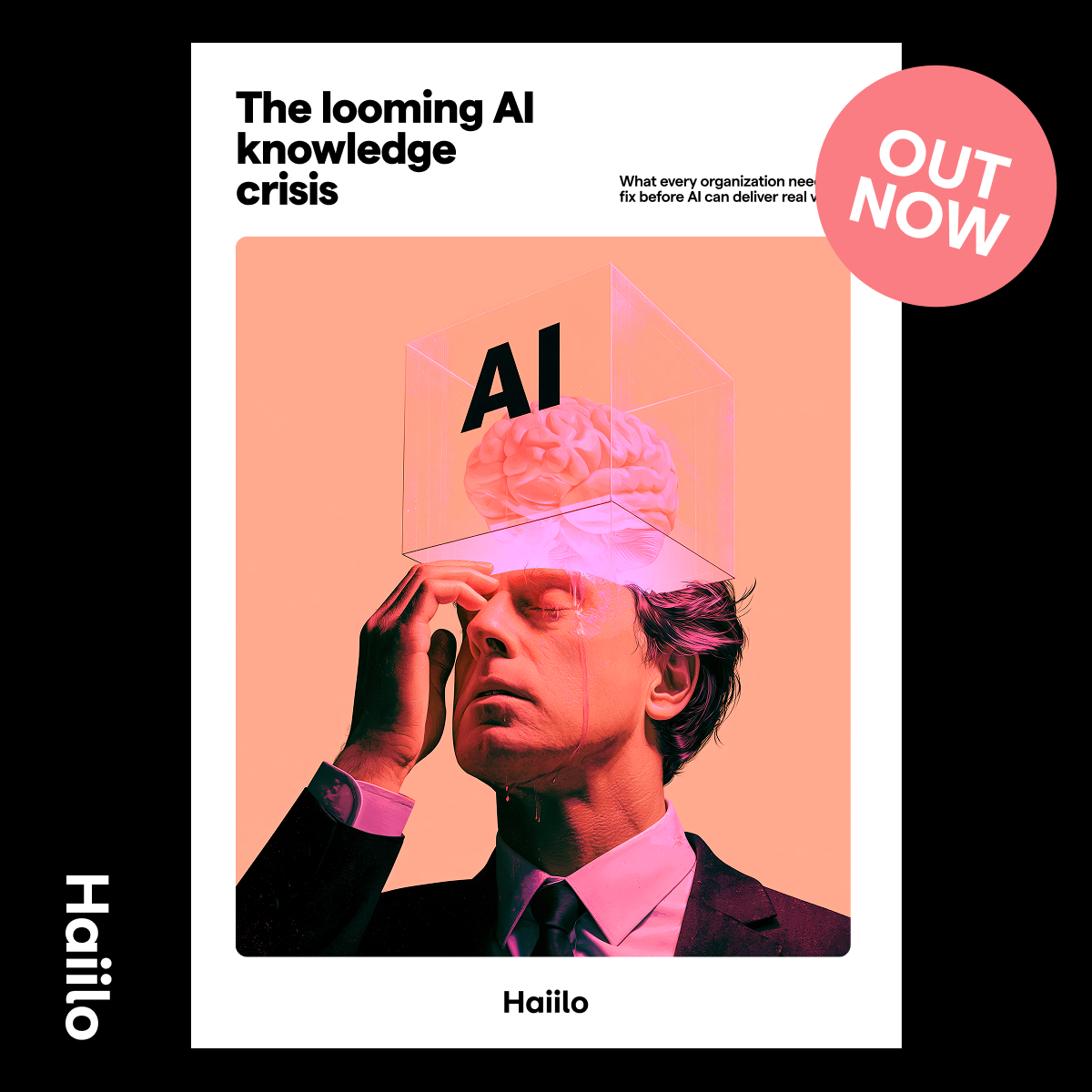
The looming AI knowledge crisis
Read all about it (and what to do next) in our latest report
Find
your
flow
Bring communication, knowledge, and tools into one calm place — and help your people find their flow.