
What is employee advocacy software for marketing teams?



There’s a moment the best marketing teams hit... eventually.
You’ve built a solid content engine, the blog is active, campaigns are running, social is consistent. But when you step back and look at performance, one thing becomes clear:
You’re doing a lot of work for a fairly limited audience.
Organic reach isn’t what it used to be. Paid is getting more expensive, and even your best-performing posts feel like they’re fighting to be seen.
So you start hearing about employee advocacy. Employees sharing content, extending reach, driving trust.
Sounds great in theory, but that raises some very practical questions:
- How do you get people to share consistently?
- How do you keep content on-brand?
- How do you prove it’s working?
This is exactly where employee advocacy software comes in. As the infrastructure that turns a good idea into something that actually, measurably works.
💡Read: How marketing can retain credibility in a skeptical world
What is employee advocacy software?
At its simplest, employee advocacy software is a platform that helps companies organize, distribute, and measure content shared by employees.
That sounds straightforward. But it solves a surprisingly complex problem.
Without software, employee advocacy usually looks like:
- A Slack message or email asking people to share a post
- A Google Doc full of suggested captions
- A lot of guesswork about what’s working
In other words, manual, inconsistent, and hard to scale.
Employee advocacy software replaces that with something far more structured:
- A central hub of approved content
- One-click sharing across social channels
- Built-in analytics to track performance
It turns scattered activity into a repeatable system.
💡Read: How Otis built a global employee advocacy culture
Why marketing teams actually need employee advocacy software
If you zoom out, this isn’t really about software. It’s about how marketing works today.
Three things have changed in a big way:
1. Organic reach is shrinking
Social platforms increasingly prioritize personal content over brand posts.
That’s not a temporary trend. It’s how algorithms are designed now.
2. Paid costs keep rising
More competition means higher costs for the same visibility.
So scaling through paid alone gets expensive fast.
3. Trust has shifted
People trust individuals far more than brands.
- 92% of B2B buyers trust employee recommendations over traditional advertising
- 88% of consumers trust recommendations from people they know above all other advertising
That changes how content needs to travel.
💡Read: How Eilakaisla turned employee voices into a competitive advantage
The gap between idea and execution
Most marketing teams understand the potential of employee advocacy. But execution is where things usually fall apart.
Because without the right setup:
- Employees don’t know what to share
- Marketing teams can’t control messaging
- Results are impossible to measure
Over time, participation drops, which isn’t a motivation problem but a systems problem. Employee advocacy software exists to fix that.
💡Read: How LG turned advocacy into a growth engine
What employee advocacy software actually does
To understand the value, it helps to break down what these platforms handle day to day.
Employee advocacy software organizes content
Instead of content living across multiple tools, everything sits in one place:
- Blog posts
- Campaign assets
- Company news
- Industry articles
Employees can quickly find something worth sharing, without hunting for it. Most platforms organize content by topic, role, or campaign, so it feels relevant rather than generic.
Employee advocacy software makes sharing easy (really easy)
This is the big one. Employee advocacy only works if it fits into how people already work.
So the best platforms reduce sharing to something very simple:
- Pick a post
- Personalize it (optional)
- Share in one click
They integrate directly with platforms like LinkedIn, X, and Facebook, and often into tools like Slack or Microsoft Teams. Because if it takes effort, it won’t happen consistently.
Employee advocacy software keeps everything on-brand
One of the biggest barriers to advocacy is risk.
What if someone posts the wrong thing? What if messaging gets diluted?
Advocacy platforms handle that through:
- Pre-approved copy and assets
- Approval workflows for sensitive content
- Brand guidelines built into the process
Employees can share confidently, and marketing keeps control where it matters.
Employee advocacy software tracks what actually happens
This is where advocacy moves from “nice to have” to “worth the investment.”
Employee advocacy software tracks:
- Reach and impressions
- Engagement (likes, comments, shares)
- Clicks and traffic
- Conversions and pipeline (in some cases)
Some platforms also use UTM tracking to tie activity directly to marketing outcomes, which means you can answer the question every marketing leader gets asked:
Is this driving real results?
Employee advocacy software encourages participation (without forcing it)
Most platforms include lightweight gamification:
- Leaderboards
- Recognition
- Rewards
Not to gamify everything, but to create a bit of momentum. Because the real challenge isn’t getting some people to share, it’s getting enough people to share consistently.
What changes when you use employee advocacy software
Once employee advocacy software is in place, the difference is noticeable.
Content travels further
Employee networks extend far beyond brand channels. And when activated, that reach adds up fast.
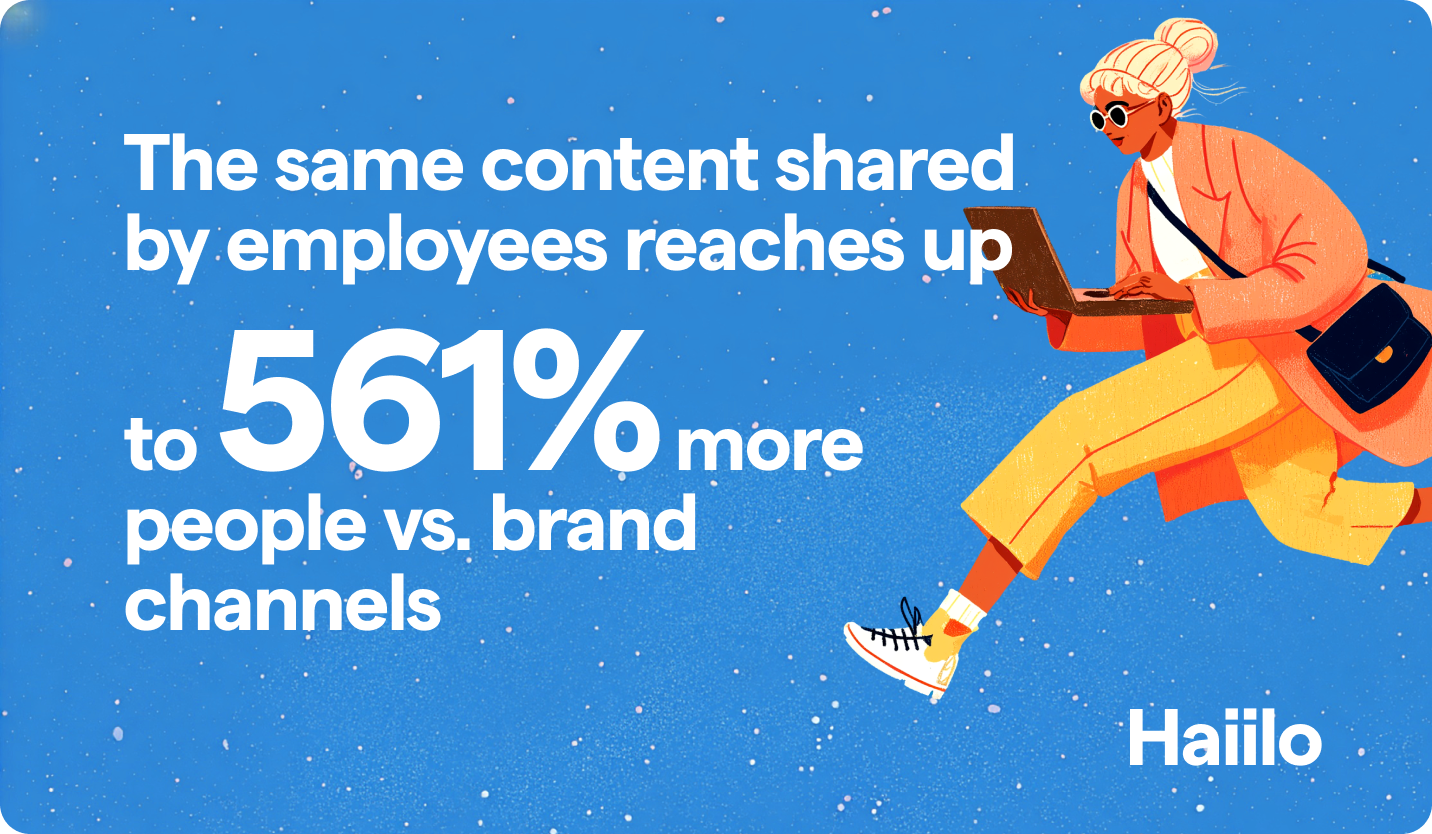
- Employee-shared content can achieve up to 561% more reach than brand posts
- It generates significantly more engagement, often around 8x higher
This isn’t incremental improvement. It’s a different distribution model.
Engagement improves
Because content feels more human and less like a campaign. More like a perspective.
That shift translates into higher interaction, stronger interest, and better overall performance.
It starts to influence pipeline
This is where execs start paying attention, beacuse advocacy doesn’t just drive visibility. It contributes to outcomes:
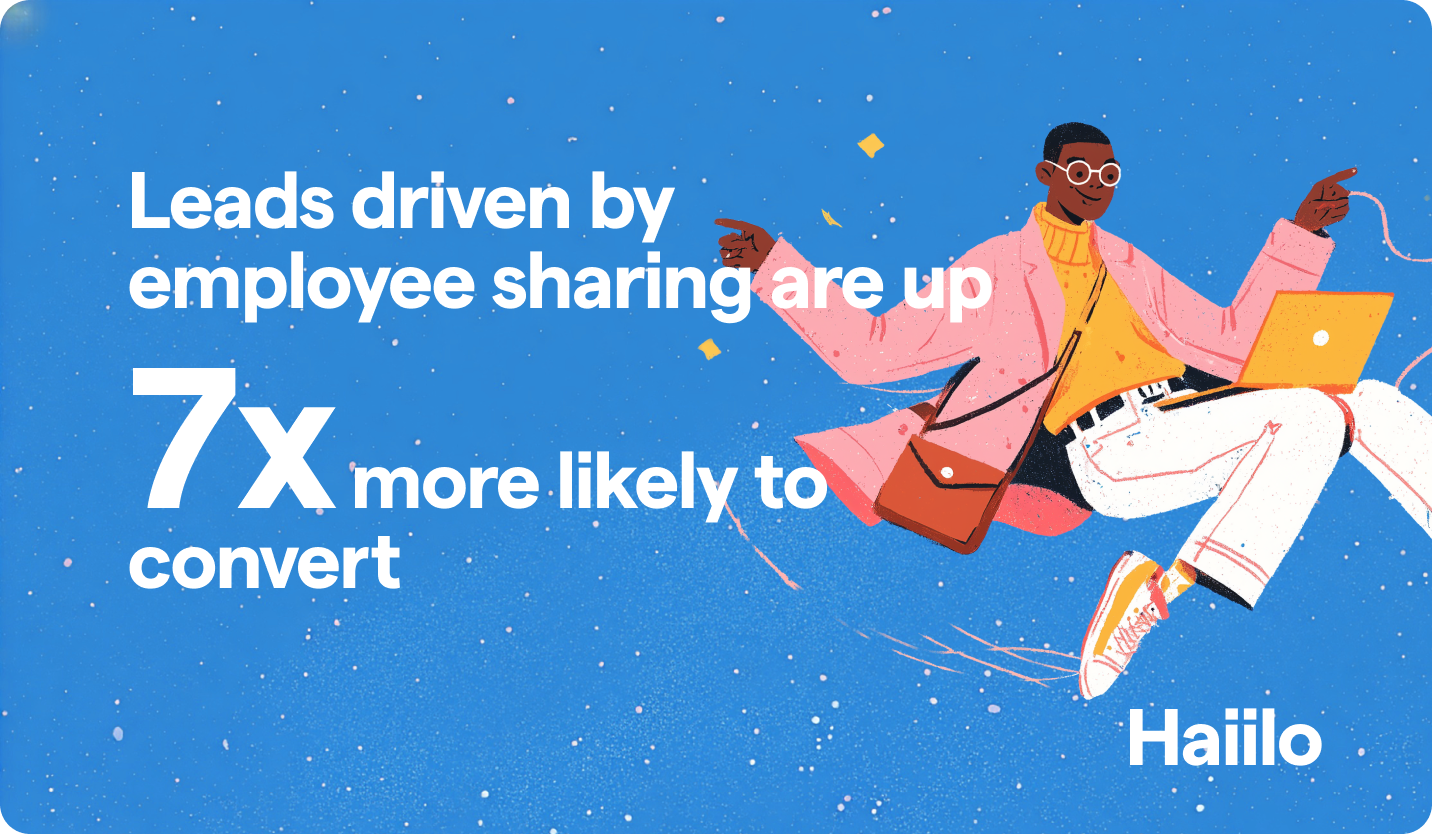
- Leads driven by employee sharing are up to 7x more likely to convert
- Advocacy programs are linked to measurable improvements in revenue and growth
Which makes it easier to justify investment and scale.
💡 Read: How to sell employee advocacy to management
The difference between software and “just trying it”
Of course, you can run employee advocacy without software. Many teams try.
But it usually looks like:
- Inconsistent participation
- Limited reach
- No real measurement
And eventually, it loses momentum. The difference with software is not just efficiency. It’s sustainability.
It creates a system where:
- Content flows consistently
- Employees know what to do
- Marketing can measure and optimize
That’s what turns advocacy into a channel, not a one-off initiative.
What to look for (without overcomplicating it)
Not all employee advocacy platforms are created equal.
But most good ones cover a few essential areas:
- Content hub: A central place for curated, approved content
- Easy sharing: One-click posting across key platforms
- Governance: Approvals, permissions, and brand guidelines
- Analytics: Clear reporting on reach, engagement, and outcomes
- Integration: Works with the tools your team already uses
Beyond that, it comes down to usability. Because the most powerful platform is useless if nobody uses it.
A quick reality check
There’s a common assumption that software will “fix” employee advocacy. It won’t. What it does is remove friction.
The real drivers of success are still:
- Relevant content
- Clear value for employees
- Simple workflows
- Consistent participation
The platform just makes all of that easier to achieve.
So where does this leave marketing teams?
Employee advocacy software sits in an interesting place. It’s extending, and necessarily replacing your existing channels.
It takes the content you’re already creating and:
- Expands its reach
- Improves its performance
- Makes its impact easier to prove
All by using something most companies already have: their people.
Final thought (and where Haiilo fits in)
For most marketing teams, the challenge isn’t awareness.
It’s execution at scale. Making advocacy easy enough that people actually do it. Structured enough that it stays on-brand. And measurable enough that it earns its place in the marketing mix.
That’s exactly what modern employee advocacy platforms are designed to do, and it’s where Haiilo Advocacy fits in.
If you’re looking to turn employee advocacy into a reliable, scalable channel, not just a well-meaning initiative, then understanding how the right platform supports that is the next step.
Because the opportunity isn’t hypothetical. It’s already sitting inside your organization. You just need the right way to unlock it.
Employee advocacy for marketing FAQs
Employee advocacy software is a platform that helps companies manage, scale, and measure employee advocacy programmes. It provides a central place for marketing teams to distribute approved content, enables employees to share it easily across social channels, and tracks performance metrics such as reach, engagement, clicks, and conversions. The goal is to turn employee sharing from an occasional activity into a repeatable marketing channel.
Marketing teams use employee advocacy software to extend the reach of their content beyond brand-owned channels. As organic social reach declines and paid media costs rise, employees can help companies connect with larger audiences through trusted personal networks. The software makes it easier to coordinate participation, maintain brand consistency, and demonstrate the business value of advocacy efforts.
The best platforms remove the friction that often prevents employees from sharing. They provide curated content, suggested post copy, one-click social sharing, and mobile-friendly experiences. Many also include features such as recognition, rewards, or leaderboards to encourage ongoing participation without making advocacy feel forced or overly structured.
Employee advocacy software gives marketing teams control over content while still allowing employees to add their own voice. Most platforms include approved content libraries, built-in brand guidelines, and optional approval workflows for sensitive campaigns. This helps organizations scale employee sharing while reducing concerns around inconsistent messaging or compliance risks.
Modern employee advocacy platforms provide reporting on key metrics such as reach, impressions, engagement, clicks, website traffic, and social sharing activity. Some also integrate campaign tracking and attribution data to connect advocacy efforts to leads, pipeline, and revenue. This allows marketing teams to demonstrate how employee-driven content contributes to broader business and marketing goals, rather than treating advocacy as a standalone activity.
Find
your
flow
Bring communication, knowledge, and tools into one calm place — and help your people find their flow.