
Struggling to attract the right talent? How social recruitment fixes what traditional hiring misses



Social recruiting is one of the most powerful talent acquisition strategies. In today’s highly competitive hiring landscape, simply posting roles is no longer enough. Candidates actively research employers, compare cultures, and engage with brands long before they apply. That’s why more organisations are turning to social recruitment to build visibility, credibility, and trust over time.
In the world of intense competition for talent, employers are implementing new tactics to strengthen their employer brand and improve recruitment outcomes—not just attracting more candidates, but attracting the right ones.
In this blog, we will go over the importance of social recruitment, and we will cover some of the best practices for implementing a successful strategy—from building awareness to converting engaged audiences into qualified applicants.
What is Social Recruiting
Social recruitment is a talent acquisition strategy in which employers use social and professional networks to reach and hire the best talent for their open positions. Rather than relying solely on job boards or inbound applications, it focuses on ongoing engagement across platforms where candidates already spend their time.
It also extends beyond job promotion. Effective social recruitment builds long-term relationships with both active and passive candidates—people who may not be applying today but could become strong hires in the future. This makes it a more proactive and sustainable approach to hiring.
Social recruitment can include many different tactics such as:
- Promoting employer brand on social media channels
- Posting and promoting open positions on social networks such as LinkedIn, Facebook, Instagram, GitHub, and Twitter
- Implementing employee advocacy and referral programs to amplify reach through trusted employee voices
- Headhunting professionals on social and professional networks through direct outreach and community engagement
Let’s now take a look into the benefits of implementing a social recruiting strategy.
6 Reasons to Implement a Social Recruitment Strategy
With most job seekers now using social platforms as part of their search behaviour, it’s clear that social recruitment has become a core hiring channel rather than a nice-to-have. Candidates don’t just look at job descriptions—they evaluate your brand, your people, and your content before making decisions.
Because of this shift, organisations that actively invest in social recruitment are better positioned to reach wider talent pools, engage passive candidates, and influence perception earlier in the hiring journey.
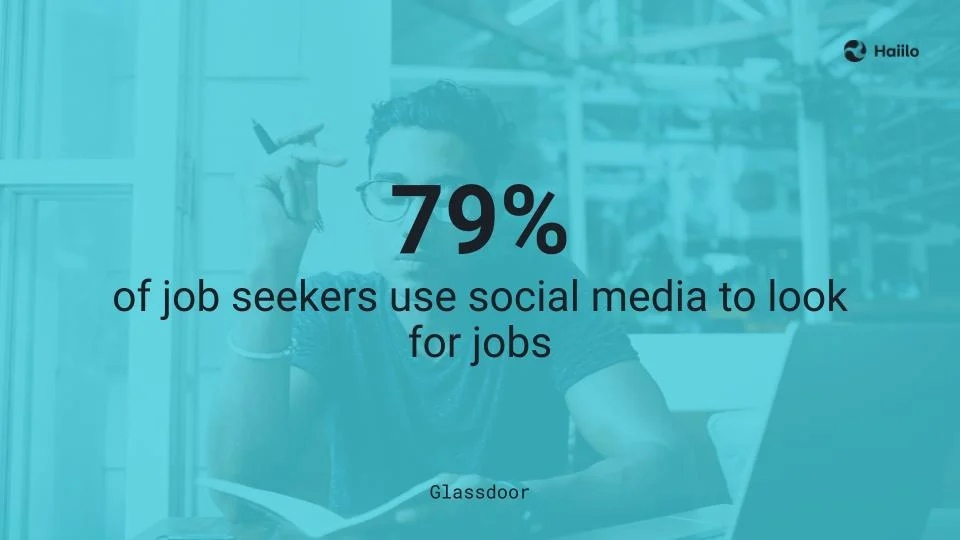
Moreover, job seekers themselves rank social media and professional networks as the most useful job search resource compared to job boards, job ads, recruiting agencies, and recruiting events. This shift reflects how candidates now prefer to discover opportunities organically—through content, conversations, and trusted networks—rather than relying solely on traditional, transactional channels.
But how exactly social recruitment can help you improve your talent acquisition efforts?
Improved Employer Brand
Organizations that leverage social media in their recruitment and talent acquisition strategies are more successful in showcasing their company culture, their values, and their overall employer brand. Social recruitment allows companies to consistently communicate what makes them a great place to work—well beyond the limits of a careers page or job description.
Before a candidate decides to apply for an open position, they research your organization on social media looking for information around your employee value proposition. This often includes how employees talk about their work, what content they share, and how the company engages with its audience.
In presenting your EVP, no one is better than your own employees. Employees bring authenticity and credibility that branded messages alone often lack. Therefore, it is crucial that you involve your employees in amplifying your company’s EVP within their own social networks, creating a more human and relatable employer brand.
Better reach and more referrals
Social media recruitment is a great way to get in front of a wider audience and reach bigger pools of qualified talent. However, without engaging your own employees, your reach will be limited. Organic company content alone can only go so far, especially as platform algorithms increasingly prioritise personal and peer-driven content.
Encouraging employees to actively share roles, company updates, and their own experiences helps extend your visibility into new and highly relevant networks. This not only increases reach but also improves the quality of incoming candidates, as referrals from trusted connections tend to carry more weight.
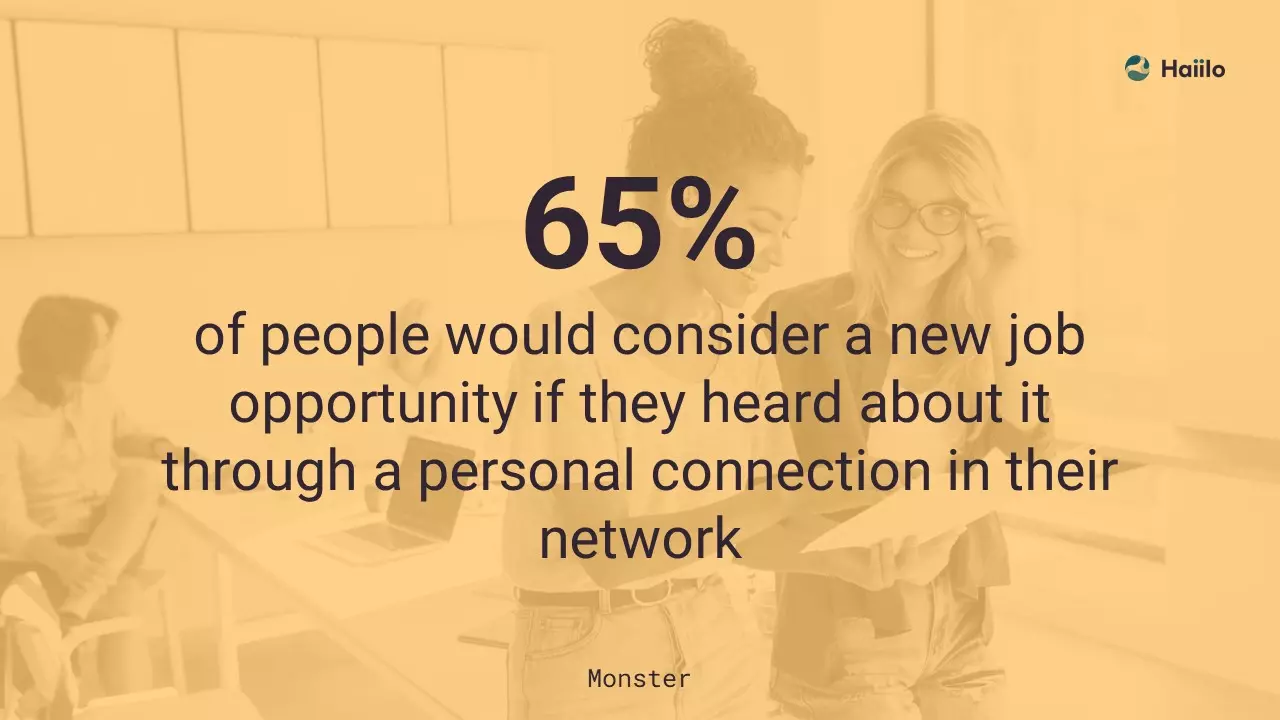
Therefore, enabling employees to act as brand advocates,and encouraging them to join your referral and advocacy programs can go a long way in building high-quality talent pools. Candidates are significantly more likely to engage with and consider opportunities that are shared by people they know or trust, making employee-driven social recruitment one of the most effective ways to generate warm, high-intent talent pipelines.
Access to passive job seekers
One of the biggest challenges in recruitment is the inability to reach passive job seekers. These are the candidates who are not actively looking for job openings but would consider better offers if the right opportunity comes along.
Social media channels are one of the most effective ways to reach this untapped talent pool. Unlike traditional job boards, social recruitment allows organisations to stay visible in the day-to-day feeds of potential candidates, building familiarity over time rather than relying on immediate job search intent.
By consistently sharing relevant content—such as employee stories, culture highlights, and career insights—you can engage passive candidates long before a role becomes available. This ongoing visibility makes it far more likely they will consider your organisation when the right opportunity appears.
Better quality of job candidates
Earlier, we mentioned that social recruiting and employee engagement in talent acquisition efforts improve the overall candidate reach. But more important than that is the ability to reach high-quality job candidates who are genuinely aligned with your organisation.
Social recruitment gives you more control over targeting and messaging, helping you attract candidates who already resonate with your values, culture, and way of working. This often leads to stronger applications and better long-term fit.
Your own employees’ social and professional networks consist of talent with similar interests or professional backgrounds. If you are looking for more talent similar to your existing employees, engage your staff in social hiring efforts! When employees share opportunities within their networks, it introduces your organisation to like-minded professionals who are more likely to succeed and stay.
Reduced time and cost per hire
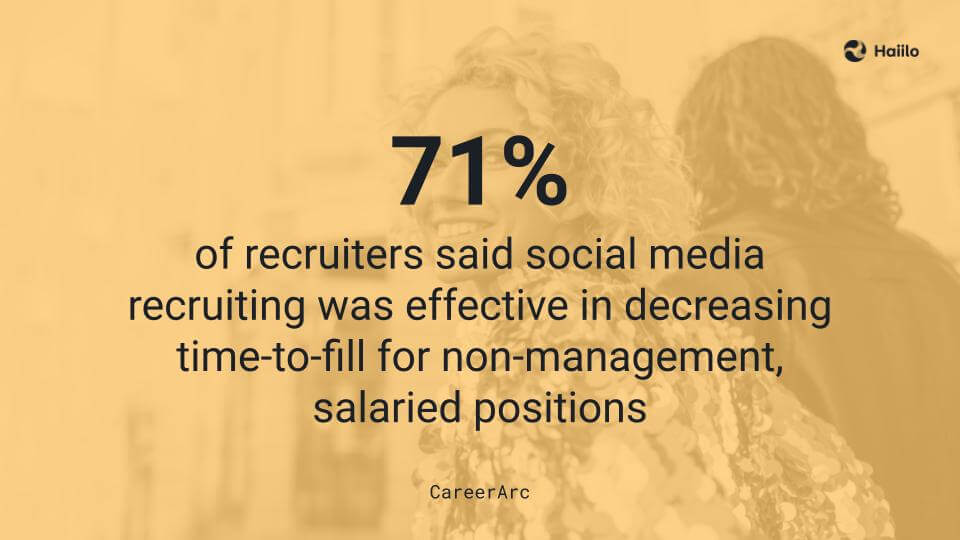
Social recruiting has proved to be one of the least costly ways to find and hire great talent. Because social media enables employers to engage candidates earlier—and build pipelines before roles even open—it reduces reliance on expensive sourcing channels and reactive hiring.
In addition, social recruitment speeds up the hiring process by creating warm, pre-engaged audiences. Candidates who are already familiar with your brand, content, and people tend to move through the hiring funnel more quickly, from application to offer.
Moreover, while job boards may cost organizations thousands of dollars each month, social recruitment can be much more cost-efficient. Many core activities—such as organic content, employee sharing, and community engagement—require more strategic coordination than budget, making it a scalable option for teams of all sizes.
Improved employee retention
Because social recruitment enables employers to reach passive job seekers and boost employee referrals, it also has a big impact on the organization’s turnover cost. Candidates who come through social and referral channels often have a stronger understanding of the company before they join, which can lead to better alignment and longer tenure.
Employee referrals, in particular, tend to produce candidates who are a closer cultural fit and more engaged from day one. When employees actively participate in hiring—by sharing content, referring talent, or advocating for the brand—they help create a more connected and committed workforce overall.
This connection also extends beyond hiring. Socially engaged employees are more likely to feel aligned with the organisation’s goals and values, reinforcing both engagement and retention over time.
📚 Related: 11 Ways to Attract and Retain Millennials in the Workplace.
7 Tips for Perfecting Your Social Recruiting Efforts
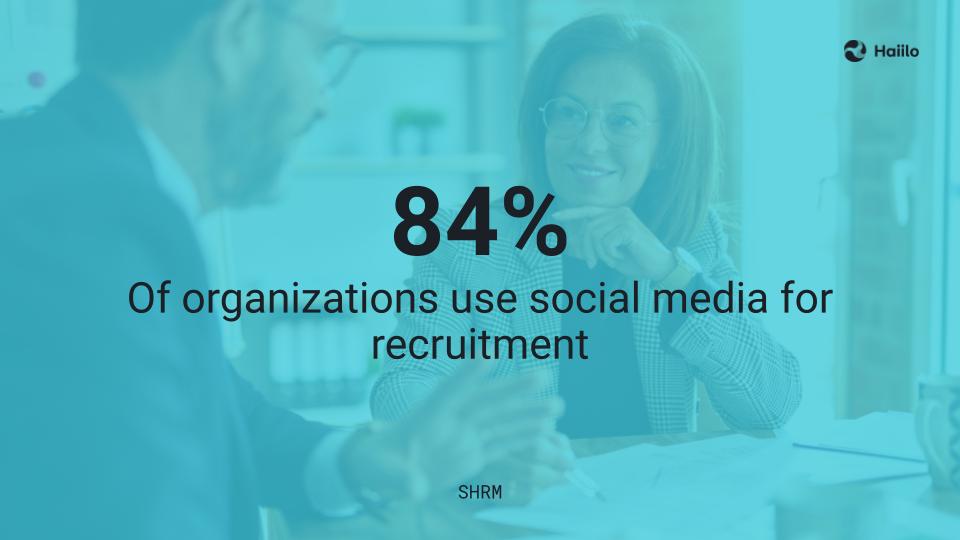
By now, we have covered the benefits of implementing a social recruiting strategy. The continued growth of social recruitment adoption only reinforces its importance as a core hiring channel rather than an emerging trend.
As more organisations prioritise building always-on talent pipelines and stronger employer brands, social recruitment is becoming a central part of modern talent acquisition strategies—helping teams attract, engage, and convert candidates more effectively.
However, similarly to any workplace strategy, social recruitment, in order to be successful, needs to be well planned, implemented, and monitored. Without a clear structure, even the most active social presence can fail to deliver meaningful hiring outcomes.
Let’s take a look at how you can boost your social hiring efforts.
1. Define the goals
Before implementing a social recruiting strategy, it is important to define its goals and objectives. In other words, it is important to answer the question: “What are we trying to achieve with social recruiting?”.
Clear goals help align your recruitment, marketing, and HR teams, ensuring that everyone is working toward the same outcomes. They also make it easier to measure success and continuously improve your approach.
To define those KPIs, it is important to understand all the important talent acquisition metrics.
Some of those goals and KPIs may include:
- Increase in reach of job openings
- Increase in followers base on social and professional networks
- Increase in traffic to career site and job pages
- Increase in the number of referrals
- Increase in Glassdoor ratings
- Increase in engagement with EB-related social media posts
- Improve the quality of job applicants
- Shorten time-to-hire
- Reduce cost-per-hire
2. Optimize your social media profiles
In order to attract job candidates via social media, you first need to optimize your organization’s social media profiles. These profiles often serve as the first impression candidates get of your company, so they should clearly reflect your employer brand and value proposition.
Moreover, many organizations have also found a way to encourage their own employees to update their personal profiles and make them consistent and recognizable. This creates a more cohesive and credible brand presence across networks. On the personal side, linktree alternatives for business let employees keep one bio link to the company pages they share most, so their profiles stay consistent without constant editing.
Why is this important?
Candidates increasingly use social platforms to evaluate potential employers before applying. If your profiles are outdated, inconsistent, or lacking substance, you risk losing interest before the conversation even starts.
The type of content you put there is like your employer brand ID – the best representation of your organizational culture, EVP, and your candidate experience efforts. Regularly sharing authentic updates—such as employee stories, achievements, and behind-the-scenes moments—helps bring that brand to life.
3. Identify the right social media platforms
In social recruiting, one social media platform does not fit all!
Based on your organization’s location and the talent that you are looking for, you need to understand which platform best fits your needs. Different platforms attract different audiences, knowledge levels, and engagement behaviours, so a targeted approach is essential.
For example, while LinkedIn may be a good platform for senior experts, Facebook may be a better fit for blue-collar workers, while GitHub may be the best fit for IT professionals. Similarly, more visual platforms can be effective for showcasing culture and attracting early-career talent.
Even though LinkedIn is still the most popular network among recruiters, we are also witnessing growing adoption of Instagram and TikTok for social recruitment and employer branding. Organisations that adapt their content to each platform’s format and audience tend to see stronger engagement and better hiring outcomes.
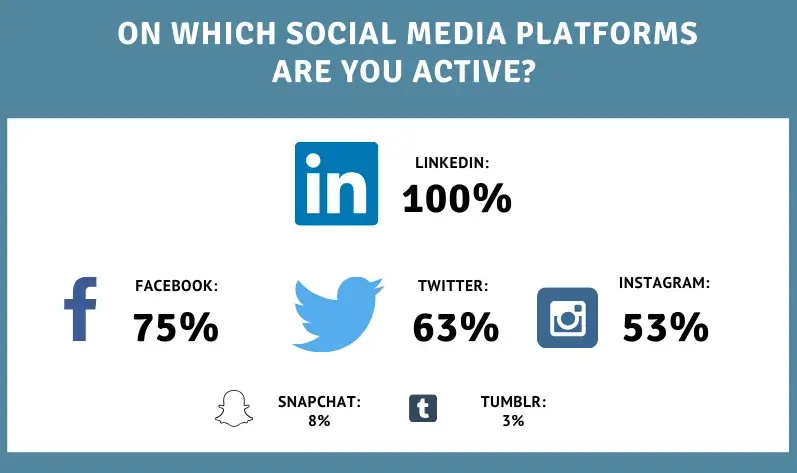
Source. Agency Central
4. Engage your employees
Using employee networks in concert with the organization’s traditional HR recruitment programs is a crucial part of every successful talent attraction strategy. In fact, employee-driven social recruitment often delivers stronger reach and higher engagement than corporate channels alone, because content shared by individuals tends to feel more authentic and trustworthy.
Organizations, especially larger ones, need to better leverage their employees’ existing networks to find and attract the best talent. Every employee acts as a potential gateway to new audiences—many of whom may otherwise never come across your brand or job opportunities.
However, engaging your employees is impossible if you don’t have a clear strategy and plan around it. For employees to be your ambassadors, you need to:
- Teach and train them on how to be advocates
- Show them how and which content to share
- Explain which social networks to leverage most
- Produce ready-to-share content that is easy to personalise
- Encourage employee-generated content such as posts, stories, and testimonials
- Gamify the experience and make participation rewarding and visible
Without this structure, even motivated employees may struggle to participate consistently. Clear guidance, relevant content, and the right incentives are what turn occasional sharing into a sustainable social recruitment engine.
Since implementing change and adding new initiatives in a large organization is not an easy task, check out our ultimate change management guide for practical advice on driving adoption at scale.
Don’t know how to effectively engage your employees?
Schedule your Haiilo demo today, to learn how to engage your employees with ease
5. Invest in your employer brand
Your employer brand is the representation of your organization as an employer, and it has a huge impact on your ability to attract and hire the right talent through social recruitment. It shapes how candidates perceive your company before they ever apply—and often determines whether they engage with your content at all.
A strong employer brand makes your social recruitment efforts more effective by giving candidates a clear, consistent picture of what it’s like to work at your organisation. It helps you stand out in crowded feeds and builds trust through authentic storytelling, employee voices, and visible company culture.
Research shows that candidates actively evaluate employer brands before applying, often using social media, reviews, and employee-generated content to inform their decision-making. This means your social presence is no longer just a marketing channel—it’s a critical touchpoint in the hiring journey.
To strengthen your employer brand, focus on consistently sharing content that reflects your values, employee experiences, and workplace culture. Over time, this builds credibility and familiarity, making it easier to attract candidates who are already aligned with your organisation before they even enter your recruitment funnel.
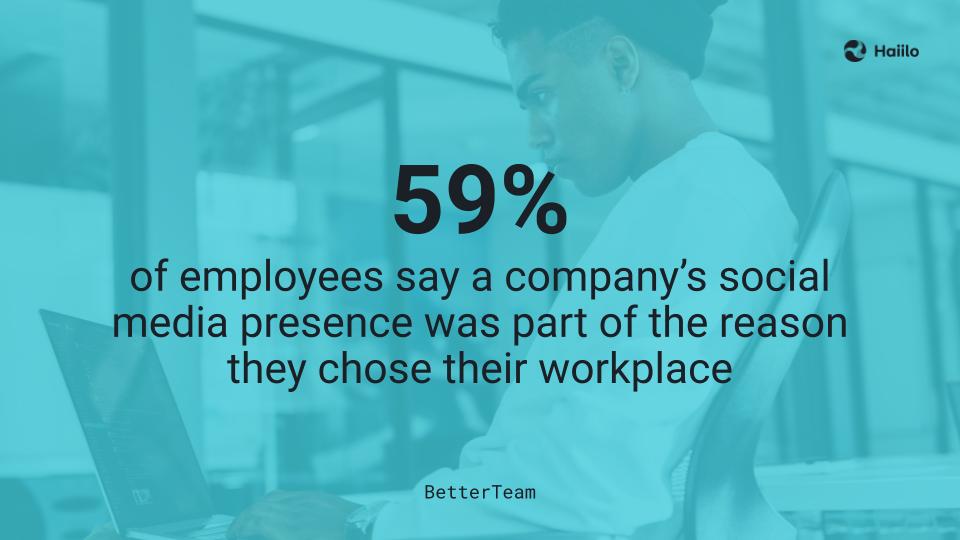
But remember, your own employees are the face of your employer brand! Candidates don’t just evaluate your company based on official messaging—they look at how your people talk about their work, what they share, and how they engage online.
Because of this, employee voices carry significantly more credibility than corporate content alone. Instead of relying solely on branded posts, organisations that succeed in social recruitment actively enable their employees to share authentic perspectives and experiences.
Therefore, empowering your employees and letting them tell their stories is a powerful way to build trust and establish credibility among job seekers. Real experiences, shared by real people, help candidates better understand your culture and imagine themselves working at your organisation.
6. Make it easy for employees to advocate
By now, you have hopefully realized the benefits of engaging your own employees in your social hiring initiatives. Without employees’ motivation to share your company’s stories and job openings, social recruitment could never be as successful.
Your employees are your best storytellers, and they know how to communicate your core company values to the outside world. But you need to make it simple and intuitive for them to participate in your social recruitment efforts.
They should never have to search for content or guess how and where to share it. Instead, modern employee advocacy platforms help employees discover, personalise, and share relevant content at the right time and on the right channels.
Making advocacy seamless—through clear guidance, ready-to-share content, and the right tools—removes friction and significantly increases participation and impact.
7. Measure the success and improve based on data
This is often the most challenging part of any social recruitment strategy. Many organisations still struggle to track and measure the impact of their social hiring efforts in a meaningful way.
Without clear measurement, it’s difficult to understand what’s working, where to optimise, and how social recruitment contributes to broader business outcomes such as time-to-hire, cost-per-hire, or quality of hire.
The right technology plays a crucial role here. Advanced analytics and reporting capabilities allow organisations to connect social activity with recruitment results—helping teams refine content, targeting, and employee advocacy efforts over time.
By continuously analysing performance and making data-driven adjustments, organisations can turn social recruitment into a scalable, repeatable growth channel rather than a one-off initiative.
4 Inspiring Social Recruiting Examples
Some companies have already mastered their social recruitment efforts, but most of them are still looking for new ways to be innovative and interesting to job candidates.
There are plenty of examples of how organizations use social media in their recruitment efforts, but here are a few of our favorite examples.
Intel on Facebook
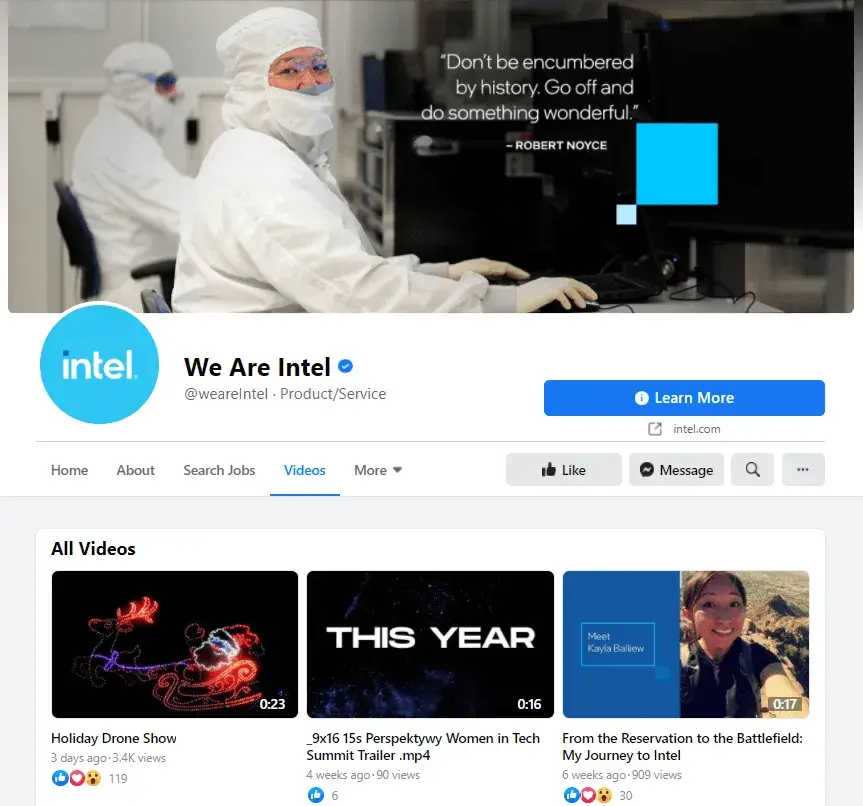
Intel is a great example of an organization that heavily invests in its employer brand. Their social media profiles such as Facebook and LinkedIn are full of employee-generated content that helps job seekers better understand what it’s like to work at Intel—from team culture to real employee experiences.
This type of content adds depth to social recruitment efforts by giving candidates a more authentic and transparent view of the organisation. Instead of relying only on corporate messaging, Intel uses employee voices to build trust and credibility at scale.
Their We Are Intel page has plenty of employee testimonials and details around campaigns such as attracting and spotlighting #WomenInTech. By consistently sharing stories from diverse employees, Intel reinforces both its culture and its commitment to inclusion—two factors that increasingly influence candidate decisions.
What makes this approach particularly effective is how seamlessly it blends employer branding with ongoing engagement. Rather than treating social recruitment as a series of job posts, Intel builds a continuous narrative that keeps candidates interested long before they apply.
UPS on Twitter
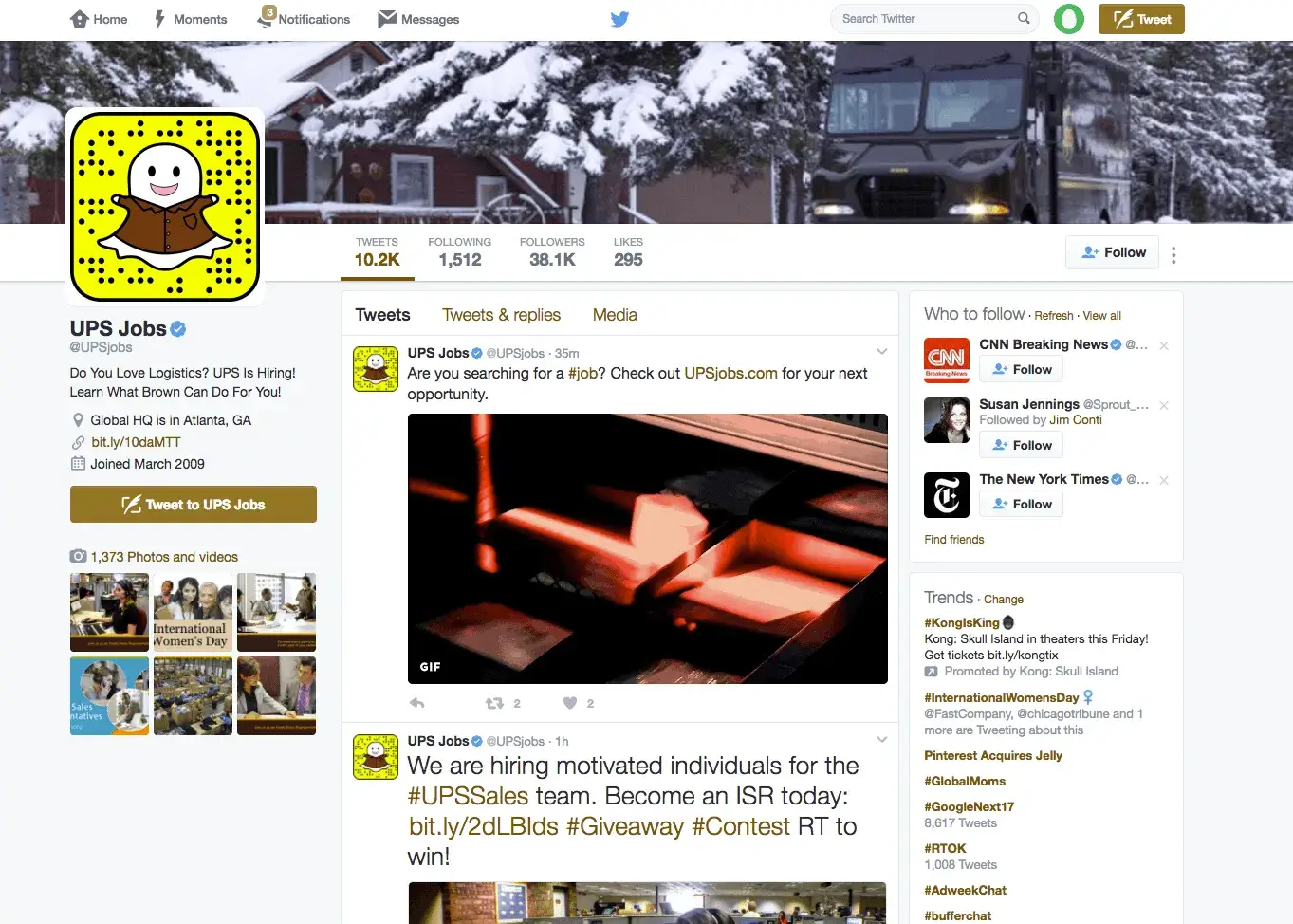
UPS is a great example of a company that leverages Twitter for social recruiting. Instead of treating the platform purely as a broadcast channel, UPS uses it to highlight employees, share real stories, and showcase the human side of the organisation.
Most of their content on Twitter focuses on employees—spotlighting their roles, achievements, and day-to-day experiences. This helps bring the employer brand to life in a format that feels timely and conversational, which is particularly effective on a fast-moving platform like Twitter.
What makes this approach powerful for social recruitment is the amplification effect. Employees don’t just appear in the content—they actively participate by sharing it with their own networks, extending reach and reinforcing credibility at the same time. This creates a continuous loop of visibility, where employer branding and employee advocacy work together to attract interest from both active and passive candidates.
Tek Systems on Instagram
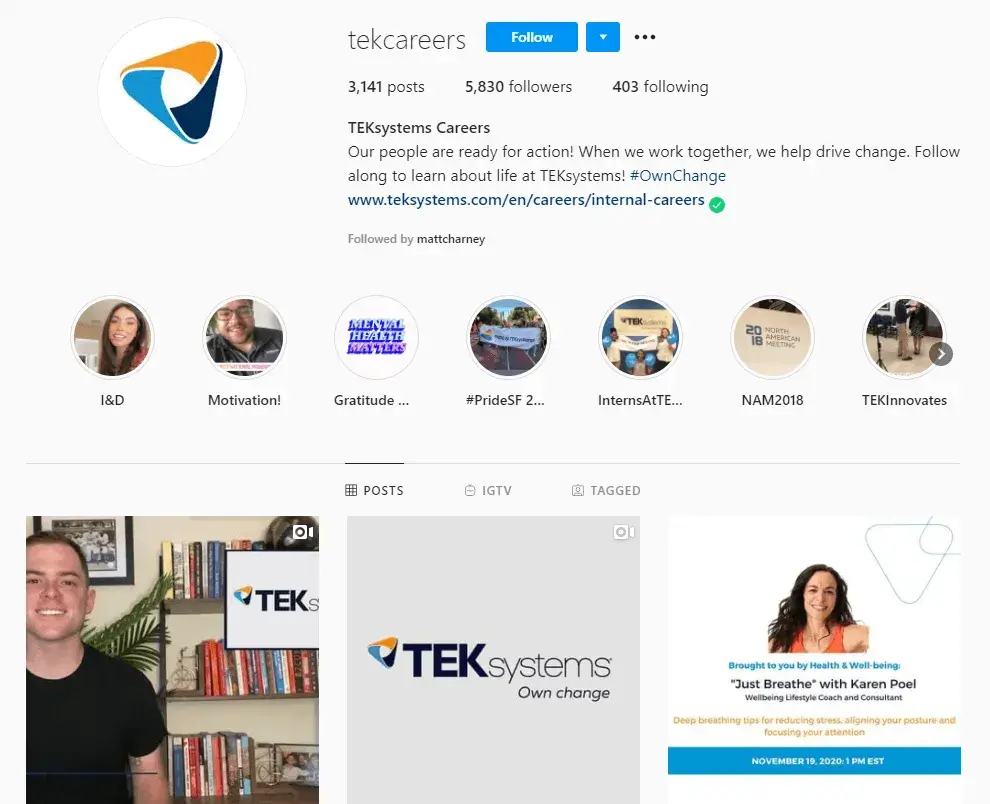
Tek Systems uses Instagram as its main employer branding channel. They have a designated page called @tekcareers where they showcase stories from their own employees who talk about their own employee experience in the company.
This approach works particularly well for social recruitment because it leans into a visual, narrative-driven format. Instead of simply listing job opportunities, Tek Systems brings its culture to life through real voices and relatable stories—helping candidates connect emotionally with the brand.
By highlighting everyday employee experiences, achievements, and career journeys, they create a steady stream of content that keeps their audience engaged over time. This makes their Instagram page not just a recruitment tool, but an ongoing destination for potential candidates to learn about the company.
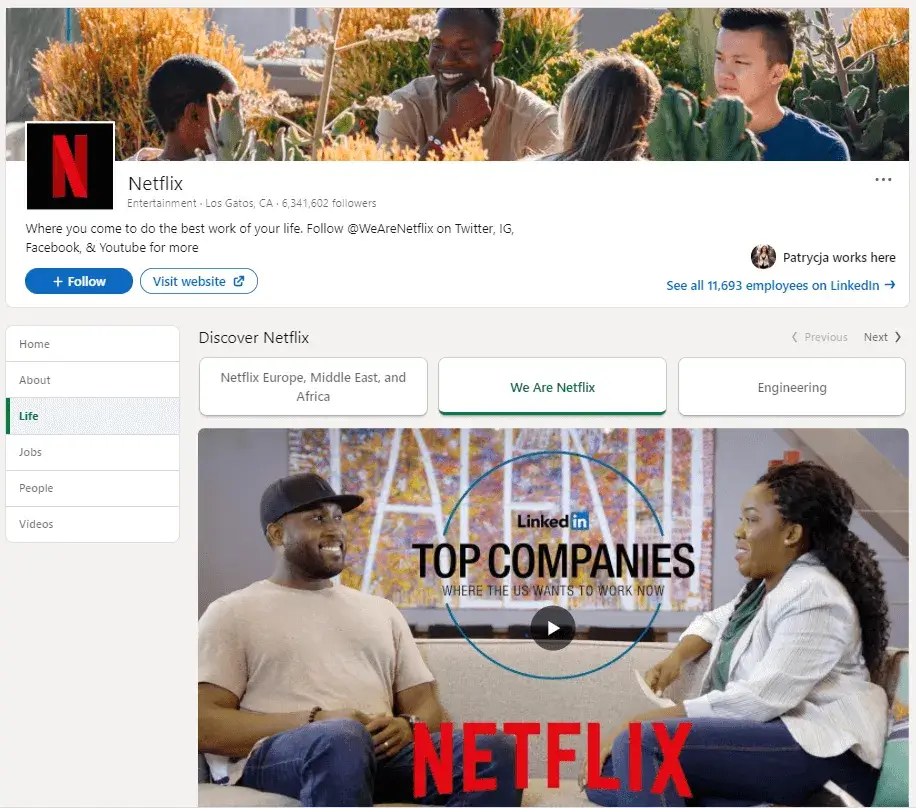
Netflix on LinkedIn
UPS is a great example of a company that leverages Twitter for social recruiting. Instead of treating the platform purely as a broadcast channel, UPS uses it to highlight employees, share real stories, and showcase the human side of the organisation.
Most of their content on Twitter focuses on employees—spotlighting their roles, achievements, and day-to-day experiences. This helps bring the employer brand to life in a format that feels timely and conversational, which is particularly effective on a fast-moving platform like Twitter.
What makes this approach powerful for social recruitment is the amplification effect. Employees don’t just appear in the content—they actively participate by sharing it with their own networks, extending reach and reinforcing credibility at the same time. This creates a continuous loop of visibility, where employer branding and employee advocacy work together to attract interest from both active and passive candidates.
Tek Systems on Instagram
Social recruitment FAQ
What is social recruitment and how is it different from traditional hiring?
Social recruitment is the use of social media platforms and professional networks to attract, engage, and hire candidates. Unlike traditional hiring, which often starts with a job posting, social recruitment is more proactive. It focuses on building visibility, sharing content, and connecting with candidates long before a role opens. This helps you stay top of mind and build a pipeline of engaged talent rather than relying purely on active job seekers.
Which platforms work best for social recruitment?
The right platform depends on your audience. LinkedIn is still the go-to for professional roles, while Instagram and TikTok are strong for employer branding and early-career talent. Facebook groups can be effective for local or high-volume hiring, and niche platforms like GitHub work well for technical roles. The key is to match your content and messaging to where your ideal candidates already spend time.
How can employees support a social recruitment strategy?
Employees play a critical role in social recruitment. When they share content, job openings, or their own experiences, it reaches networks you wouldn’t access otherwise. To make this work, you need to give employees clear guidance, ready-to-share content, and the right tools. You can learn more about enabling this with employee advocacy solutions that make sharing simple and scalable.
How do you measure the success of social recruitment?
To measure social recruitment, track both reach and outcomes. Key metrics include engagement on social content, traffic to your careers page, number of referrals, and quality of applicants. Over time, you should also look at business impact—such as reduced time-to-hire or improved retention. Linking social activity to these outcomes helps you refine your strategy and show real ROI.
Find
your
flow
Bring communication, knowledge, and tools into one calm place — and help your people find their flow.