
How SOS Kinderdorf strengthens connection and retention at scale with Haiilo
How SOS‑Kinderdorf strengthens internal communications to better connect and support employees across its organisation with Haiilo.

About SOS Kinderdorf
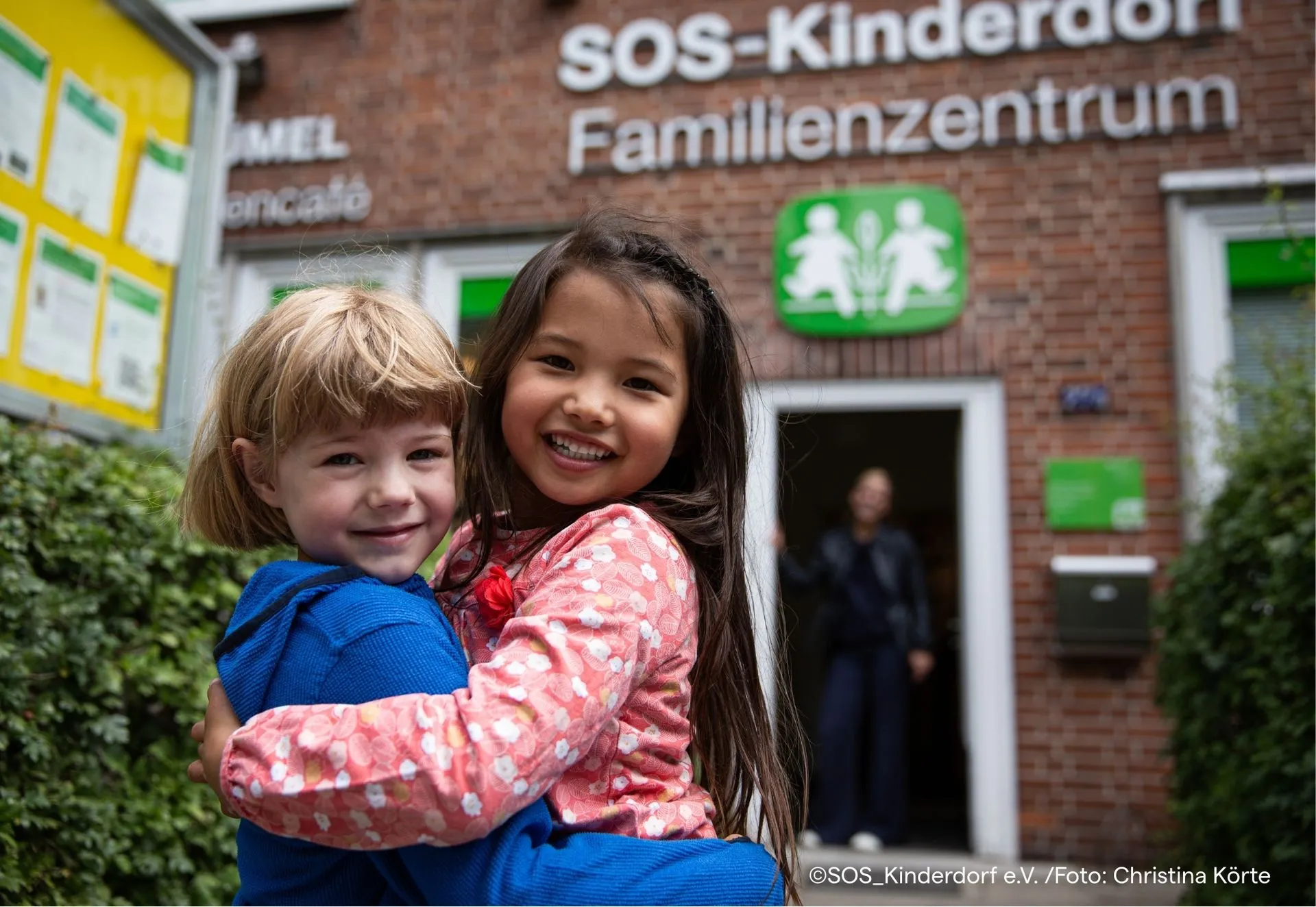
SOS Kinderdorf has been supporting children, young people, and families in Germany for over 70 years. What began in the 1950s with a single children’s village in Bavaria has grown into a nationwide network of support services for children, young people, and families.
Today, SOS Children’s Villages supports more than 100,000 people every year, offering help in a wide range of life situations. Its services include parenting advice centres, youth residential groups, vocational training programmes, mother-and-child cafés, multi-generation centres, facilities for people with disabilities, and support services for homeless young people.
With around 5,300 employees and more than 1,400 volunteers, SOS Children’s Villages operates across Germany in 38 facilities at over 270 locations. The organization brings together many different professional groups under one shared goal: sustainably supporting people in challenging life situations.

The challenge
For a long time, internal communication at SOS Kinderdorf relied mostly on traditional channels like email. Information was created in many places at once, and employees without desk-based roles had limited access to digital content.
With teams spread across many locations and working in very different roles, sharing information wasn’t easy. There was no single place where people could reliably find what they needed or stay up to date.
It also became clear that internal communication only really works when leaders are actively involved. When leaders show up, communicate openly, and encourage conversation, people feel more connected and engaged.
The solution
For SOS Kinderdorf, introducing a modern intranet was a conscious choice. Internal communication isn’t something you do for its own sake. It’s what makes everything else work. When employees feel informed and included, they can genuinely represent the organization’s values and messages to the outside world.
Internal communication also plays a big role in keeping people on board. This matters even more in the social and educational sector, where skilled professionals are in short supply and day-to-day work is demanding.
The goal was simple: create a shared digital home. A modern intranet brings information into one place, makes conversations visible, and gives employees a space where they can take part, connect with others, and feel a stronger sense of belonging.
“Staff turnover costs us significantly more than investing in a modern intranet. Internal communication is not a nice-to-have. It’s a real business factor.”
Victoria Leipert | Head of Internal & External Communications
Why Haiilo?
When looking for an intranet, SOS Kinderdorf knew one thing from the start: it had to be easy to use and fit naturally into everyday work. Employees needed to be able to find what they were looking for quickly, without training or extra effort.
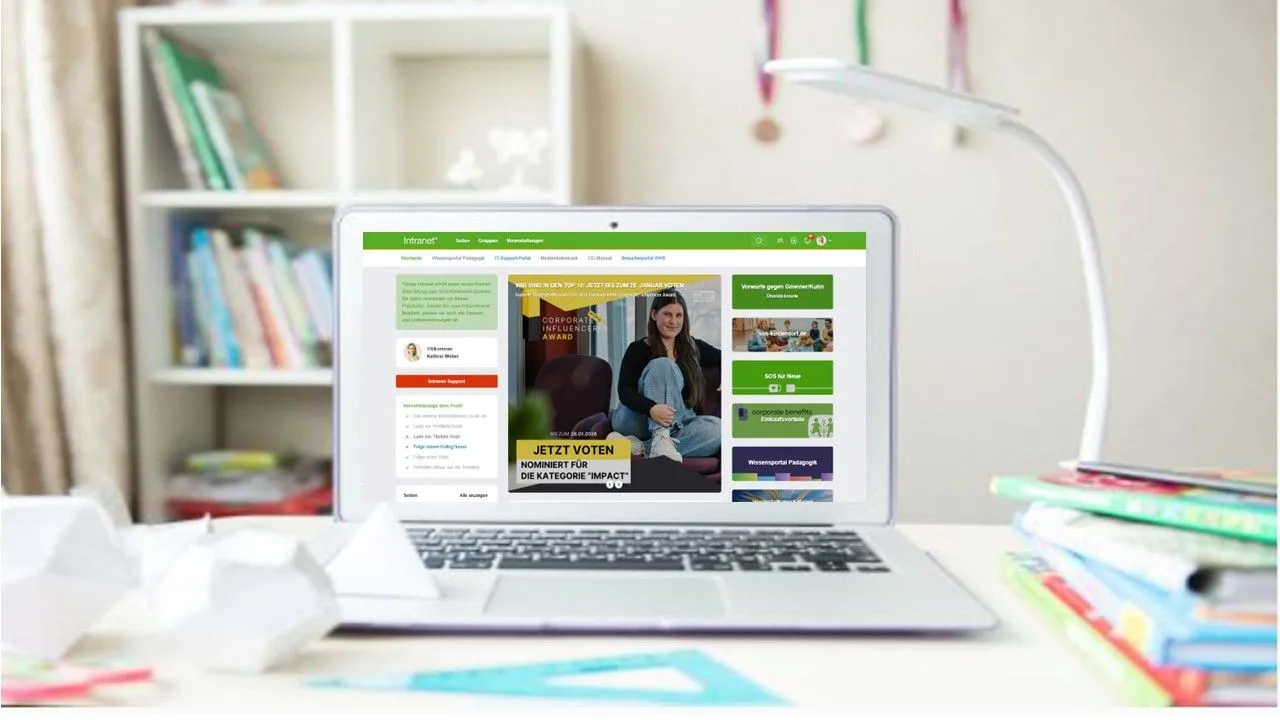
That’s where Haiilo stood out. The platform is intuitive, clearly structured, and designed for participation, making it a strong fit for SOS Kinderdorf. It also integrates smoothly with the existing Microsoft 365 environment.
Haiilo onboarding
Haiilo was introduced in 2018, with a rollout that was gradual and focused on staying close to employees. Launch events were held at different locations and supported by hands-on training to help people get comfortable with the platform.
SOS Kinderdorf also created ongoing ways for employees to ask questions and get support, including digital office hours. This made it easier to address concerns early and build confidence over time.
From the beginning, the rollout was seen as a long-term change, not a one-time launch. That mindset is reflected in the current renaming of the intranet, which was long known as “Hermann,” after founder Hermann Gmeiner. The goal is to better reflect SOS Kinderdorf as a modern, professional, and diverse organization, and to move away from founder-era, person-centered naming.
“We see this very clearly: when leaders actively use the intranet and lead by example, employees follow. Leadership is the key to strong internal communication.”
Victoria Leipert | Head of Internal & External Communications
How SOS Kinderdorf uses Haiilo day to day
In everyday work, Haiilo is the main digital hub for internal communication at SOS Kinderdorf. The social intranet sits alongside established formats like the employee magazine, leadership communications, and the corporate newsroom.
It brings information into one place, encourages conversation and participation, and makes it easier to communicate across locations and roles.
Participation instead of one-way communication
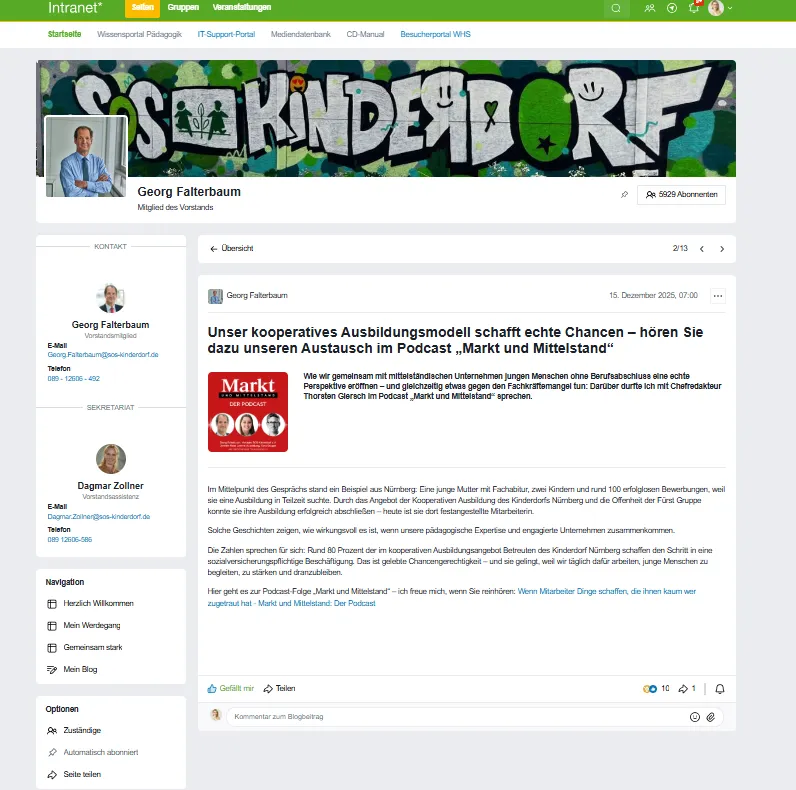
Haiilo is used in a very participatory way. Each facility and department runs its own pages to share updates and information that matter to them. These are supported by central pages and formats that bring together broader topics and allow for both push and pull communication.
Internal campaigns that build real connection
One standout example was the internal campaign celebrating SOS Kinderdorf’s 70th anniversary. Through the “70 Years of Cooking Together” initiative, teams across the organization submitted recipes, voted on their favorites, and took part together.
The recipe with the most votes was cooked, photographed, and turned into a finished piece. The winning team was rewarded with a cooking event. The entire campaign played out in the intranet through posts, photos, and videos, turning the anniversary into something people could actually experience.
Exchange, feedback, and a pulse check
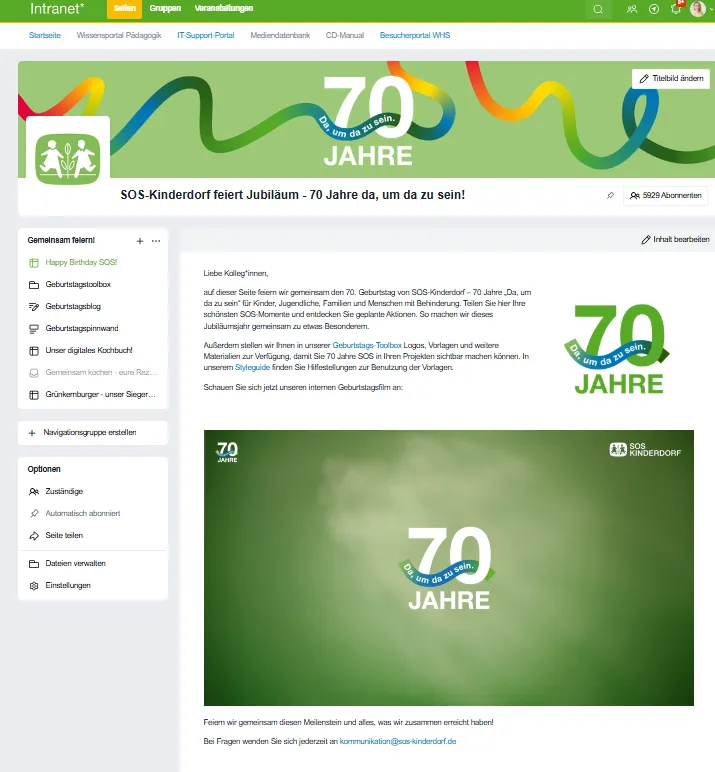
Employees can comment on, like, and discuss content directly in the intranet. Communication is no longer just top-down, it’s a conversation that spans locations and roles.
This makes it easier to try new formats and to spot emerging themes, questions, and needs across the organization early on.
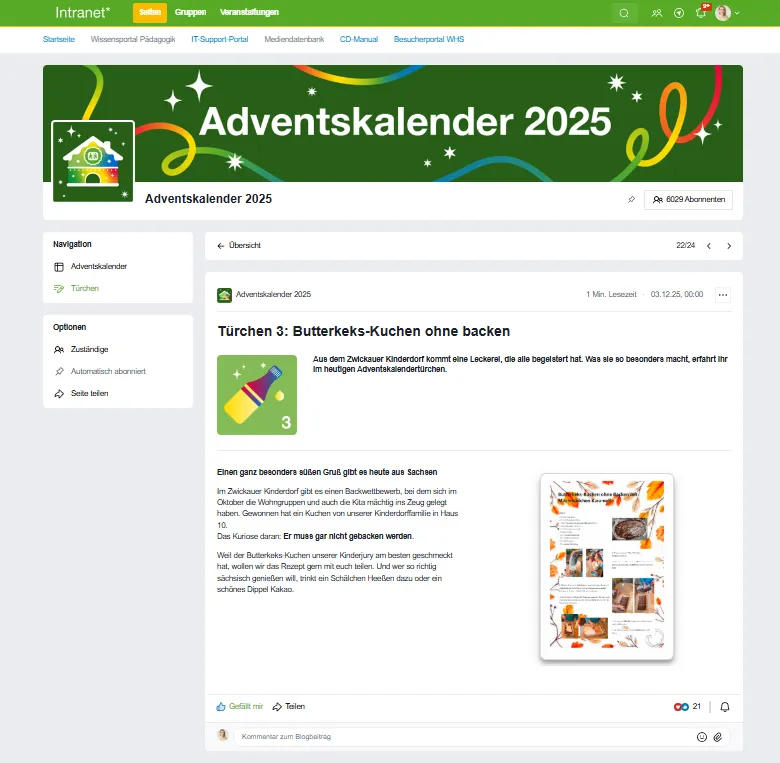
Key results
With Haiilo, SOS Kinderdorf has built a central home for internal communication. The platform is actively used across the organization, as the numbers show:
- 1,253,898 page views
- An average of 3.3 interactions per visit
- An average time on site of 8:57 minutes
“A social intranet doesn’t just change how people communicate. It changes culture. It connects people, breaks down silos, and creates new ways of working together.”
Victoria Leipert | Head of Internal & External Communications
In the social and educational sector, where skilled professionals are in high demand and everyday work is intense, strong internal communication becomes a real success factor. SOS Kinderdorf shows that when employees are informed, involved, and appreciated, engagement and identification grow.
Over time, investing in a modern intranet pays off, especially when compared to the cost of turnover and unfilled roles.
One thing is clear: strong internal communication doesn’t happen overnight. It takes clear goals, visible support from leadership, and consistency. Organizations that stay the course build a solid foundation for employee retention and lasting cultural change.
Find
your
flow
Bring communication, knowledge, and tools into one calm place — and help your people find their flow.