
Your employee value proposition survey isn’t working—here’s how to fix it



What is Employee Value Proposition (EVP), and why should your organization invest in it? Let’s find out!
Companies no longer enjoy an upper hand in the recruitment and retention of talent. Today, employees have more options than ever and are increasingly selective when choosing where to work. They expect more than just a salary—they want purpose, flexibility, growth, and a culture that aligns with their values. This shift makes it harder for organizations to stand out without a clear and compelling message.
📚Check out Top Leadership Skills and learn how to lead your employees the way they need.
How can you attract and retain top talent in this competitive market? A compelling Employee Value Proposition (also called employer value proposition) for current employees as well as potential candidates can make a real difference. But to get there, you need to understand what employees truly value—and that often starts with a well-structured employee value proposition survey that uncovers honest feedback and expectations.
What does developing a great Employee Value Proposition (or EVP) entail, and why is it so important? It goes beyond listing benefits or perks. A strong EVP clearly communicates what employees can expect in return for their skills, time, and commitment. It also reflects your company’s culture, mission, and day-to-day experience—something candidates will actively evaluate before applying.
In this article, we will go through the components of a great Employee Value Proposition (EVP). We will also walk you through the process of creating a strong Employee Value Proposition for your company, including how insights from an employee value proposition survey can help you build a message that truly resonates.
Are you ready? Let’s dive in!
Use employee feedback to provide insights for your employee value proposition.
Request a demoTable of contents
- What Is An Employee Value Proposition?
- Why Is Employee Value Proposition Important?
- What Are the Components of an Employee Value Proposition?
- 6 Steps to Creating a Great Employee Value Proposition
- Example: Employee Value Proposition at Haiilo
- Key Employee Value Proposition Stats You Can’t Ignore
What Is An Employee Value Proposition?
Employee Value Proposition (EVP) is usually defined as a set of monetary and non-monetary benefits provided by an organization to its employees in return for the skills, capabilities, and experience they bring and the contributions they make to the organization. These benefits can include salary, bonuses, career development opportunities, work-life balance, company culture, and leadership support.
However, this definition is rather outdated. It focuses too much on what companies offer and not enough on how employees actually experience those offerings. Today, employees expect more transparency, personalization, and alignment with their individual needs. Simply listing benefits is no longer enough to stand out or build long-term engagement.
The modern definition of Employee Value Proposition
Employee Value Proposition is an ecosystem of support, recognition, and values that an employer provides to employees to achieve their highest potential at work. This modern view puts the employee experience at the center. It highlights how people feel, grow, and contribute within the organization—not just what they receive.
To build this kind of EVP, companies need real input from their workforce. This is where an employee value proposition survey becomes essential. It helps uncover what employees truly value, where expectations are not being met, and how the organization can evolve. A strong EVP is not static—it is shaped continuously by listening, adapting, and delivering on what matters most to your people.
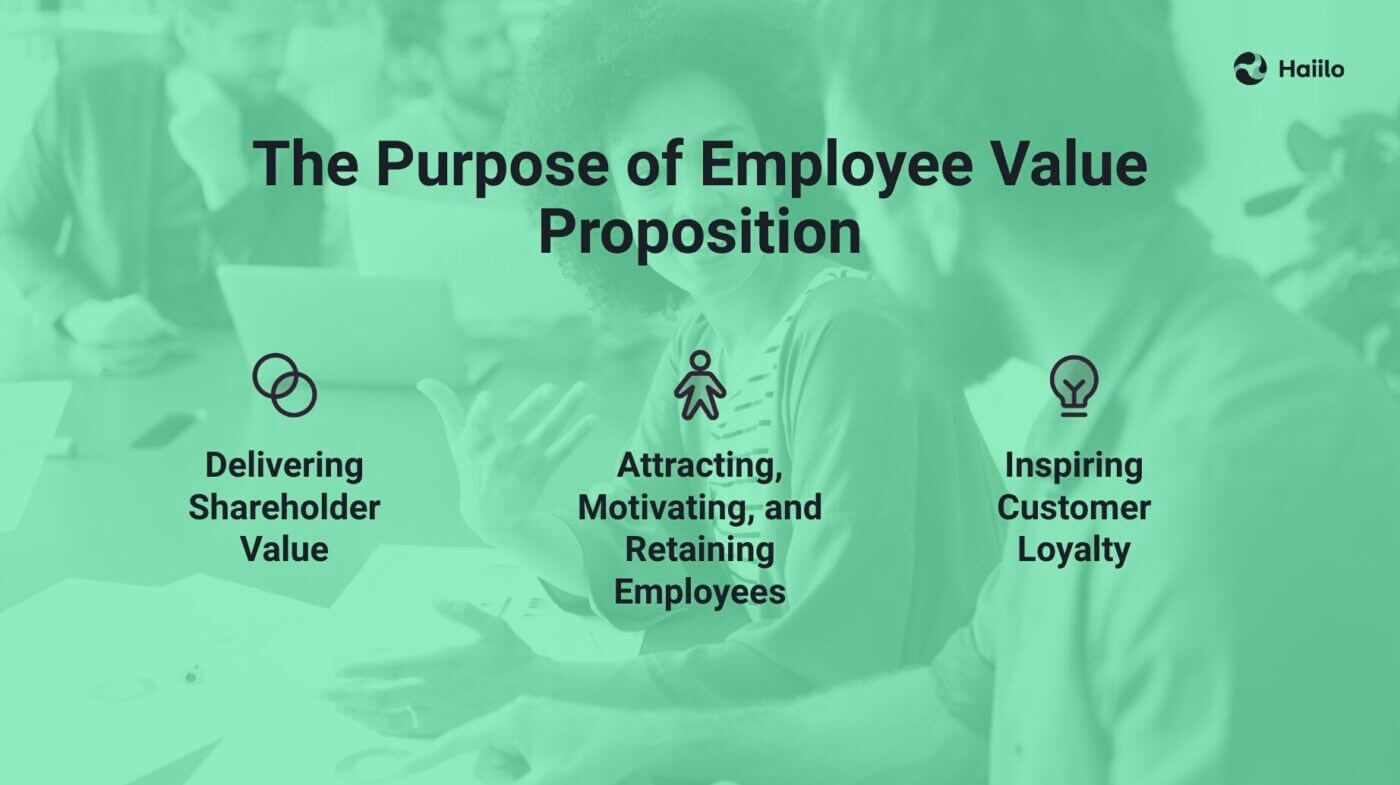
The key difference here is that EVP should not be looked at as a two-way transaction but as a comprehensive set of employer offerings that boost employee engagement and bring out the best in employees. It reflects the full employee experience—from onboarding to career growth—and shapes how people feel about their work every day. When done right, it creates a sense of purpose and belonging that goes far beyond compensation.
An effective EVP helps organizations and recruitment professionals in establishing a strong employer brand. It gives candidates a clear and authentic picture of what to expect, while helping current employees stay connected and motivated. Insights gathered through an employee value proposition survey can sharpen this positioning by revealing what truly matters to your workforce and where your messaging may fall short.
As a result of macroeconomic changes and ongoing challenges in finding and retaining talent, many organizations have re-assessed their core company values. At the same time, remote and hybrid work has reshaped how people collaborate, communicate, and define success at work. Employees are now looking for flexibility, meaningful work, and support for their well-being—not just traditional benefits.
So let’s take a closer look at why defining and understanding a company’s EVP is so crucial, and how it directly impacts your ability to attract, engage, and retain the right talent.
Why Is Employee Value Proposition Important?
Employer branding is critical for an organization to attract top talent. Done right, an EVP offers a clear and compelling answer to the question: Why should a highly talented person choose to work with us instead of anywhere else? It helps you stand out in a crowded market where candidates actively compare multiple employers before making a decision.
Designing an EVP that is unique to your organization will considerably improve your talent acquisition and retention, giving you an employer brand that has an edge over your competitors. A strong EVP aligns what you promise with what employees actually experience, which builds trust and credibility over time. Using insights from an employee value proposition survey can help ensure that your EVP reflects real employee needs rather than assumptions.
It makes talent management easier, even if you are trying to attract passive candidates. These individuals are not actively job hunting, so your EVP needs to resonate instantly and show clear value. A well-defined EVP communicates why your organization is worth their attention and potential move.
1. Attracting Top Talent
There’s no denying that recruitment marketing has changed drastically. Prospective employees are becoming more informed and selective in their job search. They look beyond job descriptions and salaries—they research company culture, leadership style, growth opportunities, and employee feedback before applying.
A strong EVP helps you meet these expectations by clearly articulating what makes your organization different. When backed by data from an employee value proposition survey, your messaging becomes more authentic and relevant. This not only attracts more qualified candidates but also improves the quality of applications, as people who resonate with your EVP are more likely to apply—and stay.
The explosion of remote and hybrid work options means that candidates can find higher-paying jobs that also give them better employee experience in terms of flexibility and work-life balance. As a result, expectations have shifted significantly. Employees now compare roles based on how well they fit their lifestyle, not just career progression or salary.
📚Read on: 8 Employee Engagement Statistics You Need to Know in 2020
This has made attracting top talent a lot harder for HR professionals. It is no longer enough to offer competitive pay or standard benefits. Organizations need to clearly communicate what makes them different—and why employees should choose them over other options that may offer similar conditions.
An EVP acts as a key driver of talent management and talent acquisition. Therefore, consistent and efficient communication of an employee value proposition that enhances employer branding has become extremely important. A well-defined EVP, supported by insights from an employee value proposition survey, ensures that your messaging reflects what employees genuinely value and expect.
2. Retaining Top Talent
In any market conditions, it is important to attract the right talent. But retaining high-performing employees is equally important, if not more. High performers are often the most likely to leave if their expectations are not met, as they typically have more opportunities available to them.
A strong EVP helps reduce this risk by aligning employee expectations with their actual experience. When employees feel supported, recognized, and connected to the company’s values, they are far more likely to stay engaged and committed. Regularly running an employee value proposition survey allows organizations to identify gaps early, address concerns proactively, and continuously improve the employee experience.
In the long run, a clear and authentic EVP creates stability within teams, reduces turnover, and helps build a more engaged and productive workforce.
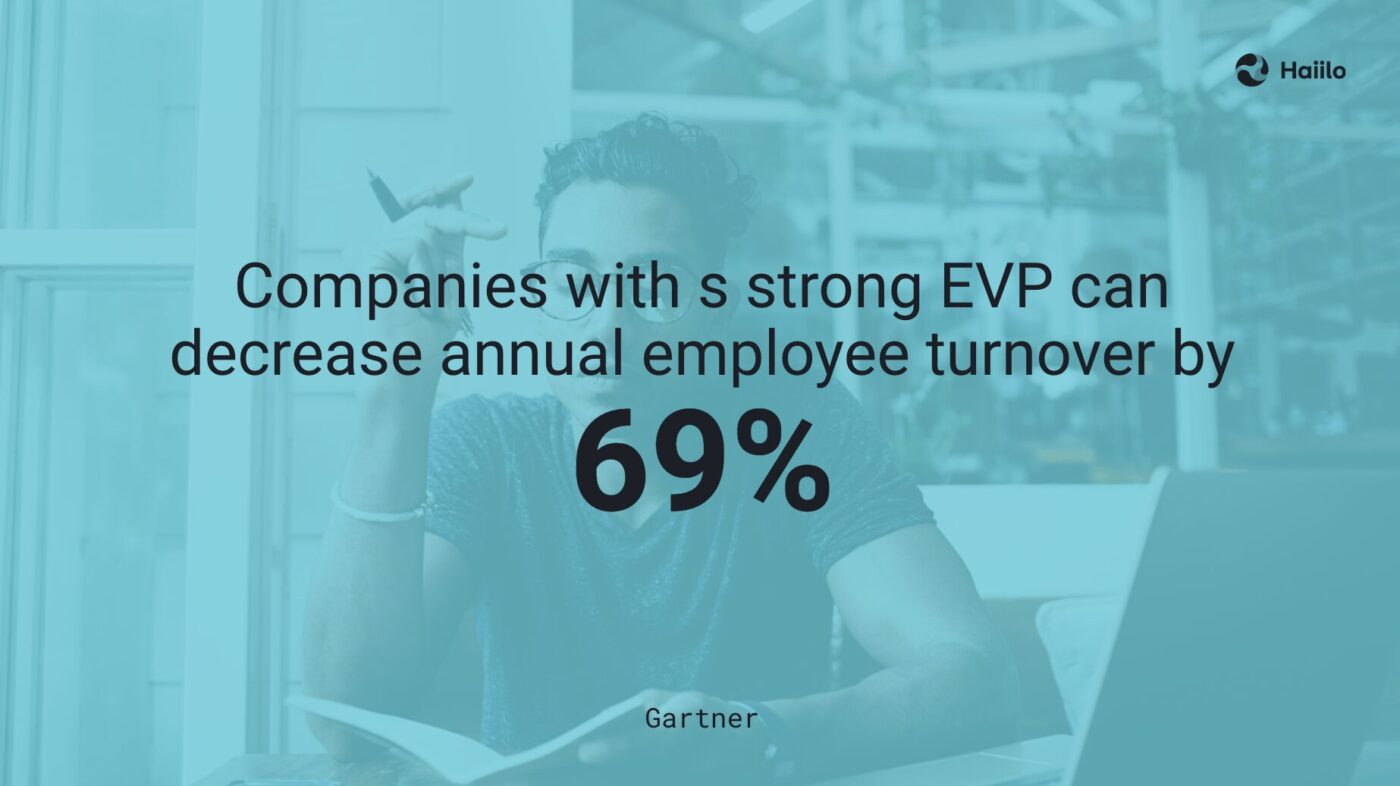
By defining a clear and compelling EVP that focuses on professional development, work-life balance, recognition of outstanding performance, and a culture of collaboration, organizations can cultivate an environment where employees not only want to stay but also become passionate ambassadors for the company. When employees feel valued and supported, they are more likely to contribute beyond their core responsibilities and actively promote the organization to others.
Furthermore, losing talented employees means losing productive people who are hard to replace. It’s time-consuming and expensive. Recruiting, onboarding, and ramping up new hires requires significant effort from both HR and team leads. This is why leading organizations put a strong focus on retention strategies and continuously refine their EVP based on employee feedback, often gathered through an employee value proposition survey.
3. Optimizing Recruiting Expenses
Firstly, if your company’s employee value proposition is compelling, you will get more applications from talented candidates. Strong messaging attracts people who already align with your culture and expectations, which improves both the quantity and quality of applicants.
Consequently, your human resources team will need to spend less on recruiting agencies, job ads, social recruitment strategies, and other talent acquisition expenses. Over time, this creates a more efficient hiring pipeline with fewer mismatches and faster decision-making.
Essentially, your cost per hire will fall. You can fill roles quicker and with better-fit candidates who are more likely to stay long term.
Secondly, because an EVP also helps retain top talent, it saves on additional recruitment and training costs. This translates to a sizeable amount as many company resources are poured into educating and training fresh candidates. Reducing turnover means you protect that investment and maintain team stability.
4. Building a great corporate culture
When employees know what their company stands for, they are more motivated and engaged at work. This is particularly true when employees’ values match their company’s values. Clear expectations and shared goals create a stronger sense of direction and belonging.
Consequently, when organizations care about this alignment, they are more likely to build a great corporate culture their employees will appreciate. A strong EVP reinforces these cultural elements and ensures they are consistently communicated and experienced across the organization.
5. Improving employee experience
An organization’s EVP also impacts the overall employee experience in the workplace. Every touchpoint—from hiring to daily collaboration—should reflect the promises made in your EVP.
Employee-driven companies define their value propositions based on their workforce. They actively listen, gather insights, and adapt their strategies accordingly. This is where an employee value proposition survey becomes essential, helping organizations understand what employees truly value and where improvements are needed.
This ability to focus on what people truly care about is what brings the biggest competitive advantage to successful organizations. It ensures your EVP stays relevant, authentic, and aligned with the evolving needs of your workforce.
What Are the Components of an Employee Value Proposition?
Defining a unique employee value proposition is all about assessing the core strengths of your organization. It requires a clear understanding of what sets you apart as an employer and how those strengths translate into real value for your employees.
This process involves identifying the different elements that come together to make your organization an awesome place to work. It should not be based on assumptions. Instead, insights gathered through an employee value proposition survey can help you validate which components matter most to your workforce and where you need to improve.
Here are five main components that your EVP should include:
1. Financial Rewards
This component of EVP addresses an employee’s expectation from the overall evaluation and compensation system – the total rewards. It covers all the financial offerings like salary, bonuses, and stock options. Transparent and fair compensation builds trust and forms the foundation of any strong EVP.
On the face of it, financial compensation may seem like the key motivator for the workforce. But, it is only a piece of the puzzle when it comes to an employee value proposition. Employees may join for the salary, but they rarely stay for it alone.
📚Read on: https://blog.haiilo.com/blog/top-15-employee-motivation-tips-and-benefits/Top 15 Employee Motivation Tips and Benefits
Let’s look at the non-financial benefits.
2. Employment Benefits
This component of EVP is associated with a range of additional benefits associated with the job. These include things like:
- Health insurance
- Retirement benefits
- Paid leaves
- Gym memberships
- Company-sponsored holidays
A benefits package works best when it’s customized to the industry, the culture, the organization, and the employees. What works for one workforce may not work for another. Regular feedback—often collected through an employee value proposition survey—helps ensure your offerings stay relevant and valuable.
3. Career Development
Employees want to see the growth potential their job has to offer and how the organization can contribute to their career development. This component of EVP includes:
- Technical training
- Leadership training
- Sponsored courses (things like a project management certification or even an MBA)
- Mentoring and career guidance
- Promotion opportunities
- Opportunities to work in other cities or countries
- Opportunities to change domains
- Opportunities to work on specific projects
For an organization that is unable to offer salaries at par with its competitors, offering a clear career development and growth plan can be the difference between hiring and losing quality talent. Employees are more likely to commit when they see a future with your company and understand how they can progress over time.
4. Work Environment
This component of EVP is associated with factors that constitute a positive working environment. These include things like:
- Flexible working hours
- Work-life balance
- Recognition
- Team building
- Communication systems
- Workspace design
- Employee wellbeing
Organizations must recognize the importance of creating a work environment where employees thrive and do https://blog.haiilo.com/blog/andrew-spence-on-helping-employees-find-meaning-at-work/meaningful work. A positive environment enables employees to perform at their best, collaborate effectively, and feel motivated in their day-to-day work.
This adds to a stronger employee experience and higher engagement levels. But this doesn’t happen by accident. Organizations need to actively shape their work environment based on employee needs. Regular input—such as feedback gathered through an employee value proposition survey—can highlight pain points in communication, workload, or flexibility, and help leaders make targeted improvements.
They must consciously make efforts towards building and communicating such an environment so that both current employees and candidates clearly understand what it feels like to work there.
📚Read on: https://blog.haiilo.com/blog/remote-work-20-ways-to-engage-and-connect-with-your-remote-employees/Remote Work: 20 Ways to Engage and Connect with Your Remote Employees
5. Company Culture
Management guru Peter Drucker once famously said, “Culture eats strategy for breakfast.”
Several industry leaders across the world still share this belief. Culture influences how decisions are made, how teams collaborate, and how employees behave when no one is watching. It is one of the most visible and experienced aspects of your EVP.
A strong company culture is built on shared values, trust, transparency, and consistent communication. When employees understand and believe in these values, they are more likely to feel connected to the organization and committed to its success. This alignment is often reinforced by insights from an employee value proposition survey, which helps ensure that your culture reflects the real experiences of your workforce—not just leadership intentions.

This component of the employer value proposition addresses the factors that constitute a great company culture. It reflects how people work together, how decisions are made, and what behaviors are encouraged and rewarded across the organization.
📚Read on: https://blog.haiilo.com/blog/the-importance-of-company-values/Company Values: Definition, Importance and Examples
These include things like:
- Trust and collaboration
- Positive relationships between team members across hierarchies
- Team communication and support
- Alignment of employees with company goals
A strong culture creates a sense of belonging and shared purpose. It helps employees understand not just what they do, but why it matters. When culture is clearly defined and consistently lived, it becomes a powerful driver of engagement and performance.
However, culture cannot be built in isolation. Organizations need to continuously listen to their workforce to ensure that the desired culture matches the lived experience. This is where an employee value proposition survey plays an important role. It helps identify gaps between intention and reality, giving leaders the insights needed to strengthen culture over time.
Ultimately, a great company culture reinforces every other component of your EVP and ensures that employees feel connected, motivated, and aligned with your organization’s direction.
6 Steps to Creating a Great Employee Value Proposition
Now that we have identified the main components of an EVP, it makes the complex task of building one a lot easier. You now have a clear structure to evaluate what matters and where your organization stands.
Here are six steps to building a great EVP for your organization:
- Assess what you currently offer
- Interview your existing and past employees
- Define the key components of your EVP
- Write your employee value proposition
- Promote your EVP through the right channels
- Review the results
1. Assess what you currently offer
EVP development should start with the basics. You must assess what your company currently is and what it isn’t. You should be clear about your branding and how your organization is perceived internally and externally.
Make a checklist of all the components of EVP in the above section. Go through each item in the EVP checklist and determine the extent to which your company currently offers each. This step helps you identify both strengths and gaps.
It’s important to be completely objective while carrying out this activity. That’s why it’s useful to take opinions from your employees about how well these are being met. An employee value proposition survey can provide structured insights and highlight areas where perception differs from reality.
2. Interview your existing and past employees
Knowing what your company can and cannot offer is crucial for building a strong EVP. But understanding how employees experience those offerings is even more important.
Use employee surveys to collect feedback from focus groups that include current employees and any new hire. Surveys allow you to gather consistent, honest feedback at scale and identify trends across teams.
Include past employees as well in employee surveys, and understand what the organization could have done to help them stay. Exit insights often reveal blind spots that current employees may hesitate to share. Lastly, follow this by researching your prospective employees to align your EVP with market expectations.
In the employee surveys, ask your current employees questions like:
- Why do you like working here?
- What motivates you at work to engage more?
- What improvements would you like to see?
- What’s the single most important need that you have related to our company?
- What kind of support do you expect from the company to help you achieve your professional development goals?
Use the responses given by different focus groups to find out what motivates your top performers and incorporate this feedback to build a better job offer for your potential employees. A well-designed employee value proposition survey helps ensure these insights are actionable and easy to compare.
3. Define the key components of your EVP
Now it’s time to evaluate your findings and arrive at your company’s new employee value proposition. This is how you will attract and retain top talent in a consistent and scalable way.
Use the research from the previous steps to answer questions like:
- What salary range and employment benefits will attract my target candidate persona?
- What career growth opportunities is my target candidate looking for?
- What kind of company culture will help my target audience succeed at work?
- What constitutes an ideal work environment for my target candidate persona?
Your EVP should also be segmented for different roles and levels. Different groups value different things, and your messaging should reflect that nuance. For example:
- The EVP for recent graduates to fill an entry-level position will highlight things like career growth, a fun office environment, a positive employee experience, and employee perks.
- The EVP for professionals who are not recent graduates will highlight things like career stability, child-care support, and work-life balance.
Once you have determined what you will offer, translate it into statements that candidates can quickly understand and relate to. Keep it clear, specific, and relevant. Now your strong employee value proposition is ready!
4. Write your employee value proposition
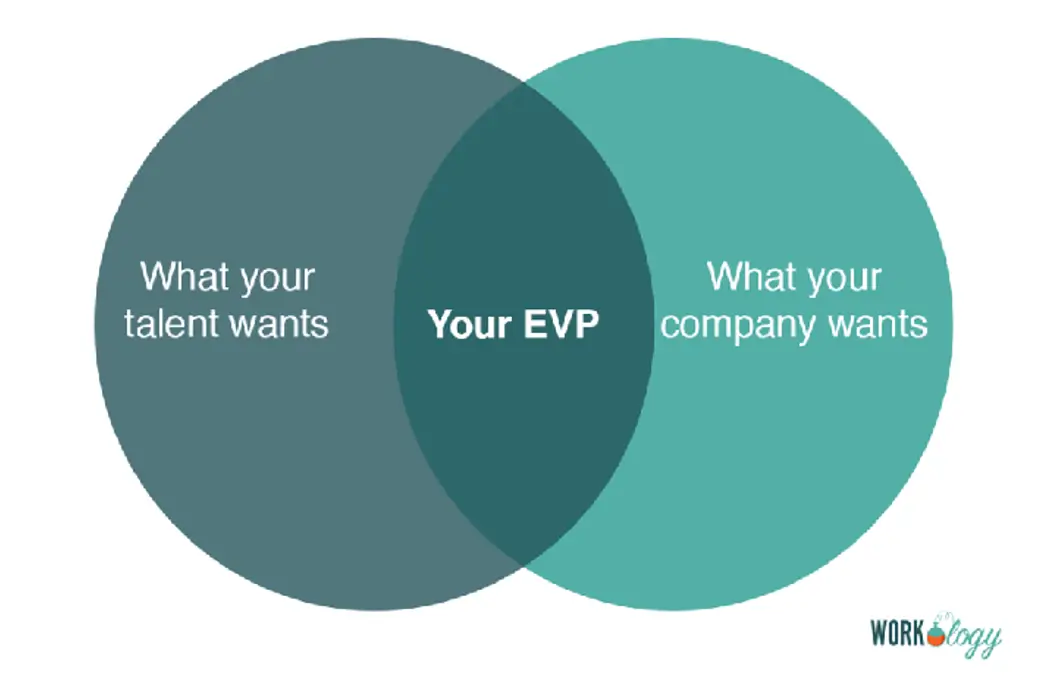
Once you’ve identified how your company differs from the competition and what employee experience you can deliver, the next step is to write a strong employee value proposition statement. This is where all your research and insights come together.
Make sure that your EVP statement is clear, unique, and inspirational. Avoid vague phrases and focus on what truly sets your organization apart. That’s the only way it will help you attract and retain top talent.
Also, make sure that your EVP is aligned with your employees and the company’s expectations. If there is a gap between what you promise and what employees experience, it can damage trust. Regular validation through an employee value proposition survey helps keep your messaging accurate and credible over time.
Source: WorkOlogy
5. Promote your EVP through the right channels
So, you have a winning EVP in place, but even the best EVP is pointless unless it is well communicated. A strong message only delivers value if people actually see it, understand it, and believe it.
So what’s next?
Don’t just talk about your EVP on the careers page on your website. Promote it! Make sure it is consistently communicated across all touchpoints where candidates and employees interact with your brand. This includes job descriptions, social media, employer review platforms, internal communication channels, and onboarding materials.
Your EVP should also be visible and reinforced internally. Employees need to experience and recognize it in their day-to-day work, not just read about it during recruitment. This is what turns your EVP into a living promise rather than a marketing statement.
Use storytelling, employee testimonials, and real examples to bring your EVP to life. Authentic content builds trust and gives candidates a clearer picture of what to expect. At the same time, regularly validate your messaging with insights from an employee value proposition survey to ensure that what you promote matches the actual employee experience.
The goal is simple: make your EVP easy to understand, easy to find, and impossible to ignore.
Leverage the different internal and external communication channels you’re currently using in your organization to get the word out. Consistency is key here—your EVP should be reflected in every message, interaction, and employee touchpoint.
Internally, promote your EVP through company blogs, newsletters, email, town halls, and internal communication tools like Haiilo. These channels help reinforce your EVP regularly and ensure it becomes part of the everyday employee experience rather than a one-time message.
Indeed, the way you communicate with your employees has a direct impact on the employee experience you deliver and, by extension, your employee value proposition. Clear, transparent, and timely communication builds trust and strengthens alignment across teams.
📚Read on: Top 5 Communication Skills and How to Improve Them
Essentially, Haiilo allows you to:
- Create personalized news feeds based on your employees’ job functions, preferences, interests, locations and the languages they speak so you share with your employees the news and information that are relevant to them
- Embrace real-time communications and provide an easy mobile-access to information
- Keep all your employees connected and informed, no matter where they are
- Easily segment your internal audiences for better content localization and personalization
- Create pages and communities dedicated to specific company topics
- Work as a knowledge base for all employees
- Enable your employees to collaborate more efficiently
- Connect various communication, collaboration and document sharing tools
- Provide data on how your employees are assessing the vibe in the workplace and what are their main concerns so you can take your internal communication to the next level
- Enable employees to become brand ambassadors by sharing important company news and educational content with their personal networks.
Externally, you can promote your EVP across social media, such as LinkedIn pages, website careers page, job postings, recruiting videos and employee referral programs. Each of these channels gives you an opportunity to show what your organization stands for in a real and relatable way.
Get your brand ambassadors to promote the employer brand using their social media platforms. Employee voices are often more trusted than corporate messaging, which makes them a powerful extension of your EVP.
There are many communication tools available to help you promote your EVP across various touchpoints of the candidate journey. The goal is to create a smooth and consistent experience from first impression to onboarding.
The key is to ensure it is integrated into your corporate communications plan and employer branding strategy. Regularly validating your messaging through an employee value proposition survey will help ensure that what you communicate aligns with what employees actually experience.
6. Review the results
The first step in the review process is to measure how key talent is responding to your new EVP. Without measurement, it’s difficult to know what’s working and where adjustments are needed.
Check metrics such as:
- Higher engagement on social media on job-related posts
- Increase in applications
- Increase in responses from passive candidates
- Falling attrition
But that’s not all!
Keep reviewing your EVP from time to time – at least once a year. People’s expectations change over time, and even if your current EVP is strong, it needs regular updates to stay relevant and credible.
Therefore, keep taking employee interviews in focus groups to understand what people are looking for. In addition, running a structured employee value proposition survey will give you consistent, comparable data over time. This will ensure your EVP remains effective and continues to attract and retain the right talent.
Example: Employee Value Proposition at Haiilo
At Haiilo, we believe that successful employees make a successful company. We have built our culture on a set of core beliefs and values that keep the employee at the center. This focus ensures that every initiative—from leadership to communication—is designed to support people in doing their best work.
We define leadership to be a fine balance of support, encouragement, ownership, and knowledge sharing. Leaders are expected to enable their teams, not control them, and to create an environment where ideas and feedback are openly exchanged.
📚Read on: https://blog.haiilo.com/blog/what-are-the-top-leadership-skills-that-make-a-great-leader/What Are The Top Leadership Skills That Make a Great Leader?
Instead of charting out traditional career paths, we encourage our employees to create and define their growth opportunities not just as individuals, but also as teams. This approach gives employees the flexibility to shape their own careers based on their strengths, interests, and evolving goals.
Employees are encouraged to take the initiative, be it moving between functional roles or even creating a new one that didn’t exist. This level of autonomy fosters innovation and helps individuals explore their full potential within the organization.
Being big believers in learning by doing, we strongly promote the idea of self-development and employee empowerment. Continuous learning is embedded in the way teams work, so development becomes part of everyday tasks rather than a separate activity.
📚Read on: https://blog.haiilo.com/blog/empowerment-in-the-workplace-enable-your-employees/Empowerment in the Workplace: Definition & Best Practices
Despite having offices globally, we work as a singular team towards a common goal. Clear communication and shared values help maintain alignment across locations and teams. Insights from an employee value proposition survey also help ensure that this global culture reflects the real experience of employees, not just the intended one.
The key highlights that define our team is:
- We value diversity and derive strength from the 20+ nationalities representing us
- We share our success by offering team members to be company options holders
- We have remained efficient and continue to value our resources as we grow
- We embrace austerity as we value time and capital very highly
Key Employee Value Proposition Stats You Can’t Ignore
- Organizations with a strong and clearly communicated EVP are better positioned to reduce compensation pressure and reach a broader talent pool. A compelling employee value proposition survey can help identify what candidates truly value.
- Companies that consistently deliver on their EVP tend to see lower employee turnover and higher levels of engagement and commitment among new hires.
- A well-executed employee value proposition increases the likelihood that employees actively promote their company and act as brand advocates.
- Recruiters often struggle to differentiate their company from competitors, making a strong EVP a key advantage in attracting top talent.
- A company’s reputation plays a major role in job decisions, with many candidates unwilling to join organizations perceived negatively—even when other factors are attractive.
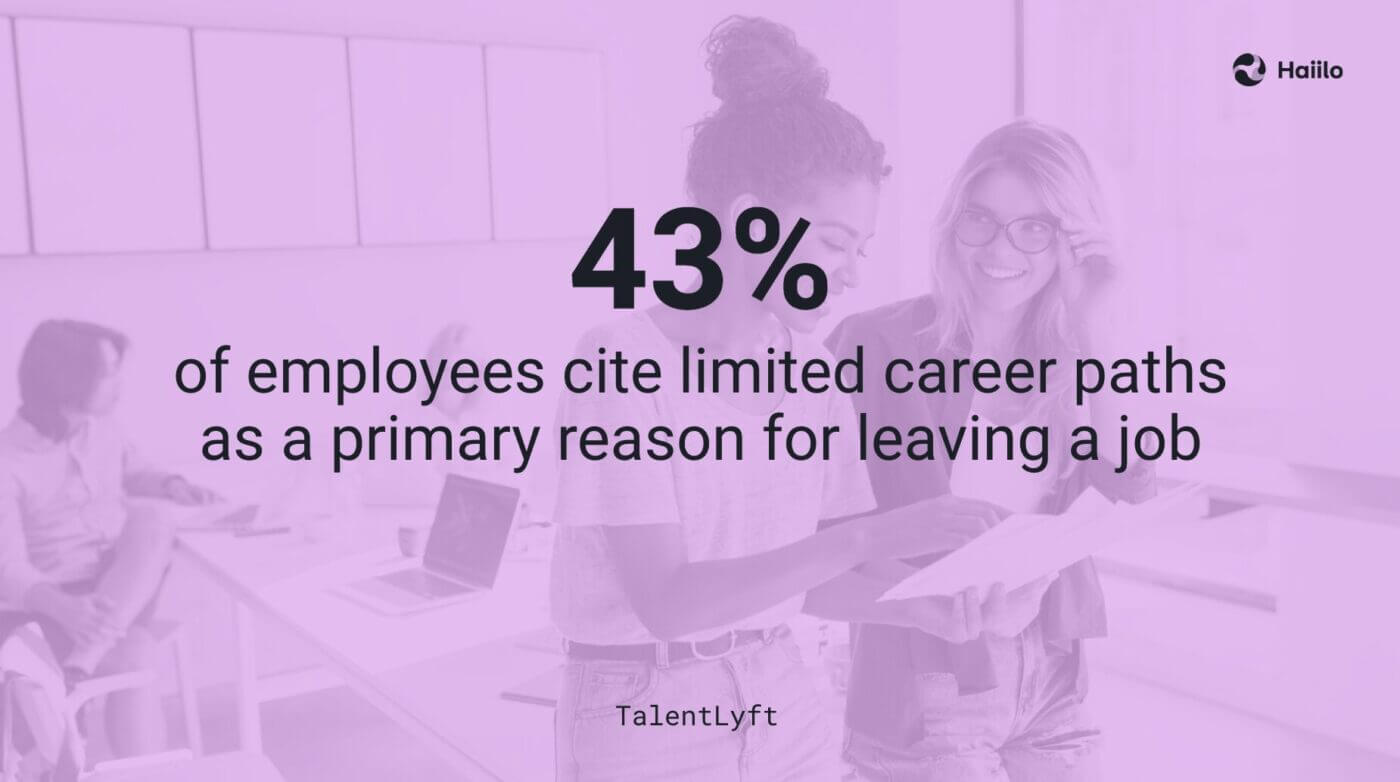
- Limited career growth opportunities remain one of the most common reasons employees leave their jobs, highlighting the importance of development within an EVP.
- Employee happiness and engagement are closely linked to productivity, making a positive employee experience a critical part of any EVP strategy.
- Many employees report gaps in workplace culture, which can negatively impact engagement and long-term retention.
- Remote and flexible work models have increased expectations for better work-life integration and autonomy.
- Some remote employees still struggle to disconnect from work, showing the need for clear boundaries and wellbeing support.
- Regular and transparent communication from leadership plays a key role in motivating employees and strengthening trust.
- A significant number of employees feel disconnected from leadership decisions, underlining the importance of alignment and communication within an EVP.
- Communication gaps can impact employee wellbeing and overall experience, making it essential to prioritize clarity and consistency.
- Many employees feel that internal communication could be improved, reinforcing the need for a strong and visible EVP.
- Aligning employee goals with company purpose remains a challenge for many organizations, but it is critical for engagement.
- Organizations that invest in employee support and development often see significant improvements in overall satisfaction and performance.
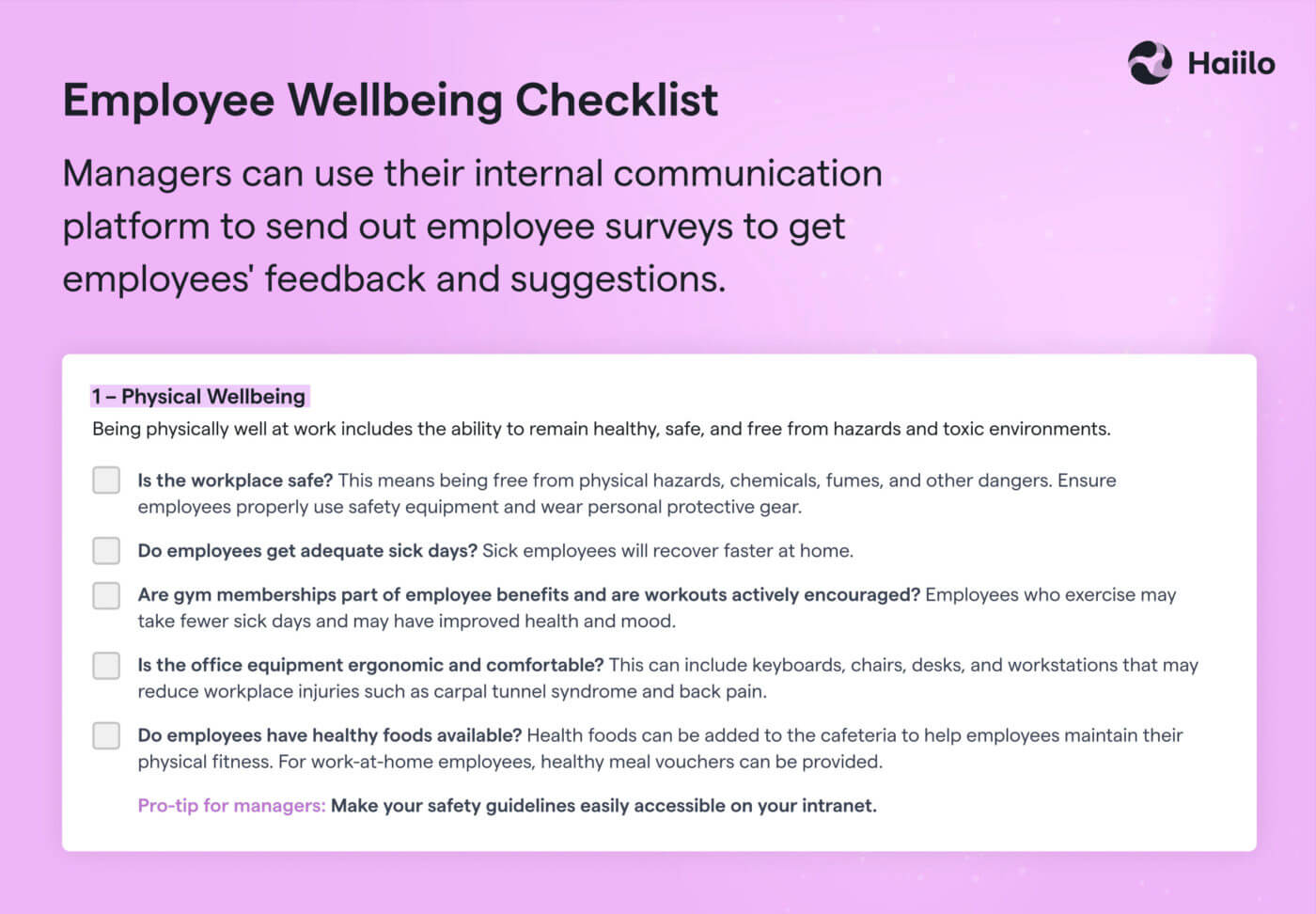
Want to improve productivity in the workplace? Get our free employee wellbeing checklist!
FAQ: Employee value proposition survey
1. What is an employee value proposition survey, and when should I run one?
An employee value proposition survey helps you understand what employees value most about working at your company—and what’s missing. It’s useful when you’re updating your EVP, seeing higher churn, struggling to hire, or rolling out major changes (like new leadership, benefits, or ways of working). The goal is simple: replace assumptions with real feedback so your EVP reflects the employee experience, not just your intentions.
2. What should I include in an employee value proposition survey?
Keep it focused on decisions you can act on. Cover compensation and benefits, but also ask about growth, flexibility, recognition, and day-to-day communication. Add a few open questions for nuance (e.g., “What should we stop/start/continue?”). If communication is a common pain point, explore channel preferences and clarity—especially if you work across formats like multichannel comms or rely on asynchronous communication. You can also include a short section on manager communication skills to spot gaps early (Top 5 Communication Skills).
3. How do I turn survey results into a strong EVP people actually believe?
Start with patterns, not outliers. Identify the top 3–5 themes employees consistently mention, then translate them into clear EVP pillars (e.g., “growth,” “flexibility,” “purpose,” “recognition”). Be honest about gaps: if employees want more development or autonomy, highlight what already exists and commit to what’s changing. If empowerment comes up often, reflect it directly in your EVP and your practices (employee empowerment). This also strengthens employer branding because your message aligns with reality.
4. How do I measure whether my EVP is working after the survey?
Track both hiring and retention signals. Look at application quality, offer acceptance rate, time-to-hire, and retention in the first 6–12 months. Internally, monitor engagement and sentiment over time—especially after EVP-related changes. Tools like a social intranet, employee communications, and insights and analytics can help you spot what content lands and where confusion remains. Externally, stronger EVP consistency often supports brand trust and brand awareness—two indicators that your employer story is sticking.
Find
your
flow
Bring communication, knowledge, and tools into one calm place — and help your people find their flow.