
Smart Working: Definition, Characteristics, and Benefits



Why does every company need to adapt to the smart ways of working? Why do organizations need to consider using AI? How can you benefit from agile and flexible work arrangements—and why are they no longer optional in today’s workplace?
Many teams are still dealing with fragmented tools, constant context-switching, and unclear priorities. The result? Work feels busy, but progress slows down. This is exactly where smart work comes in—helping organizations cut through the noise and focus on what actually moves the needle.
If you have been trying to answer some of these questions, you have come to the right place. This guide will help you understand what smarter ways of working really look like in practice—and why they are becoming a baseline expectation for modern teams, not just a nice-to-have.
In this blog, we will go over the characteristics of smart working and explain why every company, from growing teams to global enterprises, should adopt this framework without second-guessing it. We will also explore how the right mix of technology, communication, and flexibility enables people to do their best work—consistently and at scale.
Table of contents
- What Is Smart Working
- The Characteristics of Smart Working vs. Traditional Working
- The Benefits of Smart Working
What Is Smart Working
Smart working is a fairly new concept introduced to provoke organizations to adapt to the future of work and new ways of working.
According to this framework, people are at the center of everything, and it focuses on enabling employees to be more empowered to choose how, where, and when they work in order to achieve maximum productivity and satisfaction.
At its core, smart work is about more than just completing tasks. It is about choosing the best and most productive ways and technologies to achieve business goals with less friction. This includes reducing unnecessary meetings, simplifying workflows, and giving teams the clarity they need to prioritise meaningful work. For this, cross-departmental collaboration is essential, and working in silos is no longer viable.
Even though some organizations worry that flexibility might reduce control or consistency, in practice, giving employees more autonomy often leads to better focus, stronger accountability, and improved outcomes.
Additionally, smart working relies on the right workplace technology—tools that are user-friendly, well-integrated, and designed around how people actually work. A digital workplace environment should make it easier for employees to stay informed, collaborate across teams, and access what they need without friction. Unfortunately, the growing number of disconnected tech solutions many companies rely on today can easily become one of the biggest productivity blockers if not managed carefully.
Start working smarter today with Haiilo communications platform!
The Characteristics of Smart Working vs. Traditional Working
Smart working has certain traits and characteristics that are significantly different from traditional ways of working. Let’s take a closer look at the 6 biggest differences—and how they change the way work gets done in practice.
1. Agility and flexibility
Unlike traditional ways of working, smart working focuses on agile methodologies that enable people to better adapt to change and unexpected workplace situations. Instead of relying on rigid processes, teams are encouraged to test, learn, and adjust quickly—keeping work moving forward even when priorities shift.
This shift requires organizations to move away from fixed structures and become more responsive. Teams need the autonomy to make decisions faster, without waiting for multiple layers of approval. Proper change management plays a key role here, helping people stay aligned and focused on outcomes rather than getting stuck on blockers or outdated processes.
In a smart work environment, flexibility also goes beyond location or working hours. It includes the ability to rethink workflows, remove unnecessary steps, and prioritise high-impact tasks. This makes it easier for teams to stay productive—even in fast-changing or complex environments.
📹 Check out our Masterclass about top 5 change management models.
Smart working challenges companies to offer more flexible work arrangements. Traditional ways of work are based on the concept of owning people’s time, often measuring performance by hours worked rather than outcomes delivered.
In contrast, smart work focuses on results, autonomy, and trust—giving employees the flexibility to structure their work in ways that maximise focus and efficiency. Today, more organisations are rethinking rigid schedules and shifting towards models that balance business goals with employee needs.
While some organizations remain sceptical about working from home, flexible working arrangements are now a core part of how modern teams operate. They not only improve work-life balance but also help companies attract and retain talent in increasingly competitive markets.
2. Cross-departmental collaboration
Many organizations still struggle with siloed ways of working, where teams operate independently without shared visibility or alignment. This creates duplication, slows down decision-making, and makes it harder to deliver consistent outcomes across the business. Smart working directly addresses this challenge by encouraging teams to work towards a common goal with shared accountability.
In practice, this means breaking down barriers between departments and enabling smoother communication, knowledge sharing, and coordination. Organizational silos need to be broken down so that teams can collaborate more effectively, especially on complex, cross-functional projects.
Strong cross-functional collaboration not only improves execution but also leads to better innovation, as diverse perspectives come together to solve problems faster and more creatively. Without it, even well-planned initiatives can lose momentum or fail to scale.
3. Bottom-up feedback
Within companies that still follow traditional models, feedback tends to flow top-down. Managers evaluate employees, but employees rarely have structured opportunities to share input upward. This creates blind spots and limits the organisation’s ability to improve.
The smart way of working encourages and drives bottom-up feedback, where employees are invited to regularly give feedback about and to their superiors. This creates a more open culture where issues can be addressed earlier and ideas can surface from across the organisation—not just leadership.
Companies that prioritise employee experience often rely on tools like pulse surveys to gather ongoing feedback. These insights help managers adjust their leadership approach and make more informed decisions that reflect real employee needs.
4. Organizational alignment and workplace transparency
When employees are aligned with the company’s north star, the chances of achieving meaningful results increase significantly. People understand how their work contributes to larger goals, which improves focus, motivation, and accountability.
Moreover, when employees understand and live by your organization’s core values, they have clearer guidance on what is expected from them—without needing constant direction.
In a smart work environment, employees consistently evaluate activities, projects, and decisions based on how well they support business priorities. This reduces low-impact work and helps teams stay focused on what matters most.
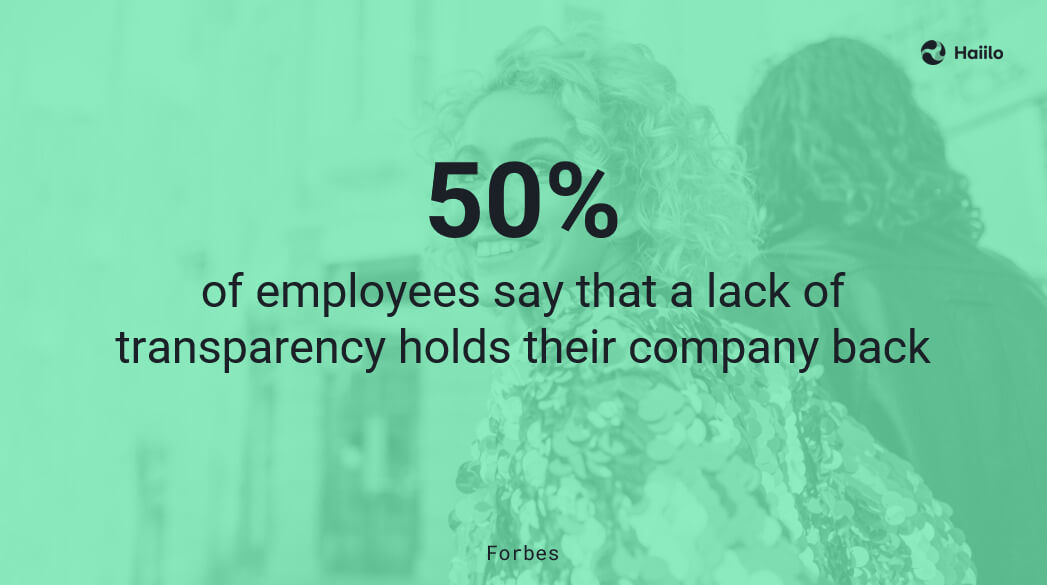
However, organizational alignment is difficult to sustain without complete workplace transparency. Employees need visibility into goals, progress, and challenges across the business. When leaders communicate openly—sharing both successes and setbacks—it builds trust and encourages stronger engagement across teams.
5. AI, digital workplace, and integrated technology
Smart employers understand the power of technology in producing better outcomes. Workplace tech continues to evolve rapidly, shaping how employees communicate, collaborate, and get work done. However, despite significant investment, many organisations still struggle to provide a seamless digital experience for their employees.
One of the biggest challenges is not the lack of tools, but the fact that too many of them operate in isolation. When systems don’t connect, employees spend more time switching between platforms, searching for information, and duplicating work—ultimately reducing productivity instead of improving it.
While having a strong tech stack should enable efficiency, it can easily become a source of information overload if not managed properly. That is why, in a smart work environment, technology must be intentionally designed to simplify work, not complicate it.
For technology to truly support employees, it must be integrated. Take, for example, all the communication channels your organization uses—instant messaging tools, project management platforms, email, intranets, and document-sharing systems. When these tools work together, information flows more easily, and employees can stay aligned without unnecessary friction.
AI is another key component of modern workplaces. While some organisations remain cautious, many are already using AI to automate repetitive tasks, streamline content creation, and improve decision-making. Others are just getting started with tools such as ChatGPT. When used thoughtfully, AI can reduce manual effort and free up time for higher-value work—making it one of the most powerful enablers of smart working today.
6. Data-driven decisions
Smart working also means moving away from guesswork and making decisions based on real insights. While this is not always straightforward, organisations that embrace smart work consistently aim to become more data-driven in how they plan, execute, and improve their initiatives.
Data helps teams understand what is working, where bottlenecks exist, and how to optimise processes over time. Without it, decisions are often based on assumptions, which can lead to wasted effort and missed opportunities.
When choosing workplace technologies, look for advanced reporting and analytics capabilities that provide clear visibility into performance. For example, if you are investing in an employee app, internal communications platform, or employee engagement software, make sure these tools allow you to measure impact, track engagement, and understand return on investment.
Over time, this data-driven approach enables continuous improvement—helping organisations refine how work gets done, align teams more effectively, and deliver consistent results at scale.
The Benefits of Smart Working
Most of the above-mentioned smart working characteristics have a direct or indirect impact on employee productivity, loyalty to the organization, mental health and wellbeing, and an organization’s ability to attract talent. Together, they create a more sustainable way of working that supports both business performance and employee experience.
So let’s dig deeper into why every company should adopt this concept—and how smart work translates into real, measurable advantages.
1. Improved productivity
One of the most immediate benefits of smart working is improved productivity. When employees have more control over how they structure their work, they can focus better, reduce distractions, and prioritise tasks that deliver the most value.
Instead of being tied to rigid schedules or outdated processes, teams can organise their time around when and how they work best. This leads to deeper concentration, fewer unnecessary interruptions, and more consistent output.
Flexibility also reduces stress linked to commuting, time pressure, and constant context-switching between tools or tasks. As a result, employees are better able to maintain energy and focus throughout the day—leading to higher-quality work.
When people feel trusted to manage their own work and supported with the right tools and communication, they are naturally motivated more to do their best. Over time, this shift helps organisations move away from measuring activity towards measuring real impact.
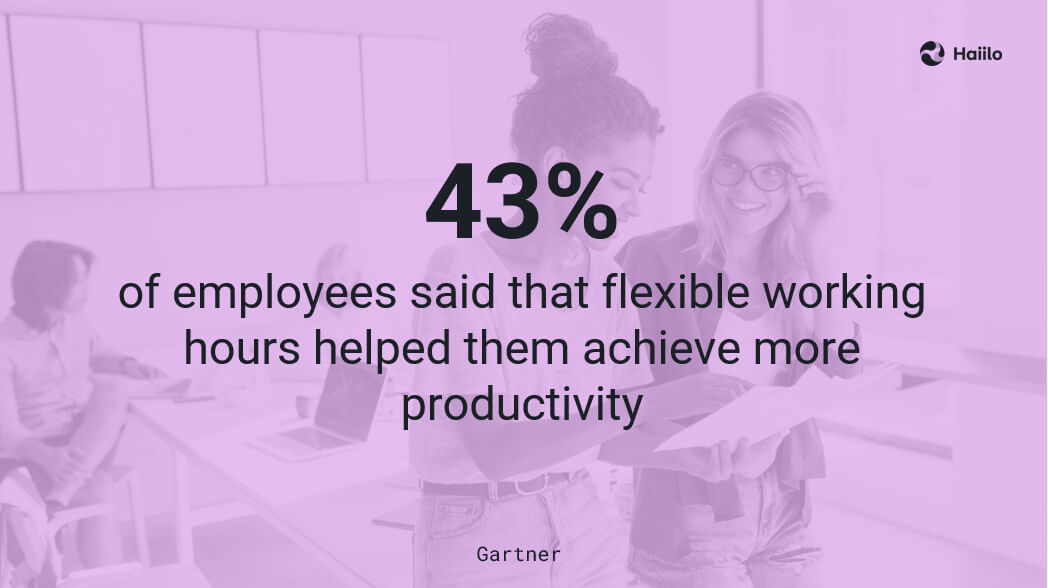
Even though all the other smart working characteristics positively impact employee productivity, workplace technology is often the most immediate lever. When employees have easy access to the tools they need—and those tools are intuitive and connected—they spend less time searching for information or completing repetitive manual tasks. In a smart work environment, technology acts as an enabler, helping people move faster from idea to execution without unnecessary friction.
On the flip side, poorly implemented or disconnected systems can have the opposite effect. Instead of improving efficiency, they create delays, increase errors, and make decision-making slower. This is why organisations need to focus not just on adopting tools, but on ensuring they are relevant, user-friendly, and fully integrated into everyday workflows.
2. Higher employee retention
Workplace flexibility is a smart way to boost employee retention in an organization. Employees today expect more control over how they work, and organisations that fail to offer this risk losing talent to more flexible competitors.
Flexible working arrangements, combined with clear communication and the right tools, help create an environment where employees feel supported and trusted. This has a direct impact on engagement, satisfaction, and long-term commitment to the organisation.
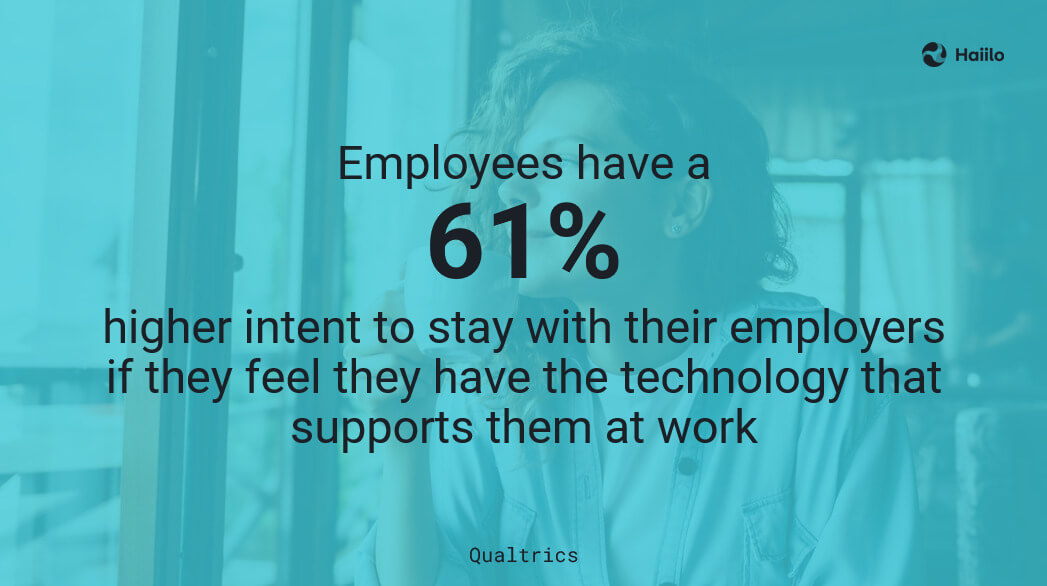
Furthermore, strong organizational alignment, cross-departmental collaboration, and effective workplace technology all contribute to a better overall employee experience. When people can do their jobs efficiently, understand their impact, and feel connected to the business, they are far more likely to stay and grow with the company.
In a smart work model, retention is not just about perks—it is about removing friction, enabling productivity, and creating an environment where employees can consistently perform at their best.
3. Better employer brand and talent attraction
Companies that have mastered smart working are also enjoying better employer brand and a stronger ability to attract high-quality talent.
Today’s candidates are not just looking at salary or job titles—they are evaluating how organisations support flexibility, autonomy, and overall employee experience. Employers that offer modern, adaptive ways of working signal that they trust their people and invest in long-term performance.
As a result, organisations that embrace smart work tend to stand out in competitive talent markets. Flexible working options, clear communication, and a strong digital environment all contribute to a more attractive employer value proposition.
Beyond attraction, a strong employer brand also reinforces credibility and consistency—helping organisations build a reputation as a place where people can grow, perform, and do meaningful work.
4. Less stress, higher morale, and better employee wellbeing
Flexible work arrangements play a key role in improving employee wellbeing. When people have more control over how they organise their work, they can better balance professional responsibilities with personal needs—reducing pressure and avoiding burnout.
In a smart work environment, this flexibility is supported by clear expectations, better communication, and more thoughtful use of technology. Instead of being overwhelmed by constant updates or interruptions, employees can focus on meaningful work while staying connected to their teams.
When employees feel supported and trusted, morale naturally improves. This is further reinforced by strong communication and motivation practices, which help create a more positive and engaged workplace culture.
Additionally, open and transparent communication is critical. When employees feel informed and included—rather than left in the dark—they are more likely to stay engaged, motivated, and aligned with the organisation’s goals. Over time, this leads to a healthier workplace culture where people can consistently perform at their best.
Smart work FAQ
1. What is smart work and how is it different from working hard?
Smart work focuses on achieving better results with less friction. Instead of relying on long hours or repetitive effort, it prioritises the right environment, tools, and ways of working to deliver outcomes efficiently. This includes clearer communication, better prioritisation, and removing unnecessary tasks. In practice, smart work means aligning people, processes, and technology so employees can stay focused on what actually drives value—not just staying busy.
2. Does smart work really improve productivity?
Yes—when implemented properly. Smart work reduces common productivity blockers like siloed teams, disconnected tools, and unclear priorities. By improving employee productivity through better workflows and communication, teams spend less time on low-value tasks and more time on meaningful work. The result is more consistent output, better quality work, and fewer delays caused by manual processes or misalignment.
3. What role does technology play in smart work?
Technology is a key enabler of smart work—but only when used correctly. The goal is not to add more tools, but to use the right ones in a way that simplifies work. Platforms like workplace technology and digital workplace solutions help centralise communication, reduce duplication, and make information easier to access. When systems are integrated, employees can collaborate more effectively and make faster decisions without switching between multiple platforms.
4. How can organisations start adopting smart work?
Adopting smart work starts with identifying where friction exists—whether in communication, processes, or tools. From there, organisations can introduce more flexible working arrangements, improve transparency, and invest in technology that supports collaboration. It is also important to create a culture where feedback flows both ways and employees understand how their work connects to business goals. Small, consistent improvements in how work is structured can quickly lead to measurable gains in productivity, engagement, and overall performance.
Check out our report on the synergy of multichannel communication and employee listening, featuring Forrester!


Find
your
flow
Bring communication, knowledge, and tools into one calm place — and help your people find their flow.