
Messy remote updates? Use virtual communication tools to align teams fast



More and more people across the globe depend on virtual communication to stay connected at work and in their personal lives. While remote work comes with real challenges, the benefits are often stronger. Flexibility, autonomy, and better work-life balance matter to employees, and many are not willing to give them up.
As a result, virtual communication is no longer a temporary solution. It has become the default way people share information, collaborate, and make decisions. To keep pace, teams must learn how to communicate clearly and choose the right virtual communication tools for different situations.
In this blog, we will cover some of the biggest struggles employees face with virtual communication, as well as the best practices for eliminating those issues. The goal is to help teams reduce friction, avoid misunderstandings, and work more effectively in digital-first environments.
About Virtual Communication and Its Emergence
Virtual communication refers to any interaction that happens through technology rather than face to face. It can take place in real time, such as video calls or live chats, or asynchronously, such as emails and recorded messages. Today, there are many ways to communicate virtually in the workplace, including video conferencing tools, email, instant messaging, and other employee communication and collaboration apps. Each channel serves a different purpose and requires different habits to work well.
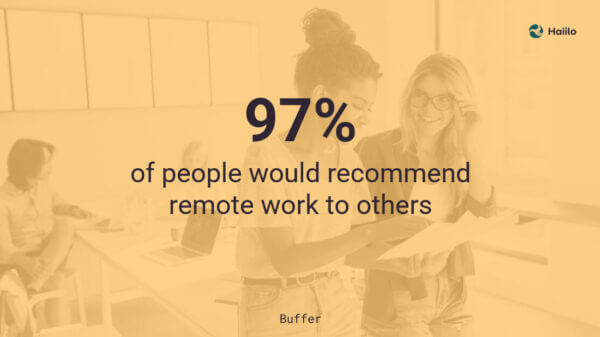
But how are companies addressing the downsides of remote work and virtual communications? What are some of the biggest challenges, and how can teams overcome them in practice? These questions matter more as distributed work becomes long-term.
Keep reading to find out how organisations are adapting their habits, processes, and virtual communication tools to reduce friction and improve collaboration.
💡 Related: 8 Tips To Boost Employee Communications At Your Company
Top 7 Virtual Communication Challenges to Tackle
In previously mentioned research, employees were asked what changed most after moving to remote work. Many pointed to shifts in how they communicate and collaborate. This highlights just how strongly daily work now depends on digital channels rather than in-person interaction.
But what specific challenges do employees face as a result of this change? Below, we break down one of the most common issues teams struggle with today.
Poor asynchronous communication
Virtual communication doesn’t work without asynchronous communication. Not every topic can or should be handled in real time. When teams rely too heavily on live meetings or instant replies, delays, overload, and frustration quickly follow.
Unstructured workplace communication can be detrimental to our performance. Employees spend large parts of their day switching between meetings, chats, and notifications instead of focusing on meaningful work. Important context gets lost, decisions are harder to track, and progress slows down.
Asynchronous communication helps reduce this pressure, but only when it is used intentionally. Teams need shared guidelines on response times, documentation, and channel use. Without clear rules and the right virtual communication tools, async communication can become just as chaotic as
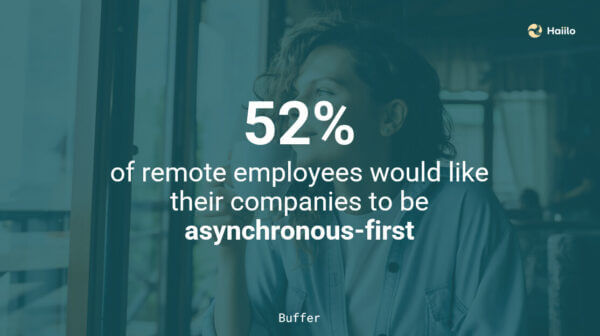
💡 If you are looking for inspiration, check out this great example by GitLab. It shows how clear documentation, written updates, and shared norms can make asynchronous work more effective at scale.
Information loss (poor access or information overload)
When it comes to remote work, we often hear that teams need to overcommunicate. In reality, it depends on how communication is done. If handled poorly, over-communication can lead to information overload, where important messages get buried under constant updates, notifications, and duplicate content.
Information overload is often the main reason why critical information gets lost in virtual communication. When everything feels urgent, nothing stands out. Instead of pushing more messages, a better approach is to make information more personalised and relevant to each role, team, or location.
Another common cause of information loss is poor access to knowledge. In many organisations, documents and updates are scattered across intranets, shared drives, emails, chats, project tools, and external platforms. This fragmentation makes it hard for employees to find the information they need at the right moment, especially in remote or hybrid settings.
Reducing information overload and improving access has a direct impact on employees’ wellbeing, engagement, and productivity. Clear ownership, searchable content, and well-chosen virtual communication tools help teams stay informed without feeling overwhelmed.
Cross-departmental silos
Strong team communication is essential for project success, but modern organisations also rely heavily on effective cross-functional collaboration. When teams work remotely, it becomes easier for departments to operate in isolation, using different tools, goals, and communication styles.
Recent research by the Project Management Institute shows that ineffective communication remains a major contributor to project failure, affecting outcomes in a significant share of projects. When information does not flow across teams, decisions slow down, priorities clash, and work is often duplicated.
Breaking down silos requires shared processes, transparency, and virtual communication tools that support visibility across departments. Without these foundations, remote and hybrid teams risk becoming disconnected, even when everyone is technically “communicating.”
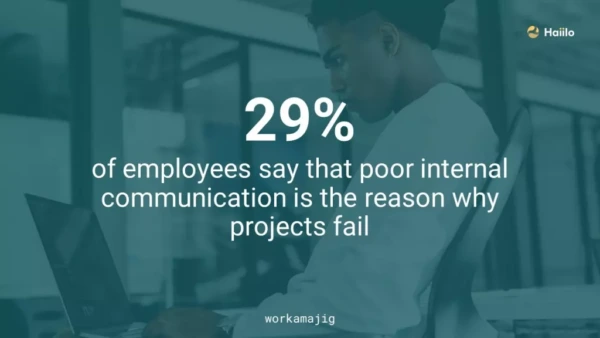
Virtual communication makes cross-departmental collaboration much harder, especially in fully remote organisations where employees rarely, if ever, meet face to face. Without informal touchpoints, teams often rely on fragmented updates and assumptions instead of shared context.
When people only interact through screens, it becomes easier to overlook other teams’ needs, constraints, and goals. This distance can quickly lead to misalignment, slower decision-making, and weakened teamwork across departments.
💡 Learn about https://blog.haiilo.com/blog/11-reasons-why-business-communication-is-crucial-for-companys-success/11 reasons why business communication is crucial for company success.
Sense of loneliness and lack of belongingness
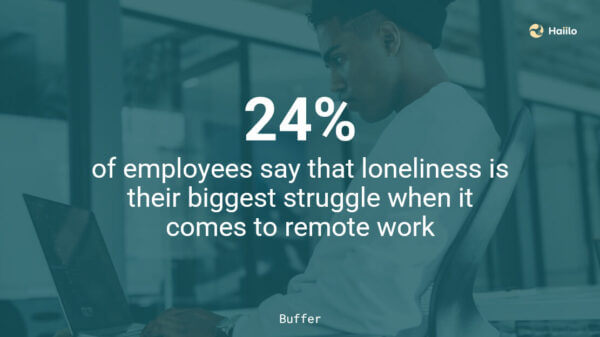
Virtual-only communication can increase a sense of loneliness at work. Recent studies show that remote employees are more likely to feel isolated when regular social interaction is missing, particularly in fully remote setups where informal contact is limited. This can affect wellbeing, motivation, and long-term engagement.
In traditional offices, water cooler chats happen naturally. These short, informal conversations give people space to talk about hobbies, interests, and everyday life, not just tasks and deadlines.
These moments help build trust and human connection. They also make collaboration easier, as people feel more comfortable asking questions or offering support.
When teams depend solely on virtual communication tools, these interactions often disappear. Scheduling a call just to chat can feel forced or awkward, so many employees skip it altogether.
At the same time, strong connections at work play a key role in https://blog.smarp.com/employee-retention-14-hacks-to-stop-employees-from-leavingretaining great talent. Research consistently shows that employees who feel connected to colleagues are more engaged and less likely to leave. When relationships are weak, turnover risk increases, even if flexibility and autonomy are high.
This is why organisations need to design virtual communication tools and routines that encourage informal interaction and a sense of belonging, not just task-focused updates.
Lack of organizational alignment
Organizational alignment has always been difficult to achieve, but virtual communication adds an extra layer of complexity. When teams work remotely, strategy updates, priorities, and decisions often reach employees in fragments or out of context.
Without regular, clear communication, people struggle to see how their daily work connects to the bigger picture. This creates confusion, slows execution, and weakens accountability across teams.
As Katpa CEO Alex Raymond puts it, alignment requires a shared understanding of the mission of the organization, as well as consistency across objectives and plans. That shared understanding is harder to build when communication is scattered across channels and tools.
To achieve real alignment, effective workplace communication is key. Shared KPIs alone are not enough. Teams need regular context, clear priorities, and the right virtual communication tools to understand why goals matter and how their work contributes to them.
Cultural differences and different communication skills
In remote environments, written messages carry much more weight. What sounds neutral or efficient to one person can come across as blunt or rude to someone from a different cultural background.
Understanding and recognising these cultural differences is essential in virtual teams. Communication styles vary widely when it comes to directness, feedback, humour, and hierarchy. Without awareness, misunderstandings can escalate quickly.
Many organisations rely on HR or internal communications teams to identify these differences and help employees adapt. Clear guidelines, shared norms, and training can prevent friction before it affects collaboration.
💡 Learn about the most important communication skills and how to improve your interpersonal communications skills.
Decrease in employee engagement
All the challenges linked to virtual communication can lead to lower employee engagement. Poor alignment, information overload, weak relationships, and unclear expectations all shape how people experience their work.
We also know that employee experience directly influences motivation and engagement. When communication feels confusing or impersonal, people are less likely to feel committed or energised.
The biggest challenge in virtual workplaces is visibility. Without in-person interaction, it becomes harder for managers and leaders to notice early signs of disengagement. By the time issues surface, they may already have affected performance, morale, or retention.
6 Ways to Make Virtual Communication in the Workplace Work
Now that we have covered some of the biggest reasons why virtual communication can be challenging, let’s take a closer look at how to make it more efficient and sustainable in everyday work.
Set some communication rules and communicate best practices
Organisations that have recently shifted to virtual communication are often struggling to adapt. Employees who are used to frequent in-person meetings may have a hard time adjusting to remote work and new ways of collaborating. Clear rules and shared best practices can make a meaningful difference in eliminating common communication barriers.
It is the employer’s responsibility to enable people and help them operate confidently in virtual environments. Without guidance, teams often fall back on habits that no longer work. Endless meetings and constant notifications can quickly lead to a loss of focus and productivity.
Start by setting simple expectations. Define which channels to use for which topics, when meetings are truly needed, and how quickly people are expected to respond. You could also introduce a regular internal newsletter focused on remote work tips, test a no-meeting day, or create a shared space where employees exchange their own advice and examples.
📹 Check out our Masterclass about how to eliminate communication barriers at work!
Make content more relevant (hyper-personalisation)
Information overload and irrelevant updates are among the main reasons why employees miss important messages and why organisational communication breaks down. When people receive too much content that does not apply to them, they stop paying attention.
This is why organisations need to personalise workplace communication and move towards hyper-personalised content. Employees are far more likely to read, understand, and act on messages that feel relevant to their role and situation.
Doing this at scale requires the right technology. Without tools that support employee filtering and segmentation, personalisation quickly becomes manual and inconsistent. Content should be tailored based on job role, team, location, language, and interests.
Only then can organisations reliably deliver the right message to the right person at the right time using their virtual communication tools.
Enable seamless team (and cross-functional) collaboration
Teams and departments need dedicated virtual workspaces and channels where they can collaborate, share updates, and build relationships. Mixing project work, announcements, and casual conversation in the same place often leads to confusion and missed context.
Many remote employees want more opportunities to connect with colleagues, both to get work done and to feel part of a team. When collaboration tools are fragmented or poorly structured, people disengage or rely on private messages instead of shared spaces.
Clear ownership, visible discussions, and shared documentation help teams work across functions without constant meetings. The easier it is to find conversations and decisions, the easier it becomes to collaborate effectively in virtual environments.
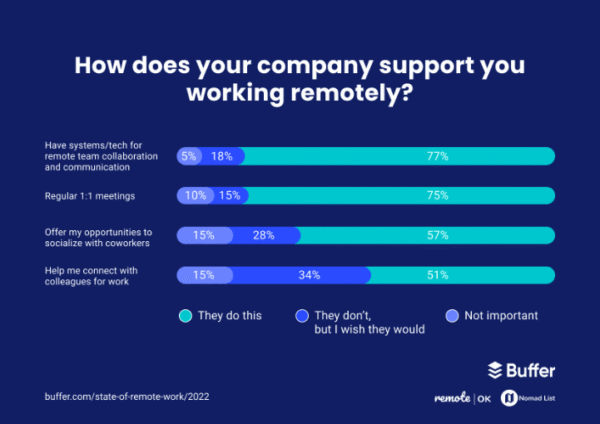
While popular instant messaging and chat platforms help teams communicate better, they are mainly designed for quick conversations. On their own, they offer limited support for structured collaboration, long-term knowledge sharing, or complex project management.
This is why virtual communication requires a more structured approach to planning, execution, and follow-up. Without clear systems in place, decisions get lost in chat threads, context disappears, and teams struggle to track progress over time.
Access to the right technology is critical here. Virtual communication tools should support clarity, documentation, and visibility, not just speed.
Provide an intuitive and easily accessible central content hub
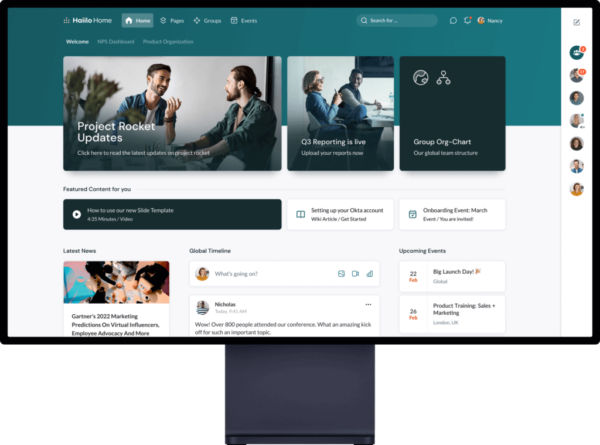
People in your organisation should never feel left in the dark. Even without a physical office, you should try to recreate one digitally—a central place where employees know they can find trusted information, updates, and resources.
This is where modern social intranets play a key role. They give employees a single, intuitive hub to stay informed, access documents, share knowledge, engage with company initiatives, and connect with colleagues across teams and locations.
A well-structured content hub reduces confusion, limits information silos, and supports more consistent virtual communication—especially in remote and hybrid workplaces.
Show empathy and listen carefully
One of the most effective ways to improve virtual communication and employee engagement is by asking employees directly for their feedback. In remote and hybrid workplaces, regular feedback loops are no longer optional—they are essential for understanding how people are really doing.
Short, focused surveys help capture employees’ current state of mind, surface concerns early, and collect practical ideas for improvement. They also signal that leadership is listening, which builds trust over time.
However, asking without acting is worse than not asking at all. Feedback only creates value when it leads to visible change. To act effectively, you first need to measure consistently and transparently.
Measure and act!
Many organisations already run regular employee surveys. The real impact, however, comes from analysing the results and making data-driven decisions for improvement.
When feedback analysis is done manually, it often becomes slow and inconsistent. This is why insights get delayed or ignored, and employees feel unheard.
Modern employee engagement technology makes this process faster and more reliable. It helps teams identify patterns, prioritise actions, and close the feedback loop—an essential step for improving virtual communication tools and everyday collaboration.
Interesting Facts About Virtual Communication at Work
- Virtual meetings and messaging are now a core part of daily work for most employees, especially in remote and hybrid environments.
- Many employees feel that meetings are overused and could often be replaced with clearer written updates or asynchronous communication.
- The biggest challenges with virtual meetings often relate to focus, clarity, and effective use of technology rather than the format itself.
- Technical friction such as connectivity or audio issues can quickly disrupt meetings.
- Unclear expectations around how to use tools often reduce participation.
- Poor virtual meeting etiquette, including multitasking and lack of engagement, lowers meeting quality.
The Role of Technology in Enabling Virtual Communication
Throughout this blog, we highlighted the role of technology in enabling virtual communication across organisations.
Without the right set of communication tools, it is difficult to make remote work truly work. Building a digital workplace where employees feel connected, informed, engaged, and productive is challenging—but essential for long-term success.
Employee engagement platforms like Haiilo can help you:
- Create and distribute hyper-personalised content employees actually want to read
- Share timely updates while avoiding information overload
- Reach every worker with critical information through mobile-first communication
- Offer a central collaboration hub to create, store, and access key documents quickly
- Keep teams connected with intuitive chat and collaboration features
- Integrate smoothly with the rest of your workplace tech stack
- Collect meaningful employee feedback and turn insights into action
Frequently asked questions about virtual communication tools
What are virtual communication tools, and what problems do they solve?
Virtual communication tools are digital platforms that help employees communicate, collaborate, and stay informed without being in the same physical space. They replace ad‑hoc conversations with structured, searchable communication. Used well, they reduce confusion, support remote and hybrid work, and help teams stay aligned. Tools that go beyond chat—such as social intranets or employee communication platforms—are especially useful for sharing updates, knowledge, and context across the organisation. This is critical when teams are trying to improve collaboration and avoid the silos described in breaking down organisational silos.
How do virtual communication tools support cross‑functional collaboration?
Cross‑functional work often fails when information is scattered across tools and teams. Virtual communication tools help by creating shared spaces where updates, documents, and discussions are visible and accessible. Instead of relying on private messages or meetings, teams can collaborate asynchronously and keep decisions documented. This works best when communication is part of a broader multi‑channel communication strategy, where different channels are used intentionally based on urgency and purpose.
How can we avoid information overload when using virtual communication tools?
Information overload usually comes from sending the same message to everyone, regardless of relevance. Effective virtual communication tools allow content to be targeted by role, location, or team. This ensures employees only see what matters to them. A central hub also helps people find information when they need it, instead of relying on constant notifications. Articles like workplace technology and best employee apps explain why consolidation and relevance matter more than adding more tools.
What should we look for when choosing virtual communication tools?
Look for tools built specifically for internal communication, not just messaging. Key features include a central content hub, mobile access, integrations with your existing tech stack, and support for employee feedback. Platforms like a social intranet or dedicated employee communications solutions help organisations keep people informed and engaged. If your goal is consistent alignment, choosing tools designed for internal communication will deliver far better results than chat apps alone.
Curious to learn more? Check out our report on IC trends in 2023

Find
your
flow
Bring communication, knowledge, and tools into one calm place — and help your people find their flow.