
How to Measure DEI Success [Metrics & Best Practices]



Is it possible to measure the success of diversity, equity, and inclusion in your organization? While this is not easy, it’s also not impossible. In fact, many organisations struggle because DEI outcomes can feel intangible or long‑term, making progress harder to spot without the right approach.
This is where clear goals, consistent data collection, and well-defined DEI metrics come into play. With the right mix of qualitative and quantitative indicators, you can move beyond good intentions and start understanding what is actually working, what is stalling, and where employees may be experiencing barriers.
Although organisations invest significant time and resources into DEI initiatives, many leaders still lack confidence in how effective those efforts really are. By using proven best practices, meaningful metrics, and supportive technologies, you can measure DEI success more reliably, track progress over time, and identify concrete areas for improvement that drive lasting change.
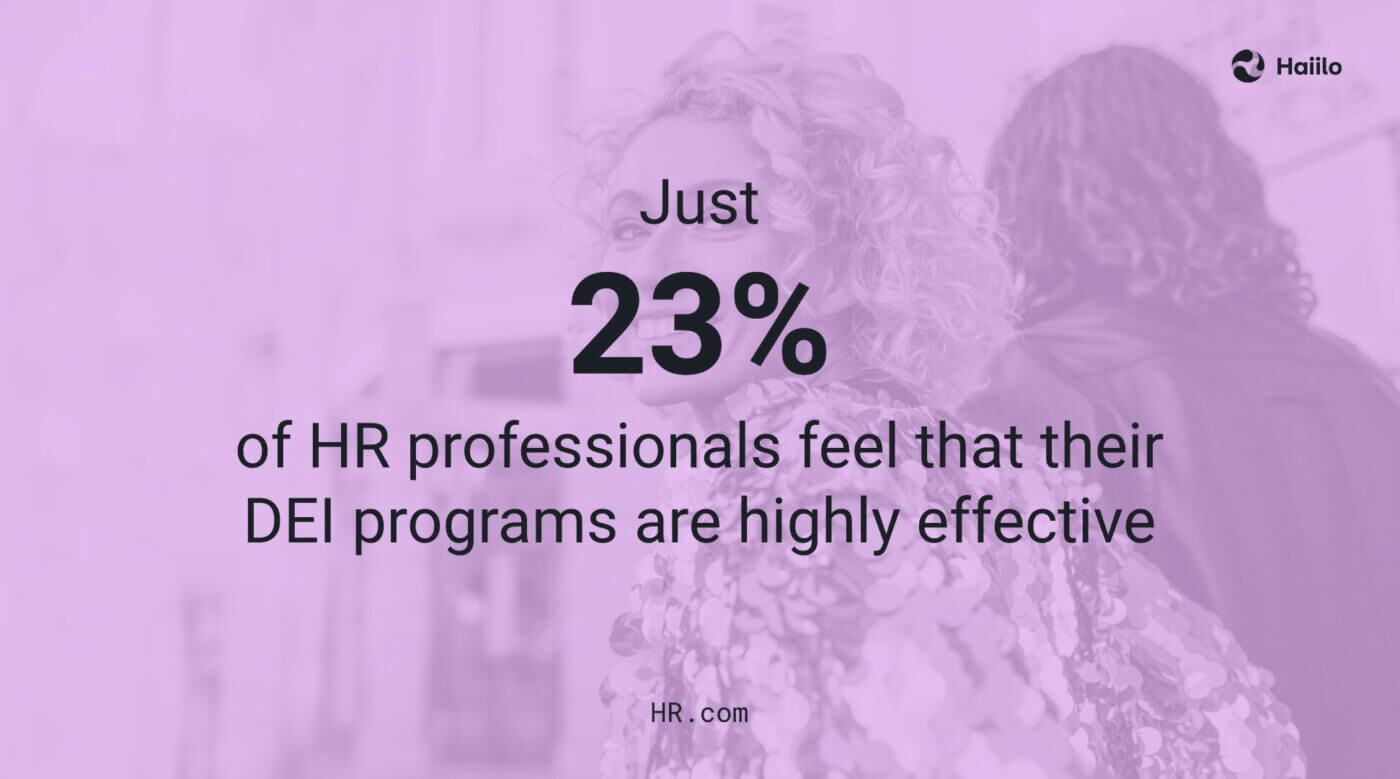
This aligns with Deloitte’s finding that more than 20% of employees believe their organization is on the right DEI path and mainly needs to keep pushing on current efforts, while 70% of them have identified several different opportunities for their companies and leaders to consider.
Why Measuring DEI Matters
Why is it so important to understand the success of your organization’s DEI initiatives? Without measurement, DEI efforts often rely on assumptions, anecdotes, or isolated success stories rather than a clear picture of real progress.
Research has shown that engagement and inclusion are separate but closely related concepts. In particular, studies suggest that employee engagement is an outcome of diversity and inclusion. While employees who feel highly included in a workplace with low commitment to diversity report higher engagement levels (67%) than those in workplaces with high diversity but low inclusion (20%), the strongest results come from organisations that prioritise both. A combined focus on diversity and inclusion delivers the highest levels of engagement (101%), reinforcing the need to look at DEI holistically rather than in silos.
Like any other workplace initiative, diversity, equity, and inclusion should be measured in a way that clearly shows its impact on overall business success and performance. This is where DEI metrics play a critical role, helping organisations connect cultural progress with outcomes such as engagement, retention, and productivity.
However, with DEI this is often easier said than done. Cultural change takes time, and many outcomes are influenced by factors that are not immediately visible or easy to quantify.
As nicely explained by Laura Mills, Head of Early Career Insights at Forage:
“Data is empirical evidence that you’re making progress — or not making progress — towards your DEI goals. It helps you understand your baseline, but also what’s possible. But to make meaningful progress, you need to understand the landscape you’re working within first.”
When organisations are first getting started with DEI activities, they are most likely to set simple talent acquisition or workforce composition goals, such as increasing the candidate pipeline for a particular underrepresented group or improving representation at specific levels.
While this is a good starting point, the impact of DEI can and should go much further. By expanding measurement beyond representation and applying more nuanced DEI metrics, companies can make a more meaningful, long‑lasting impact by focusing on equity and inclusion — ensuring that people not only join the organisation, but feel supported, valued, and able to succeed once they are there.
Make your DEI initiatives more impactful with Haiilo!
How to Measure the Level and Impact of DEI in Your Organization
There are different ways to measure the current state of DEI in your organization and understand its impact on the overall business success.
Let’s take a deep dive.
1. Workforce demographics
Start measuring diversity in your organization by analyzing your current workforce demographics. Track the composition of employees across different dimensions such as race, gender, age, nationality, disability, and sexual orientation at all levels (entry-level, middle management, senior leadership).
2. Recruitment pipeline
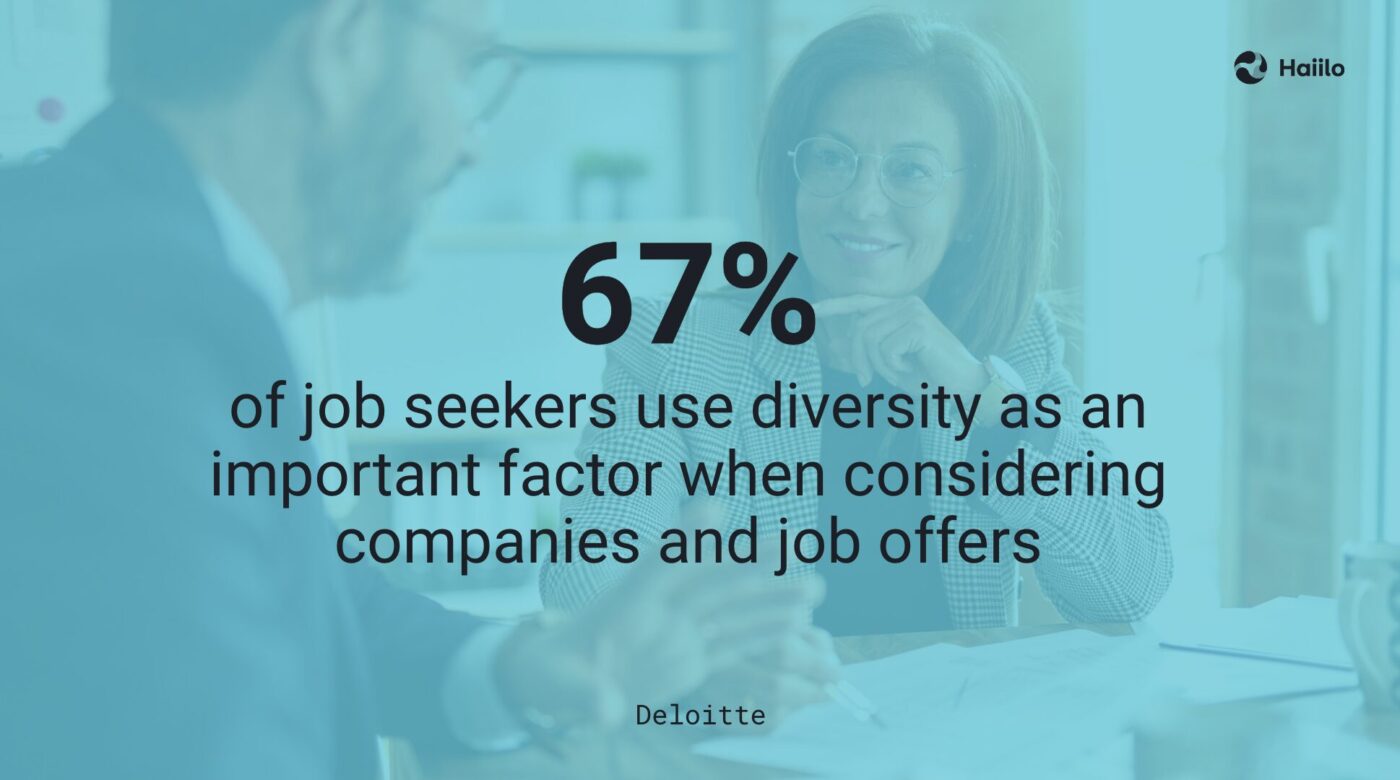
According to Deloitte, 67% of job seekers use diversity as an important factor when considering companies and job offers.
Naturally, companies that invest in DEI are more likely to attract diverse talent to their organization.
So understanding the diversity of your recruitment pipeline is critical for ensuring the right level of diversity in your organization. If your talent pool is not diverse, you may want to consider additional channels for promoting your job openings or launching various DEI Employer Branding campaigns to attract more diverse talent.
3. Turnover rates
Instead of just tracking employee turnover on a company or departmental level, put more effort into understanding turnover among different employee groups.
If there are commonalities or outliers, this may be a good sign of a lack of diversity, equity, and inclusion in your organization.
4. Employee engagement and performance
According to Deloitte, when employees think their organization is highly committed to, and supportive of diversity, and they feel highly included, then they are 80% more likely to agree that they work in a high-performing organization.
Equity and inclusivity directly impact employee morale, motivation, and engagement, which usually results in better employee performance.
5. Compensation and benefits equity
Fair pay, compensation, and benefits are critical for ensuring a good employee experience. To ensure compensation and benefits policies in your organization are fair, make sure you conduct pay equity analyses to identify disparities in compensation across different demographic groups.
💡 Related – Diversity and Inclusion in the Workplace: Benefits + Best Practices
6. Access to training and career progression opportunities
Do employees in your organization have equal access to training, advancement, and career progression opportunities?
Are these opportunities communicated to everyone?
To measure and analyze equal access to career progression, you can ask yourself these questions:
- How many people from diverse backgrounds are making it to leadership roles?
- How long is it taking them to do so?
- Is there a difference between the average career trajectory of white employees and employees of other backgrounds?
7. Absenteeism
Previously mentioned research showed that the more included employees feels, the more likely they are to be at work (i.e. reducing the cost of absenteeism). More specifically, the data from one organization demonstrated that if just 10% more employees feel included, the company will increase work attendance by almost one day per year (6.5 hours) per employee.
8. Sense of belonging
Employees’ sense of belonging in the workplace is a good indicator of their perception of equity and inclusivity in your organization. Make sure that you regularly distribute employee pulse surveys to understand the sense of belongingness in the workplace.
💡 Related: Top 30 Diversity and Inclusion Survey Questions
9. Incident reports
Dig deeper into the incident reports related to discrimination and harassment in your organization. Look for anomalies to identify differences across various dimensions such as race, gender, age, disability, and sexual orientation.
10. Participation in DEI initiatives
If your organization is regularly promoting various diversity, equity, and inclusion initiatives, make sure that you track your employees’ engagement with them.
Those who are most engaged could become your DEI ambassadors and help you amplify the impact of your internal DEI communications strategy.
Best Practices for Measuring Diversity, Equity, and Inclusion
Measuring and understanding the impact of DEI is complex because DEI has a direct and indirect impact on dozens of people and business-related KPIs.
However, these steps can really help you get a better understanding of the impact and benefits of DEI in your organization.
Set clear goals
In order to understand the impact of DEI on your organization, it’s important that you set up clear DEI goals for your organization.
Some examples of the goals may be:
- Increase the number of job applications from [a specific race, gender, age, nationality, disability, and sexual orientation]
- Increase the number of promotions for [a specific race, gender, age, nationality, disability, and sexual orientation]
- Hire X% more women in leadership roles in the next 12 months
- Increase the sense of belongingness in the workplace by X%
- Improve employee engagement by X%
- Increase employee engagement with DEI-related internal content by X%
Benchmark
To understand the current state of diversity, equity, and inclusion in your organization, you must perform both internal and external benchmarking.
- Internal benchmarking: Compare DEI metrics over time to assess progress and identify trends in your organization. For example, if your goal was to have 50% of women in leadership roles, benchmark this goal against the current state of female leaders in the company.
- External benchmarking: Compare your organization’s DEI metrics against industry standards and best practices to identify areas for improvement.
Ensure internal transparency
Make sure that you consistently share your DEI metrics and trends with the entire organization. Such transparency will help you build trust with employees and show them that DEI is on top of your organization’s goals and priorities.
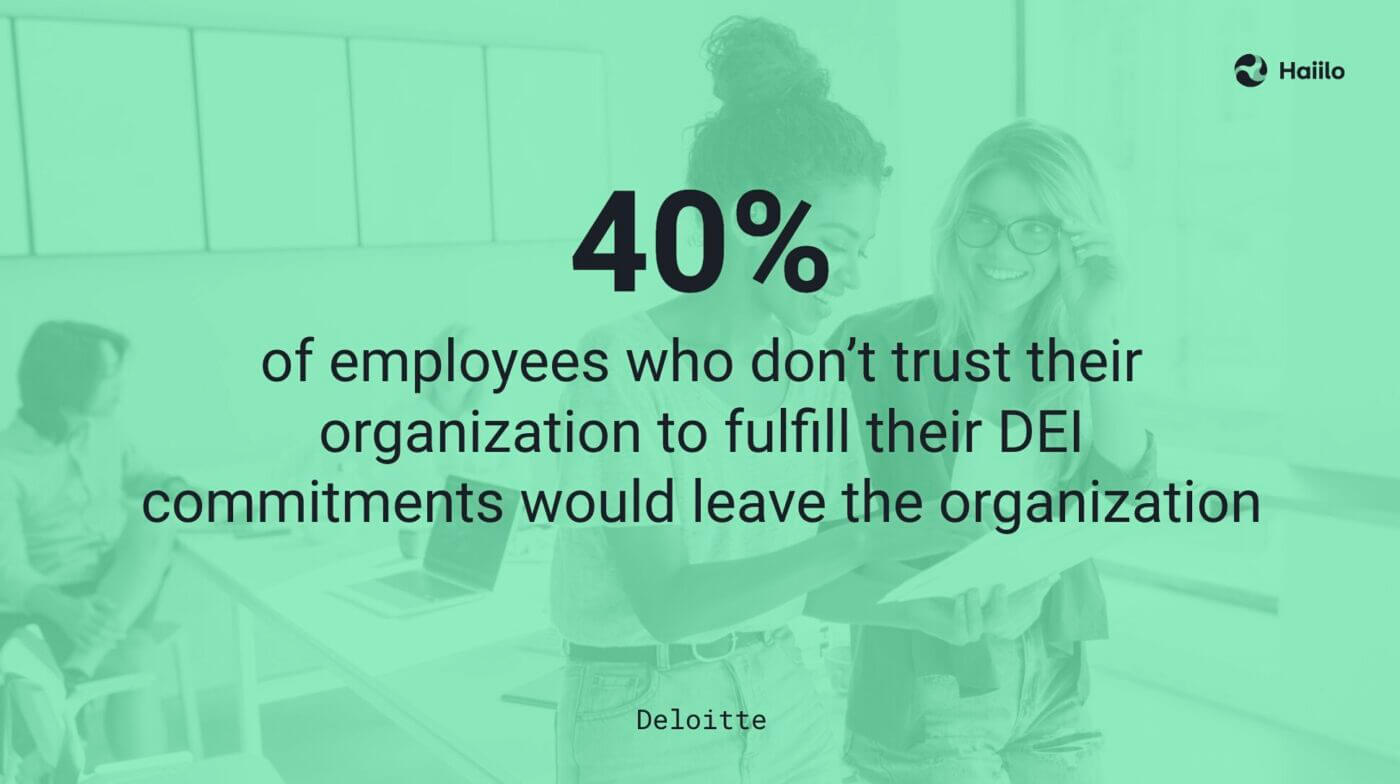
Unfortunately, Deloitte’s DEI trust research showed that 40% of employees who don’t trust their organization to fulfill their DEI commitments would leave the organization.
Transparency can also play a key role in improving your DEI metrics. When employees clearly understand your DEI goals and the progress being made, they are more likely to feel involved and accountable. For example, if your goal is to hire more people from a specific gender, age, or nationality, you can openly communicate this ambition and motivate existing employees to refer more candidates from those groups. This not only supports your hiring objectives, but also helps embed DEI ownership across the organisation.
Measure the impact of your DEI communications strategy
Your internal communications strategy plays an essential role in improving the impact of DEI in your organization and achieving better organisational alignment. IC and HR professionals are not only responsible for promoting DEI and ensuring transparency in the workplace, but can also act as a driving force behind demonstrating the ROI of DEI initiatives and internal campaigns.
By applying the right DEI metrics to internal communication efforts, organisations can move beyond assumptions and gain clearer insight into how messages are received across different employee groups. This helps ensure that DEI communications are not just visible, but also understood and trusted.
With Haiilo, internal communications departments can understand how their DEI content and campaigns resonate with various internal audiences, rather than relying on one‑size‑fits‑all messaging.
For each DEI campaign, you can set read, reach, and alignment targets to track awareness, engagement, and message relevance. For example, if your goal is to increase visibility of career progression opportunities among different employee groups, defining and measuring these targets is critical for understanding where gaps still exist.
In addition, each DEI campaign can be supported with a short survey or simple poll to capture employees’ direct feedback. This qualitative input adds important context to quantitative DEI metrics and helps explain why certain messages resonate more strongly than others.
Together, data and analytics around alignment scores, interacting users, and content perceptions provide valuable insights and actionable recommendations. These insights enable organisations to continuously refine their DEI communications and improve outcomes over time.
Check out our report on the synergy of multichannel communication and employee listening, featuring Forrester!


Frequently Asked Questions
What are DEI metrics and why are they important?
DEI metrics are the data points organisations use to track progress across diversity, equity, and inclusion. They help move DEI from intention to impact by showing what is improving, where gaps still exist, and how initiatives affect employees over time. Without clear DEI metrics, it’s difficult to understand whether actions are driving meaningful change or simply creating activity without outcomes.
Which DEI metrics should organisations focus on first?
Most organisations start with representation and hiring data, but effective DEI metrics go further. Engagement, inclusion sentiment, internal mobility, access to opportunities, and employee voice are just as important. Using tools like Haiilo Insights & Analytics helps combine quantitative data with qualitative feedback, giving a clearer picture of how different employee groups experience the workplace.
How can internal communications improve DEI metrics?
Internal communications play a critical role in shaping inclusion and transparency. Measuring read rates, reach, and alignment across DEI campaigns helps organisations understand whether messages are landing with different audiences. Platforms such as Haiilo Employee Communications and the Haiilo Social Intranet make it easier to track engagement, gather feedback, and adjust communications to better support DEI goals.
How often should DEI metrics be reviewed and shared?
DEI metrics should be reviewed regularly, not just annually. Ongoing measurement allows organisations to spot trends early and course‑correct when needed. Sharing progress internally also builds trust and accountability. Publishing updates through internal channels, supported by analytics and employee listening tools, helps ensure DEI remains a continuous focus rather than a one‑off initiative.
Find
your
flow
Bring communication, knowledge, and tools into one calm place — and help your people find their flow.