
The Ultimate Management Communication Guide



Yet many employees still don’t feel empowered enough to raise concerns, share ideas, or suggest new solutions. In most cases, the way managers drive communication within their teams is the biggest culprit. When messages feel inconsistent, rushed, or one-directional, employees quickly disengage and stop contributing beyond the basics.
This is why management communication matters so much. Employees rely heavily on their direct managers to interpret information, provide context, and explain what decisions actually mean for their day-to-day work. When that translation doesn’t happen clearly, people fill the gaps themselves—often with assumptions, rumours, or incomplete information.
It’s clear that management communication is one of the most critical aspects of every business, with a direct impact on culture, trust, and performance.
Building trust in the workplace
Trust doesn’t come from polished leadership statements alone. It’s built in everyday interactions between managers and their teams. Employees are far more likely to trust their organisation when their manager communicates honestly, explains decisions openly, and follows through on what they say.
Effective management communication plays a critical role in building trust because it makes leadership visible and human. When managers share context, acknowledge uncertainty, and invite dialogue, they strengthen employee–manager relationships and create a safer environment for feedback and discussion.
Driving employee engagement and success
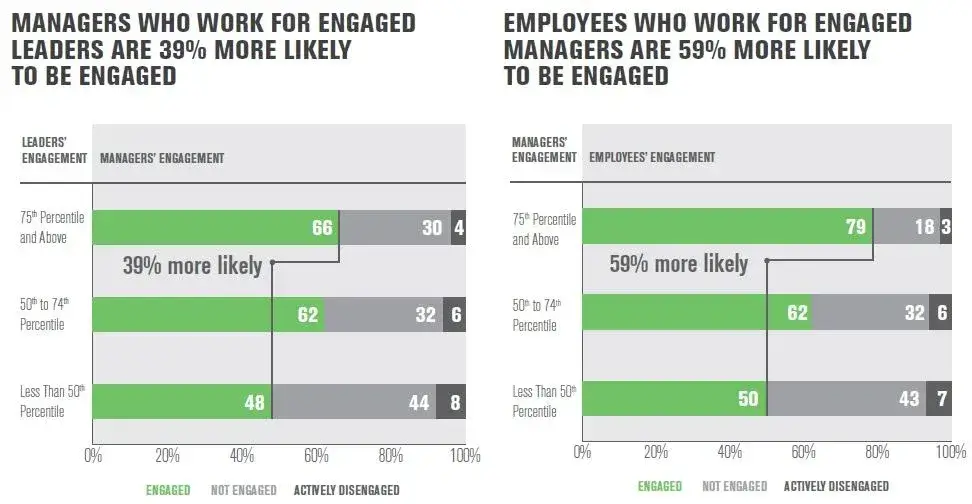
Managers are also central to employee engagement. Helping people understand where the organisation is heading—and what that means for their role—requires clear, consistent communication. Coaching, feedback, and performance conversations all depend on managers being present, engaged communicators.
When managers themselves feel disconnected or overwhelmed, engagement drops quickly across their teams. Engagement cascades through the organisation: managers who communicate with clarity and purpose create teams that are more motivated, aligned, and focused on outcomes. Strong communication management supports this by giving managers the structure and tools they need to stay engaged—and bring their teams with them.
Improving employee collaboration and productivity
Poor communication remains one of the most common blockers to effective collaboration. When information is unclear, delayed, or inconsistent, teams struggle to coordinate work, make decisions, and move projects forward. Misunderstandings multiply, handovers break down, and valuable time is lost resolving issues that could have been avoided with clearer communication.
Because managers are responsible for keeping their teams connected and informed, they also have a direct influence on employee collaboration and productivity. Effective communication management helps managers set shared expectations, align priorities across roles, and remove friction between teams. When employees understand what needs to be done, why it matters, and how their work fits into the bigger picture, collaboration becomes smoother and productivity follows naturally.
Ensuring workplace alignment
Workplace alignment depends on employees understanding the organisation’s direction and feeling confident about where things are heading. When leadership communication lacks clarity or consistency, people struggle to see how their work connects to broader goals. This often results in disengagement, uncertainty, and misaligned effort across teams.
Strong management communication plays a critical role in closing this gap. By translating strategy into clear, relevant messages, managers help employees understand priorities, navigate change, and stay focused on what matters most. As part of a wider communication management approach, this alignment ensures teams move in the same direction—reducing confusion, improving decision-making, and strengthening long-term performance.
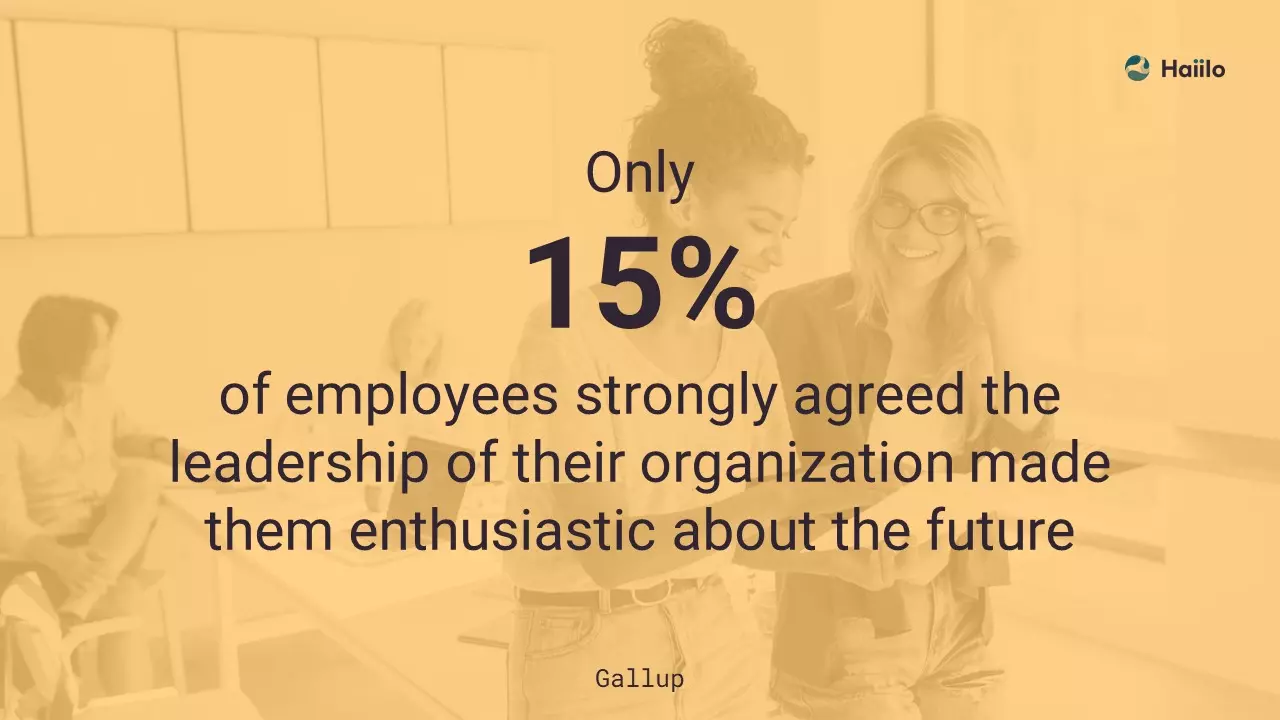
Effective management communication is what enables employees to work towards the same organizational goals. When managers communicate priorities clearly and consistently, employees understand what success looks like and how their work contributes to the bigger picture. This shared understanding is a core outcome of strong communication management and a prerequisite for sustained performance.
Attracting new talent and enabling brand advocates
When employees work with managers who communicate openly and effectively, they are far more likely to speak positively about their experience. Over time, this turns employees into advocates and brand ambassadors—not because they are asked to be, but because they genuinely believe in the organisation and its leadership.
Employee voices are often more trusted than formal corporate messaging. Teams led by strong communicators are therefore better positioned to attract new talent, strengthen employer reputation, and extend brand awareness organically. Management communication plays a key role here by shaping everyday experiences that employees naturally want to share.
Retaining high performers
Managers who invest in clear, consistent communication are much more likely to retain their highest performers. High achievers want context, feedback, and a clear understanding of how their work makes an impact. When those needs aren’t met, frustration builds quickly.
Informed employees with strong relationships with their managers tend to be more satisfied and committed. They understand how their contributions support organisational success and feel recognised for their efforts—two factors that significantly influence long-term retention.
Driving innovation and creativity
Innovation depends on employees feeling safe to challenge ideas, suggest improvements, and speak up early. When communication is blocked or slowed at management level, new ideas struggle to surface and momentum is lost.
Managers play a critical role in removing these barriers by encouraging empowerment, share of voice, and two-way communication. Creating regular opportunities for discussion and feedback helps teams move past inertia and unlock creativity across the organisation.
📚 Learn more about why managers should encourage bottom-up feedback from their employees.
Improving change management
Clear, consistent management communication is one of the strongest foundations for successful change. During periods of transformation, employees look to their managers for clarity, reassurance, and practical guidance on what is changing—and what is not.
Strong communication management helps managers explain the “why” behind change, reinforce key messages over time, and address uncertainty before it turns into resistance. When managers are equipped to communicate change effectively, organisations are far better prepared to sustain momentum and reduce fatigue across teams.
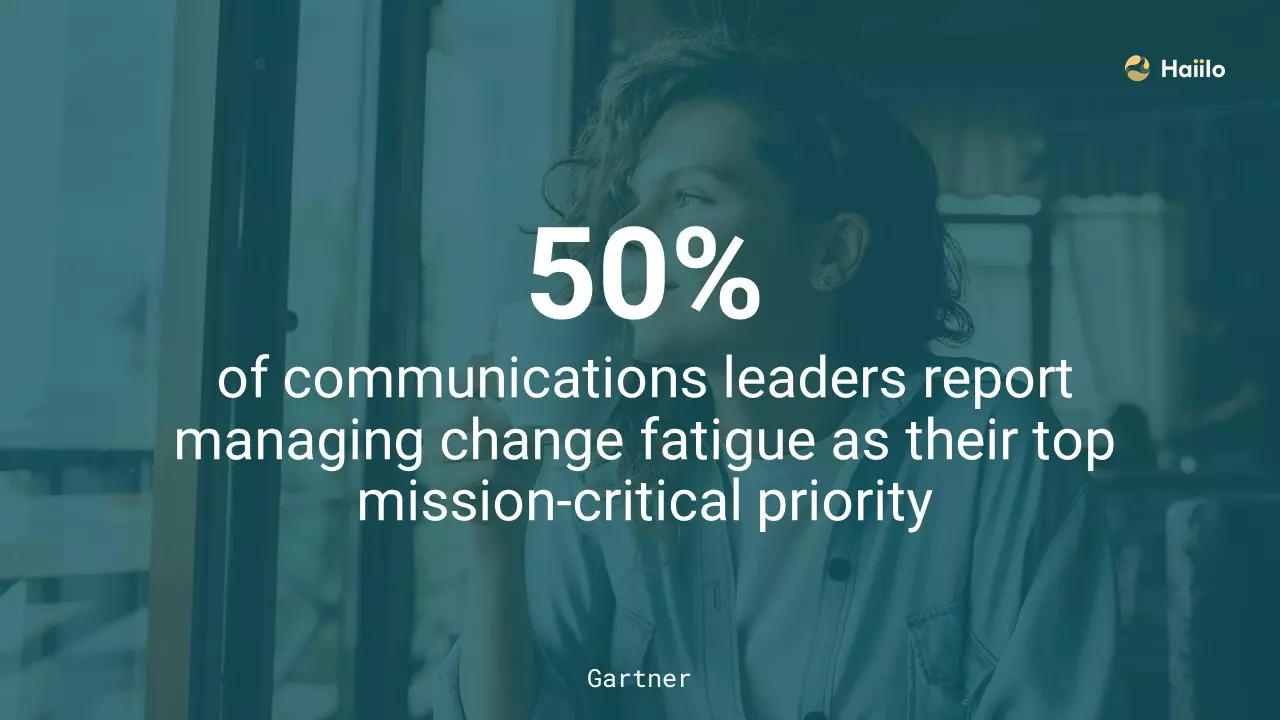
Key to this is an effective change communications strategy that delivers the right information, context, and resources at the right time—and enables managers to act as change accelerators within their teams. Managers are the primary link between organisational strategy and employees’ day-to-day reality, which makes their role in change communication especially critical.
Because most people are naturally resistant to change, managers are responsible for securing employees’ buy-in by clearly explaining not just what is changing, but why it matters. This requires consistent messaging, open dialogue, and the ability to address concerns early before uncertainty turns into resistance.
A strong change communication strategy focuses on aligning employees with business goals and direction. Above all, it should answer the question every employee is asking: “What’s in it for me?” When managers can clearly connect change initiatives to individual impact, adoption becomes far more likely.
Ensuring workplace compliance and safety
Effective management communications also play a vital role in keeping employees safe and compliant. Clear, timely communication helps ensure that people understand expectations, follow procedures correctly, and respond appropriately to risks or incidents.
When managers communicate policies, guidelines, and safety updates consistently, employees are more likely to take them seriously and act accordingly. As part of broader communication management, this reduces confusion, supports accountability, and helps organisations maintain high standards of workplace safety—especially in fast-moving or high-risk environments.

However, building a strong compliance culture that is truly embedded in everyday behaviour is not an easy task. Policies alone are not enough—employees need to understand expectations, see them reinforced consistently, and know how compliance applies to their specific roles and situations.
Luckily, employee communications platforms like Haiilo Stories can make communicating with staff easier and more streamlined. From announcing new policies and critical updates to reinforcing expected behaviours through engaging, visually rich communication campaigns, managers can ensure compliance messages are clear, visible, and repeated over time. This consistency is a key pillar of effective communication management and helps turn rules into habits.
Top 15 Management Communication Skills
In this blog, we’ve explored why management communication matters and which best practices help managers improve communication efforts with their teams. To wrap up, here’s a clear overview of the most important communication skills and characteristics that successful managers consistently demonstrate:
- Active listening
- Making information relevant
- Coaching and constructive feedback
- Delivering timely information
- Defining clear purpose and direction
- Setting and communicating clear goals
- Communicating persuasively
- Using storytelling to communicate ideas
- Ensuring alignment among team members
- Empowering employees to speak up and innovate
- Motivating and engaging employees through authentic communication
- Understanding different communication channels and how employees use them
- Recognising employees’ communication preferences and styles
- Measuring the impact of management communications
- Enabling easy collaboration among team members
Frequently asked questions about communication management
What is communication management and why does it matter for managers?
Communication management is the structured way managers plan, deliver, and reinforce messages so employees understand priorities, decisions, and expectations. It matters because most employees experience the organisation through their manager, not through leadership emails or intranet announcements. When communication management is weak, messages get distorted, goals feel unclear, and engagement drops. When it’s done well, managers provide clarity, context, and consistency—helping teams stay aligned, confident, and focused on what matters most.
How can managers improve communication management without adding more noise?
The goal isn’t to communicate more—it’s to communicate better. Managers should focus on relevance, timing, and channel choice. That often means reinforcing key messages instead of sharing constant updates, and using formats employees actually engage with. Tools that support targeted updates, mobile access, and multi-channel distribution make this much easier. For example, a central employee communications platform helps managers publish once and reach employees where they already work, without duplicating effort or creating overload.
What role does technology play in effective communication management?
Technology enables consistency and reach at scale. Without it, managers rely on email chains, meetings, and ad-hoc messages that are easy to miss or misinterpret. Modern platforms support structured communication management by combining news, feedback, and discussion in one place. A well-designed social intranet also encourages two-way communication, making it easier for employees to ask questions, share ideas, and stay connected—especially in hybrid or frontline environments.
How can managers measure whether their communication is actually working?
Effective communication management is measurable. Managers can look at reach, engagement, and interaction to understand what employees are reading, responding to, or ignoring. These insights help managers adjust tone, format, and timing over time. Linking communication performance to outcomes—such as alignment during change or engagement during busy periods—also makes it easier to improve continuously rather than relying on assumptions.
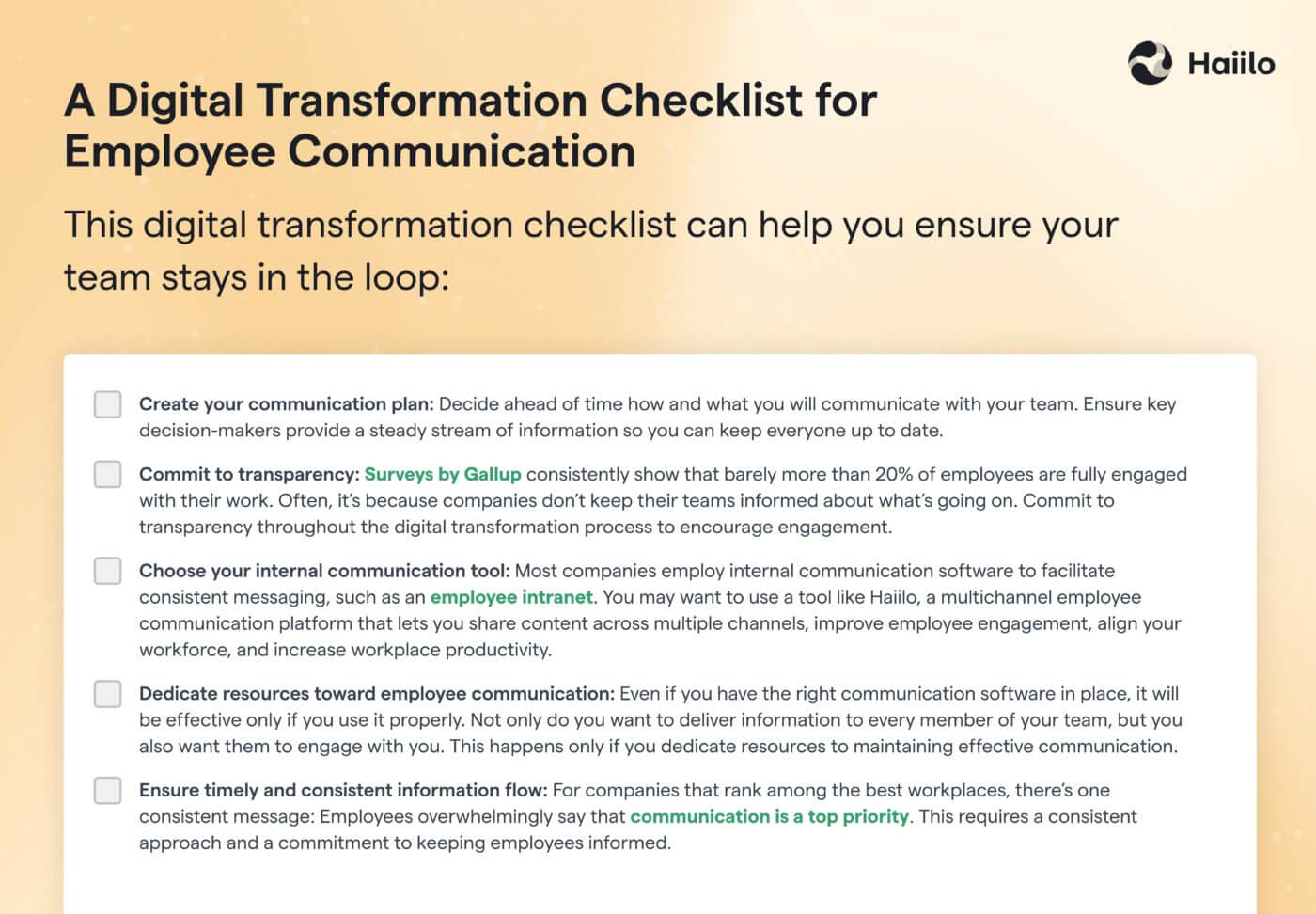
Digital transformation is easy with our simple checklist. Get it now!
Find
your
flow
Bring communication, knowledge, and tools into one calm place — and help your people find their flow.