
Internal podcasting falling flat? here’s how to make it actually engage employees



Internal company podcasts are a great way to engage employees, encourage employee share of voice, and keep the workplace informed about important company updates.
In addition, internal podcasting gives organizations a flexible and accessible format to communicate with employees, no matter where they work. Unlike long emails or static updates, podcasts are easy to consume on the go, which makes them especially valuable for remote and frontline teams. Employees can listen during their commute, between tasks, or whenever it fits their schedule, making communication more convenient and consistent.
The popularity of podcasts has been increasing steadily over the past decade, and they have become a preferred format for sharing insights, stories, and updates. Many marketers and thought leaders use podcasts to build stronger connections with their audiences and deliver content in a more personal and engaging way. The same approach applies to internal podcasting, where companies can use audio to make communication feel more human, transparent, and relatable.
By using internal podcasting, organizations can go beyond one-way communication. Leaders can share context behind decisions, employees can contribute their perspectives, and teams can stay aligned through stories rather than just announcements. This helps build trust, improves understanding, and makes company communication more memorable.
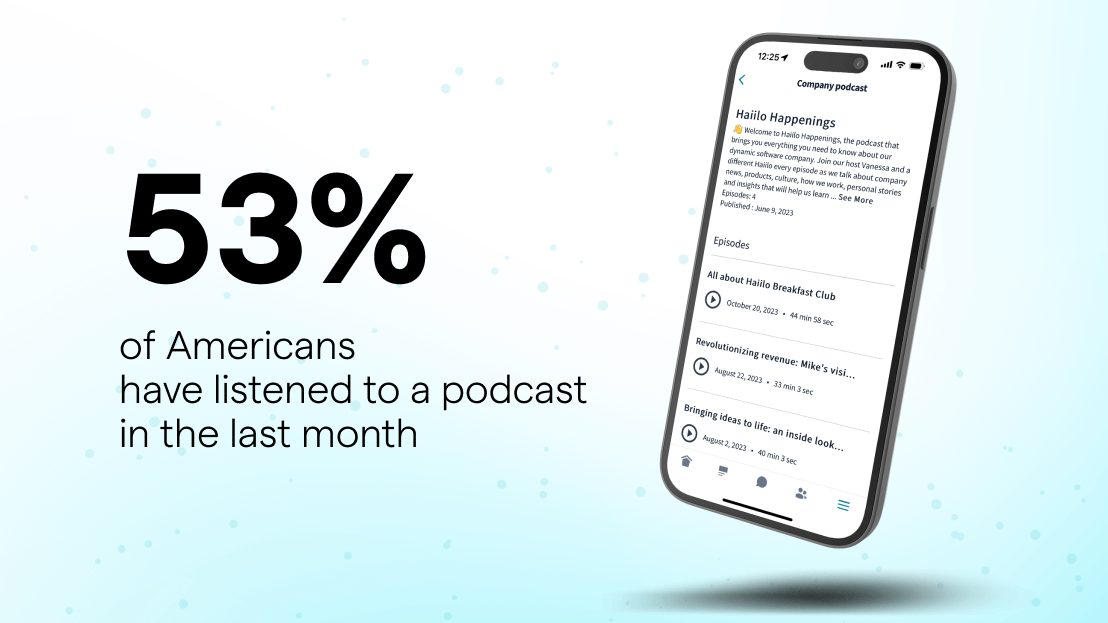
Internal company podcasts are yet to gain widespread adoption, but more and more HR and internal communications professionals are starting to experiment with internal podcasting initiatives in their organizations.
As teams become more distributed and employees rely less on traditional communication channels, companies are looking for formats that feel more natural and easier to consume. Internal podcasting meets that need by delivering updates, stories, and insights in a way that fits into employees’ daily routines.
In this blog, we will talk about the benefits of internal podcasts and how to launch an internal company podcast to reach and engage employees. You will also learn how internal podcasting can help you create more personal, consistent, and impactful communication across your organization.
What Is an Internal Company Podcast
Internal company podcasts are live or prerecorded audio sessions organized specifically for internal purposes.
Internal company podcasts are becoming more and more popular as a channel to communicate with employees. As organizations move toward more flexible and digital ways of working, internal podcasting is gaining traction as a format that feels more personal and easier to consume than traditional updates.
They can be used to keep the workforce informed and aligned, to onboard employees in a more engaging way, to keep the employees connected with senior leadership, to drive transparency in the workplace, and to create an open company culture where employees can speak up and share their voices. Internal podcasting also allows leaders to explain decisions in more depth and context, which helps employees better understand the “why” behind company changes.
Another advantage is flexibility. Employees can listen when it suits them, whether during a commute, a walk, or between tasks. This makes internal podcasting especially useful for remote and frontline teams who may not regularly check emails or attend meetings.
Remember, your goal with podcasts should be to create a frictionless listening experience that provides the best employee engagement. This means keeping episodes concise, relevant, and easy to access across devices.
But how can you use internal podcasts, and why would you want one in the first place? Keep reading to find out!
Learn how Haiilo can help you run successful company podcasts!
Why Should You Implement an Internal Company Podcast
Internal company podcasts have been gaining in their popularity because of the 2 obvious reasons:
Convenience
One of the main reasons why podcasts are so popular today is their convenience. Compared to webinars or live events, podcasts can be listened to on the go, without the need to sit at a desk, look at a screen, or read slides and other materials.
This makes internal podcasting a practical option for enterprise organizations employing a high volume of frontline workers without a designated working space, or mobile workers who are always on the move. Instead of missing updates, employees can stay informed in a way that fits naturally into their day.
Even for remote workers, podcasts offer an opportunity to step away from screens, go for a walk, or multitask while staying connected. This helps employers promote better employee well-being and support a healthier work-life balance at the same time.
Engagement
Because podcasts are easy to access and consume, they often lead to higher engagement and stronger attention compared to more traditional communication formats.
Unlike long emails or static updates, internal podcasting creates a more personal experience. Employees can hear tone, intent, and emotion, which makes messages easier to understand and more memorable. This is especially valuable when sharing complex updates, company changes, or leadership insights.
In addition, internal podcasting supports more authentic communication. Instead of one-way announcements, it allows for conversations, interviews, and storytelling that bring different voices into the spotlight. This helps strengthen internal communication, build trust, and keep employees more connected to the organization.

Due to the extensive information overload, inboxes filled with emails, and channels full of messages, it can be hard for HR and IC professionals to cut through the noise with important company updates that must reach and be consumed by every employee.
In many organizations, key messages get buried or overlooked, which leads to confusion and misalignment. Internal podcasting offers a different approach by delivering updates in a format that feels more direct and easier to follow. Instead of competing with dozens of unread messages, podcasts create a dedicated space where employees can focus on the content without distractions.
Since podcasts allow for multitasking, it’s easier to find time to listen to them.
Employees don’t need to stop what they are doing or set aside extra time. They can listen while commuting, exercising, or completing routine tasks. This flexibility makes internal podcasting a more practical option for staying informed, especially for busy teams or employees who are frequently on the move.
Also, podcasts can be much more efficient because they leave less room for interpretation than written communication.
Tone, emphasis, and context are easier to convey through voice, which reduces misunderstandings. Leaders can explain decisions more clearly, and employees can better grasp the intent behind messages. This makes internal podcasting a powerful tool for improving clarity and ensuring that important information is not only delivered but also understood.
5 Steps to Implement an Internal Company Podcast
If you are planning to implement an internal company podcast, these are the must-follow steps.
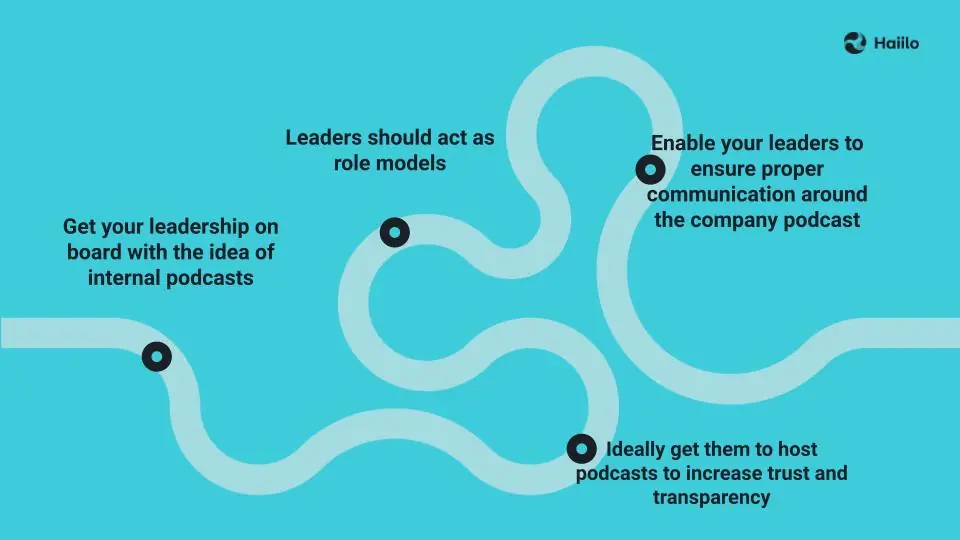
1. Get your leaders on board
Employees want to hear from your company’s leaders. When communication comes directly from the top, it feels more authentic and relevant. When they see that the leadership and C-level executives are engaged, they are more likely to become more engaged as well.
Hence, if you are planning to introduce internal company podcasts, the leadership must be on board.
Leaders don’t have to produce perfect content. What matters more is consistency and clarity. Short, regular episodes where leaders explain updates, share priorities, or reflect on decisions can make a big difference. This is where internal podcasting becomes a strong tool for building trust and helping employees stay connected to the bigger picture.
Moreover, your CEO should be, whenever possible, the host of your webinar. Here, proper leadership communications are critical. Leaders should act as role models by communicating openly and regularly. They are responsible for ensuring that the entire workplace is aligned with where the company is today and where it is heading.
5 Steps to Implement an Internal Company Podcast
If you are planning to implement an internal company podcast, these are the must-follow steps.
1. Get your leaders on board
Employees want to hear from your company’s leaders. When communication comes directly from the top, it feels more authentic and relevant. When they see that the leadership and C-level executives are engaged, they are more likely to become more engaged as well.
Hence, if you are planning to introduce internal company podcasts, the leadership must be on board.
Leaders don’t have to produce perfect content. What matters more is consistency and clarity. Short, regular episodes where leaders explain updates, share priorities, or reflect on decisions can make a big difference. This is where internal podcasting becomes a strong tool for building trust and helping employees stay connected to the bigger picture.
Moreover, your CEO should be, whenever possible, the host of your webinar. Here, proper leadership communications are critical. Leaders should act as role models by communicating openly and regularly. They are responsible for ensuring that the entire workplace is aligned with where the company is today and where it is heading.
By actively participating in internal podcasting, leaders can make communication more human and transparent. Employees hear not just what is happening, but also why it matters. This improves understanding, reduces uncertainty, and strengthens overall alignment across the organization.
4. Get the right technology
Proper workplace technology can significantly increase the success of your internal company podcasts. The right tools make internal podcasting easier to manage, scale, and improve over time. For example, social intranets like Haiilo can help you easily segment your audience for better podcast targeting. When content is relevant to specific roles, teams, or locations, employees are much more likely to listen and stay engaged.
Next, it can help you streamline podcast distribution using a multichannel communications strategy. Instead of relying on a single channel, you can share your content across platforms your employees already use, such as intranets, mobile apps, or collaboration tools. This ensures your internal podcasting content reaches employees wherever they are.
Also, with the Hypecast plugin for Haiilo, you can create your own audio infrastructure for your company with just a few clicks. This allows your teams to listen to the content anytime and anywhere, just as they are used to in their private lives. Making access simple and frictionless is key to driving adoption.
Last but not least, the platform enables you to measure the success of your podcasts, track engagement, and understand listening behavior. These insights help you continuously improve your podcasting initiatives by focusing on what truly resonates with your audience.
5. Ask employees for feedback
To keep your podcast successful, you must involve your employees and get feedback from them regularly.
Internal podcasting should not be a one-way channel. The more you listen to your employees, the more relevant and engaging your content will become. Regular feedback helps you understand which topics matter, what format works best, and how often employees want to hear from you.
After every podcast, you could send employees a 2-question survey asking what they liked and what they would improve. Keep it short and easy to answer to encourage participation.
If you actively consider your employees’ share of voice, you will create podcasts that people actually want to listen to. Over time, this strengthens engagement and turns internal podcasting into a trusted and valuable communication channel.
5 Internal Company Podcast Ideas to Help You Get Started
Not sure about the topics to cover on your company podcasts? Here are a few ideas.
Company culture podcast
Most enterprise organizations know what their core company values are. However, simply defining them is not enough. To truly embed them in everyday work, they need to be consistently communicated and reinforced.
A great way to do this is through internal podcasting. Consider launching a quarterly company culture podcast hosted by a senior leader or a rotating group of employees. This keeps the format fresh while ensuring leadership stays visible and involved.
During the podcast, the main goal should be to talk about alignment with the core company values, share real examples, and highlight what teams are doing well. It’s also a great opportunity to discuss challenges openly and explain how the organization plans to improve.
The best way to encourage certain behaviors and alignment with company values is by showcasing real examples. If there are situations where a certain employee showed that they truly live by your company’s values, they should be highlighted in this podcast. Recognizing these stories makes values more tangible and helps others understand how to apply them in their day-to-day work.
Over time, this type of internal podcasting can strengthen culture, improve transparency, and make company values feel more relevant and actionable across the organization.

Take a look at how we do it at Haiilo

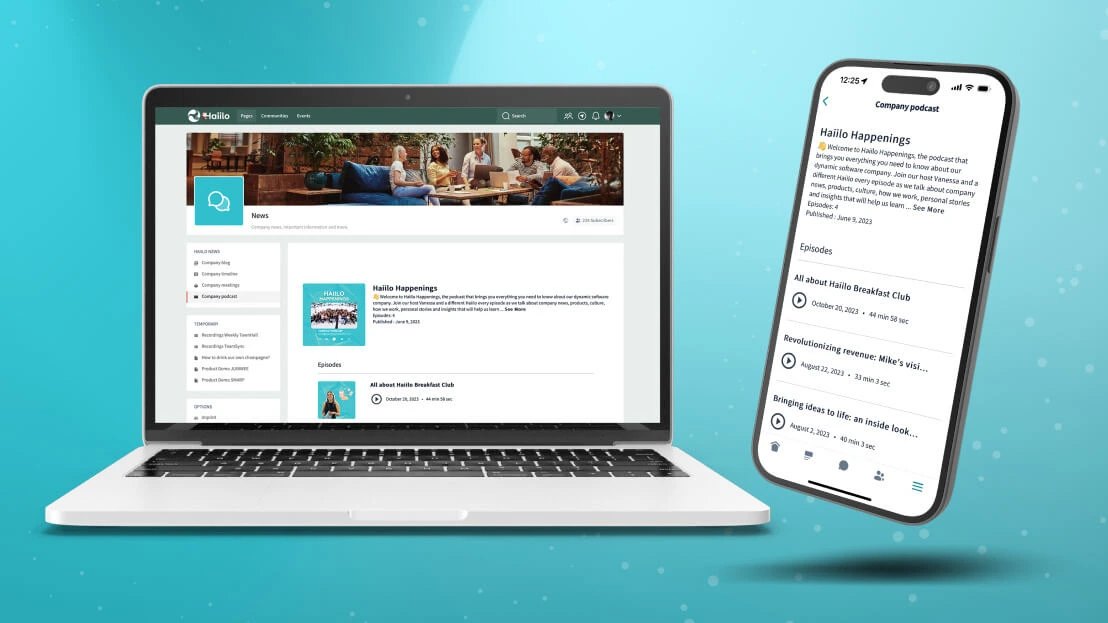
Training and onboarding podcasts
Internal company podcasts can be used for employee training and new employee onboarding. Most companies have dozens of onboarding documents for various roles and departments, which often makes the process long, overwhelming, and not very engaging.
Internal podcasting offers a simpler and more flexible alternative. Instead of asking new hires to read through large amounts of written content, you can use prerecorded podcasts instead of written onboarding materials. This helps break down complex topics into shorter, easier-to-digest episodes and makes the experience feel more human and less transactional.
If you are hiring at scale, you can also introduce bi-weekly or monthly live onboarding podcasts for specific departments. These sessions give new employees a chance to hear directly from team members, ask questions, and better understand how their role fits into the bigger picture. Over time, this approach can improve clarity, reduce onboarding friction, and help employees ramp up faster.
Most importantly, internal podcasting makes onboarding more personal. Hearing real voices, experiences, and stories helps new hires feel connected to the organization much earlier in their journey.
Company updates podcasts
Every company has some way of sharing written updates with employees.
The challenge is that these updates are often overlooked or only skimmed. Important messages get lost in crowded inboxes or buried in multiple communication channels. That means it’s probably time for you to try something new.
This is where internal podcasting can make a real difference. Instead of relying only on written communication, you can deliver company updates in a more engaging and accessible way. Employees can listen when it suits them, which increases the chances that key messages are actually consumed.
Audio also allows leaders to explain updates with more context and clarity. Tone, emphasis, and storytelling help employees better understand the meaning behind the message, not just the facts. This reduces confusion and makes updates more memorable.
By turning company updates into a regular podcast format, you create a consistent communication channel that employees can rely on. Over time, this strengthens alignment, improves transparency, and makes internal podcasting a core part of how information flows across the organization.
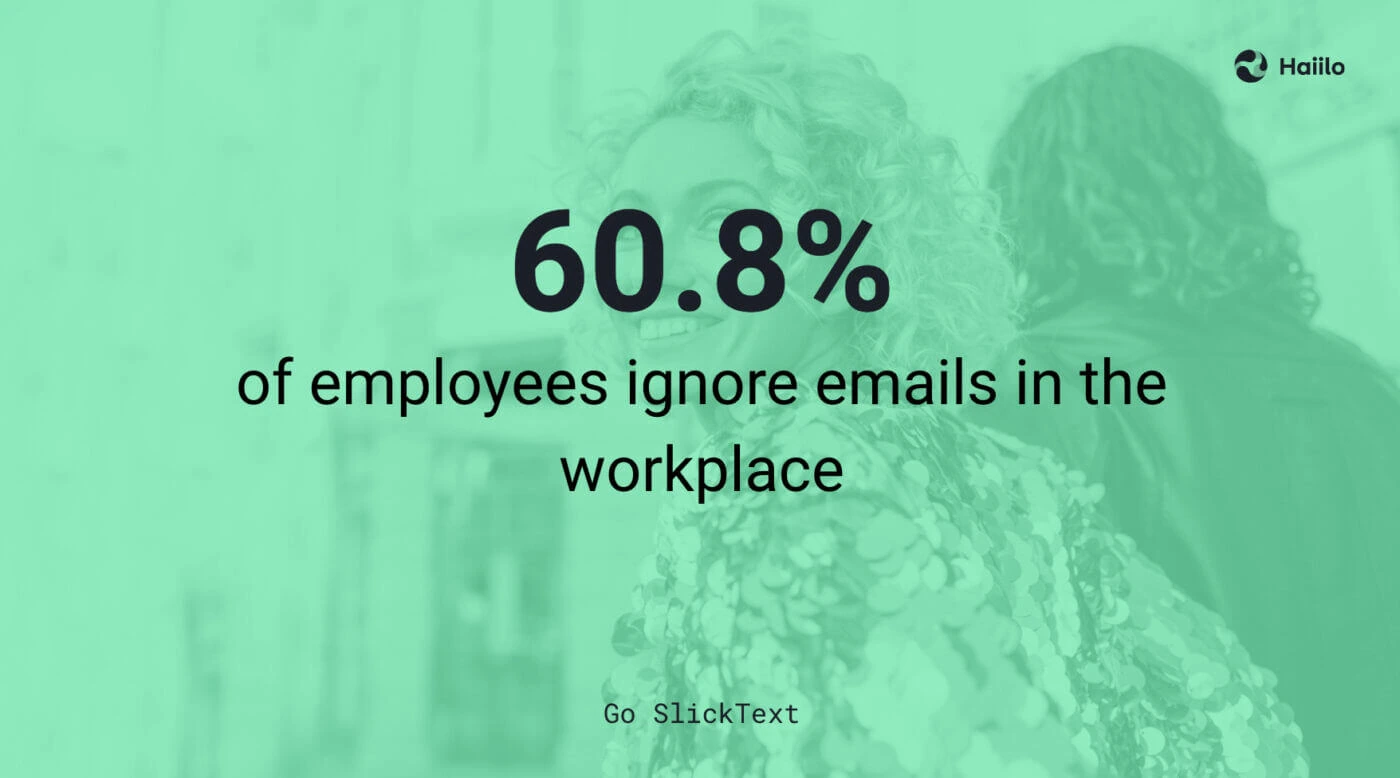
A different content format can make a huge difference. Next time there is an important change or update to be shared with your employees, consider using internal podcasting to deliver the message in a way that is more engaging, accessible, and easier to remember.
Q&A podcast
Having a 1-hour monthly podcast session where people can ask any questions to senior leadership can help you build a positive, more transparent company culture.
This format works especially well in large organizations where communication often feels distant or one-sided. Through internal podcasting, employees get direct access to leadership without formal barriers, which makes communication more open and honest.
In large enterprises, teams often work in silos and they don’t always have the opportunity to get answers to important questions they may have. A Q&A podcast helps break down these barriers by giving employees a platform to raise concerns, share ideas, and get clarity on decisions.
Remote and hybrid workplaces face the same challenge. Regular Q&A sessions ensure that everyone, regardless of location, feels included in company conversations and has equal access to leadership insights.
Knowledge sharing podcasts
Podcasts are a great tool for internal knowledge sharing. Learning from other people’s wins, challenges, and experiences is critical for driving continuous success and ensuring business continuity.
Internal podcasting makes this process easier by turning insights into stories and conversations that employees can actually relate to. Instead of static reports or long documents, teams can share real experiences and lessons learned in a format that is easier to understand and remember.
For example, you can create departmental learning podcasts. Your sales team could share learnings, experiences, and challenges from recent deals with the rest of the organization. This helps others avoid similar mistakes and replicate successful approaches.
Your marketing leader could host a quarterly podcast about campaign results and channel performance, while HR teams could share insights on initiatives that improve retention and employee experience. These conversations make knowledge more accessible and actionable across the business.
After all, there are no limits when it comes to podcast topics. Choose them based on your organization’s goals, challenges, and opportunities. With the right approach, internal podcasting can become a powerful channel for learning, alignment, and continuous improvement.
Find
your
flow
Bring communication, knowledge, and tools into one calm place — and help your people find their flow.