
How to Improve Cross-Functional Collaboration in the Workplace



Today, building a successful business is all about enabling cross-functional collaboration in the workplace. But rapid changes in how and where people work make it harder for leaders to support teams that are distributed, hybrid, or constantly shifting priorities.
📚Check out Why Employee Communications are Better Internal Comms.
Teamwork is valued more than ever, and employers increasingly look for people who can demonstrate real team spirit and collaborate effectively with colleagues across roles, locations, and departments. This goes beyond good intentions and requires the right skills, habits, and support.
As organisations adapt to ongoing change, cross-functional collaboration plays an even more critical role. Clear ownership, shared goals, and strong communication help teams move faster and avoid friction. In practice, teams’ ability to communicate and collaborate directly influences productivity, decision-making, and long-term resilience. This is where structured cross functional collaboration training can help teams work together with more confidence and clarity.
In this blog post, we will go over some of the most common challenges team leaders face when it comes to cross-functional collaboration. We will also share best practices for fostering collaboration among remote and distributed employees, with a focus on practical approaches teams can apply in their day-to
Make sharing information and collaborating on the projects seamless with a proper IC platform
What Is Cross-Functional Collaboration?
Essentially, cross-functional collaboration is a process in which people with different functional expertise or from different job functions come together to work towards a shared objective. It brings together diverse perspectives, skills, and experience to solve problems that cannot be addressed by one team alone.
When talking about cross-functional teams in the workplace, the team is simply a group of people from various departments across the business who collaborate on a specific challenge or initiative. This might include representatives from marketing, HR, IT, operations, or finance working side by side.
Effective cross-functional collaboration depends on clear goals, defined roles, and strong communication. Without structure, collaboration can easily slow decision-making or create friction. This is why many organisations invest in cross functional collaboration training to help teams build the skills needed to work across boundaries, align priorities, and move projects forward more efficiently.
During more stable periods, there are very few projects that can be completed by one person or by a group with the same skills, knowledge, and experience. Employees from different areas of expertise need to come together to solve complex problems, share perspectives, and implement solutions that span multiple parts of the organisation. This is especially true for initiatives that affect customers, processes, or long-term strategy, where isolated decision-making quickly becomes a risk. Well-designed cross functional collaboration training helps teams build the habits and skills needed to work effectively across these boundaries.
Cross-Functional Collaboration Is Even More Important Today
Collaboration among employees and teams is even more critical today. Large-scale disruptions and ongoing change tend to impact every part of the business, from production and sales to marketing and customer support. As a result, responses cannot sit with one function alone and instead require coordinated, cross-functional work that aligns priorities and actions.
Every company is different, but many organisations now rely on close collaboration between HR, legal, internal communications, marketing, corporate communications, crisis communication, and change management teams. Together, these groups are responsible for building clear strategies, communicating decisions, and supporting employees through uncertainty and transformation.
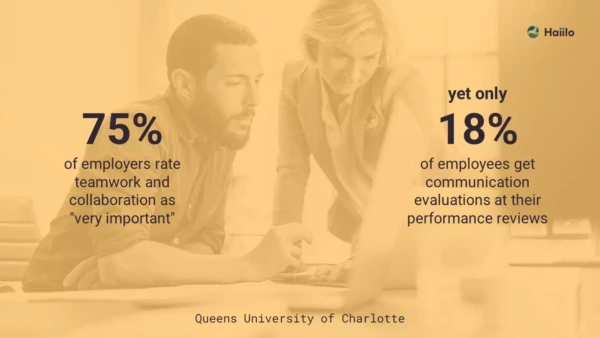
Even though employers often describe teamwork and collaboration as “very important”, many still struggle to consistently assess and develop their employees’ communication skills and their ability to collaborate efficiently across departments.
This gap is becoming more visible as ways of working continue to evolve. As a result, organisations are increasingly turning to structured cross functional collaboration training to help teams adapt, work together more effectively, and maintain momentum during periods of change.

As communication and collaboration play a critical role during periods of disruption and uncertainty, it is increasingly likely that IC practitioners will pay close attention to internal comms data. Clear signals, timely updates, and feedback loops help teams stay aligned when priorities shift quickly.
In times of crisis or rapid change, organisations that focus on accuracy, clarity, and consistency in their internal communication are better positioned to respond effectively. This reinforces the need for strong collaboration across teams and functions, supported by shared information and aligned decision-making.
5 Benefits of Effective Cross-Functional Collaboration
Putting together people from various departments to work on the same project has many benefits, especially when challenges span multiple functions or areas of responsibility.
As these people come from different backgrounds, their individual contributions matter. They can look at situations from various perspectives, challenge assumptions, and identify risks or opportunities others may miss.
Even though cross-functional and team collaboration can come with challenges, most employers now recognise the importance of improving collaboration across departments. This is particularly true as organisations adapt to new ways of working and more complex business environments. Investing in the right processes, tools, and cross functional collaboration training helps teams work together more effectively.
Let’s go over some of the biggest advantages of cross-functional collaboration in the workplace.
1. Innovation
Because each employee approaches a problem from their own perspective, cross-functional teams are more likely to develop innovative solutions than groups made up of people from a single function. Diverse input encourages creative thinking, helps teams connect ideas across disciplines, and leads to more well-rounded outcomes.
As companies continue to build diverse cross-functional teams, brainstorming and idea generation are more likely to succeed. Different viewpoints challenge assumptions, spark discussion, and help teams move beyond familiar solutions to explore new approaches.
2. Knowledge sharing
More and more companies are working to close skill gaps in the workplace. This often means training people internally so they can develop new capabilities needed to deliver projects linked to digital transformation and ongoing change.
That is why knowledge sharing among cross-functional teams is so important. When employees from different disciplines work together, knowledge spreads faster and becomes embedded across the organisation instead of sitting with one team.
Forming cross-functional teams also supports employee growth. People gain exposure to new ways of thinking, tools, and processes. Over time, this helps organisations stay competitive and makes cross functional collaboration training more effective because learning happens in real work, not just in theory.
3. Employee engagement
Research consistently shows that employee engagement levels are low in many organisations and that disengagement has a direct impact on performance and retention.
Working in teams motivates people to collaborate around shared goals rather than individual tasks. Employees are more likely to feel involved and committed when their work contributes to a broader outcome.
In addition, people want to see how their individual effort supports the team as a whole. Shifting towards team-oriented structures can strengthen team bonding and improve day-to-day workplace dynamics.
4. Improved communication skills
Communication skills are among the most in-demand soft skills in today’s workplace. They are often assessed during hiring and performance reviews, yet they continue to be a challenge for many teams.
Read on: Top 5 Communication Skills and How to Improve Them
Effective communication is the foundation of successful collaboration. It shapes how decisions are made, how feedback is shared, and how quickly teams can move forward.
Clear, frequent and concise communication encourages idea sharing across functions. As a result, cross-functional collaboration gives employees regular opportunities to practise and improve their communication skills in real situations.
5. Organizational culture & team spirit
Many employers are actively trying to embed new employee behaviours when it comes to working together across teams.
Cross-functional teams are not only effective at delivering projects. They also help employees build relationships with colleagues from departments they may not normally interact with.
Read on: Company Values: Definition, Importance and Examples
Therefore, cross-functional collaboration connects people from different functions and helps improve the overall organisational culture.
Common Cross-Functional Collaboration Challenges
Managing cross-functional teams is not easy. It requires balance, structure, and shared accountability.
Differences in roles, cultures, leadership styles, expertise, and soft skills can make cross-functional collaboration more complex than managing a single team with similar backgrounds.
🗺️ Below is a map that highlights common https://slack.com/blog/news/state-of-work-2023team collaboration challenges organisations face when trying to work across functions, based on recent global research.
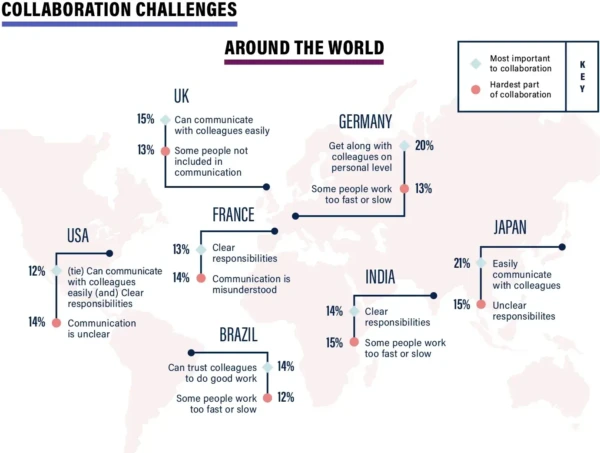
But team leaders are now facing a major challenge, as many organisations have had to shift to remote work to protect their employees and maintain continuity. This sudden change has reshaped how teams collaborate, often without giving leaders enough time to adapt processes or tools.
Let’s take a look at the common challenges team leaders are facing now when trying to improve cross-functional collaboration in a remote-first environment:
1. Managing remote teams
Businesses are increasingly embracing remote work. Some organisations have even made remote work mandatory to ensure employee safety and operational resilience.
This situation creates two key challenges that make cross-functional collaboration more difficult for team leaders:
1. In many organisations, entire teams are now working remotely at the same time
2. Teams are required to work from home for extended or undefined periods
Managing communication becomes harder under these conditions. Team leaders need to ensure everyone has access to the same information, understands priorities, and stays aligned. How do you make sure the entire team has received the latest updates? How do you ensure urgent messages are seen and acted on? And how can you be confident that people actually read and understand what is shared?
What is clear is that remote work is no longer an exception. Distributed teams are expected to continue growing as organisations rethink how and where work gets done. This shift makes strong processes, clear communication, and cross-functional collaboration training even more important for long-term success.
💡How to overcome this challenge?
Employers need to ensure that remote employees always have access to important information and can easily communicate with the rest of the cross-functional team. It is essential to reduce friction, avoid information gaps, and create spaces where collaboration can happen naturally. Just as importantly, leaders should make sure employees do not feel isolated or disconnected while working from home.
Read on: Remote Work: 20 Ways to Engage and Connect with Your Remote Employees
2. Ensuring flawless communication with the rest of the company
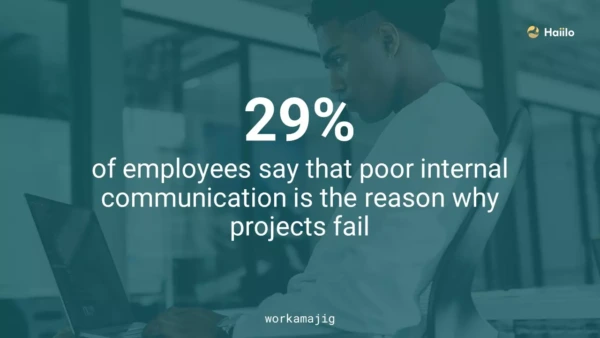
Under normal circumstances, one of the biggest challenges in cross-functional collaboration is the lack of communication among teams. Departments often operate in silos and develop their own terminology, processes, and priorities that are not always clear to the rest of the organisation.
In addition, some enterprise companies use multiple internal communication tools. It is common to see one department relying on SharePoint, another on Google Drive, and others on email or chat tools as their primary collaboration method. This fragmentation makes it harder to share information consistently and creates friction for cross-functional teams that need to work together efficiently.
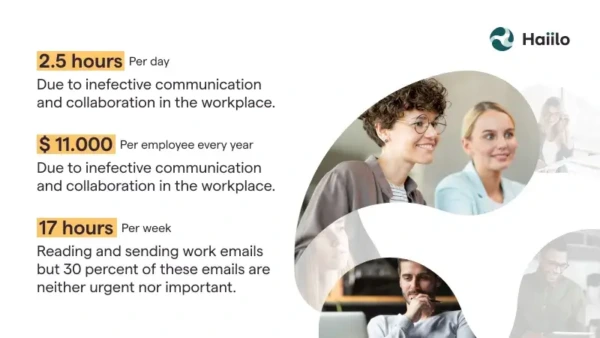
As this ecosystem of internal communication solutions has become increasingly complex, it can lead to information overload, confusion, and a drop in employees’ productivity. When messages are scattered across too many tools and channels, important updates are easily missed or misunderstood.
This issue becomes even more problematic when entire teams are working remotely. Without shared physical spaces or informal conversations, teams rely almost entirely on digital communication to stay aligned.
How do you make sure teams can keep up with the projects other teams are working on? How do you help your teams meet deadlines when visibility is limited and priorities change quickly?
As teams manage projects in different ways and work from separate locations, it becomes harder to ensure clear, consistent communication across departments. Without structure, cross-functional collaboration can slow down and frustration can build.
💡 How to overcome this challenge?
To maintain cross-functional collaboration, organisations need to ensure that employees from different departments have a central place for communication, collaboration, and document sharing. A shared environment reduces friction, improves visibility, and helps teams stay aligned.
New employee communication solutions like Haiilo allow employers to connect their internal communication and collaboration tools into one experience. This helps streamline workflows and supports more effective cross functional collaboration training by giving teams the right context and information at the right time.
Connecting tools that match how people naturally communicate and learn gives everyone a chance to contribute. It also increases the likelihood of success for every cross-functional contributor.
3. Ensuring that the company goals and objectives are reached despite disruption
In many industries, activity levels fluctuate and priorities shift rapidly. Teams may be restructured, resources reallocated, or projects paused or restarted as conditions change.
Even well-established organisations can be affected by sudden disruption. As a result, companies often need to adjust strategies quickly and make decisions with incomplete information.
This constant change creates uncertainty. Plans evolve, timelines move, and teams are expected to deliver while adapting to new constraints. In this environment, it becomes increasingly difficult for leaders to ensure that teams stay focused on targets and business goals.
💡 How to overcome this challenge?
Team leaders need effective ways to communicate updates quickly and coordinate work across teams. Clear priorities, shared goals, and regular alignment help teams stay focused.
Leaders also need to collaborate closely with peers from other departments to ensure that everyone remains aligned with company objectives. Structured communication and cross functional collaboration training can support this by clarifying roles, responsibilities, and expectations.
4. Maintaining a good level of trust
Trust is essential for collaboration. When trust is missing, teams hesitate to share information, raise concerns, or ask for support.
A lack of trust makes it harder for employees from different departments to communicate openly and work towards shared goals. Over time, this can weaken collaboration and reduce overall performance.
Maintaining transparency, encouraging open dialogue, and supporting consistent communication are key to building trust across cross-functional teams, especially when teams are distributed and working remotely.
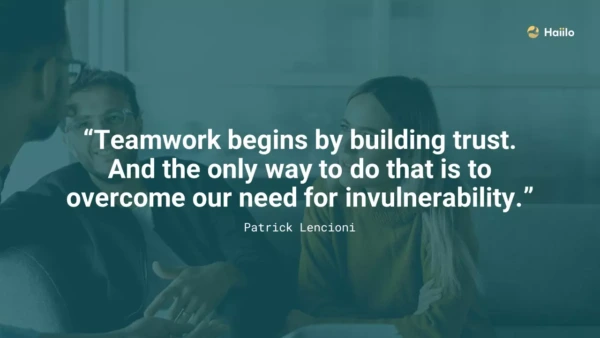
Building trust is even more critical these days. Sudden organisational changes and uncertainty have increased concerns about business stability and job security. As a result, employees are looking to their leaders for clarity, reassurance, and direction. Team leaders play a key role here, which is why they need to find effective ways to build strong connections with their teams, even when working apart.
💡 How to overcome this challenge?
Honest and transparent communication is essential when it comes to building trust in the workplace. This becomes even more important during periods of disruption and uncertainty. Leaders need to communicate frequently, share what they know, and be open about what is still unclear. Consistency and honesty help reduce anxiety and build confidence over time.
Leaders can also help break down silos and foster trust across teams by aligning the goals and incentives of the organisation as a whole. When teams understand how their work connects to shared objectives, collaboration feels more purposeful and less competitive.
If mistrust is limiting collaboration in your organisation, start with small, low-risk opportunities for teams to work together. Early wins help build momentum and show teams that cross-functional work can be productive and rewarding.
In addition, consider recognising and rewarding teams that actively participate in cross-functional collaboration. Visible progress and acknowledgement reinforce positive behaviour and help strengthen trust between teams over time.
5. The problem of social loafing
Most people remember group projects where one or two individuals contributed less than the rest of the team. This dynamic can also appear in cross-functional collaboration in the workplace.
When responsibilities are unclear or accountability is weak, some team members may reduce their effort, relying on others to carry the workload. This behaviour, often referred to as social loafing, can slow progress and frustrate high-performing employees.
That is why team leaders need to actively foster team spirit and ensure that employees support one another. This is especially important during periods of pressure and change, when collaboration is essential to reaching shared targets. Clear expectations and ongoing support are key components of effective cross functional collaboration training.
💡 How to overcome this challenge?
One of the most effective ways to reduce social loafing is to define clear criteria or KPIs that apply both to the team as a whole and to individual contributors from different departments. This creates shared ownership while maintaining personal accountability.
Employees who consistently contribute and support the team should be recognised and rewarded. Publicly acknowledging high performers also helps reinforce the behaviours the organisation values and sets clear expectations for others.
6. Coping with various technologies used in different departments
Consider marketing, sales, and development teams within the same organisation. Each of them typically relies on different internal communication and collaboration tools as part of their daily work.
Sales teams may depend on a CRM, marketing teams on content or campaign tools, and developers on specialised platforms. While it makes sense for each department to use best-of-breed tools for their core tasks, this diversity can make cross-functional improvement initiatives harder to manage.
The challenge becomes even more pronounced during periods of disruption, when teams need to coordinate quickly despite working with different systems and workflows.
💡 How to overcome this challenge?
It is natural for departments to use different tools based on their specific needs. However, organisations should also provide solutions that make it easier for cross-functional teams to collaborate effectively.
Many companies have introduced collaboration platforms to support this need. It is especially important to understand the value of having a central employee communication place where teams from different departments can stay informed, share updates, and track progress together.
7. Leading a team under pressure
Cross-functional collaboration depends heavily on strong leadership. Teams need someone who can coordinate efforts, resolve conflicts, and keep everyone focused on shared goals. Without clear leadership, collaboration often loses direction.
At the same time, team leaders are under significant pressure. They are expected to maintain performance, deliver results, and support their teams while strategies and priorities continue to shift.
This combination of high expectations and constant change makes leading cross-functional teams especially challenging.
💡 How to overcome this challenge?
Appoint a leader, or even an internal influencer, who can connect teams from different departments and organise collaboration in a structured way. Clear ownership, defined roles, and regular alignment help teams stay focused and reduce uncertainty, even when working under pressure.
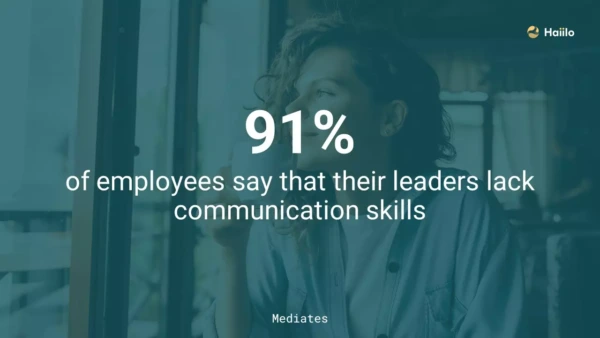
This leader has to, above everything else, be an excellent communicator and motivator. Strong leadership communication helps reduce uncertainty and keeps teams aligned. Leaders should also encourage more frequent, informal online or offline conversations and touchpoints to help teams build relationships, share context, and feel connected despite physical distance.
How to Foster Cross-Functional Collaboration In Your Company
Ensuring seamless collaboration between teams and departments is never easy. It becomes even more challenging when employees are working remotely and rely almost entirely on digital communication to coordinate their work.
Read on: Crisis Communication — How to Communicate with Your Employees During a Crisis?
How can you make sure employees always have the information they need to support their colleagues? How do you help teams communicate and collaborate quickly when priorities keep changing? And how do you help teams stay productive during stressful and uncertain periods?
The reality is that the way we work has fundamentally changed.
Remote work has become standard in many organisations, which requires extra effort from team leaders. Leaders need to replace informal office communication with clear processes, visibility, and shared context.
To improve cross-functional collaboration while teams are remote, it is essential that employees can instantly access relevant information and easily share updates on the projects they are working on. This is where structured processes and cross functional collaboration training can support consistency and clarity across teams.
Broadly speaking, keep the following tips and best practices when managing remote teams to help them stay productive:
- Share company policies and procedures with teams in a timely and consistent way
- Communicate health, safety, and wellbeing guidance clearly across the organisation
- Keep employees informed about relevant updates from governments or local authorities
- Segment messages based on employees’ roles, expertise, and locations to keep communication relevant and useful
- Ensure you can instantly notify teams about urgent or time-sensitive updates
- Measure the effectiveness of your internal communication strategy to understand what works and what needs improvement
[Extra Tip] Encourage Cross-Functional Collaboration by Celebrating Success with Your Teams
When cross-functional teams achieve results together, make their success visible and social. Share wins with the wider organisation and allow others to celebrate achievements with them. Public recognition reinforces collaboration as a shared value.
This kind of recognition can significantly boost morale and engagement. It is especially important when teams are remote and may feel disconnected from colleagues and everyday workplace interactions.
Many employees miss informal conversations and shared moments that naturally happen in an office environment. Over time, this can affect motivation and emotional connection to the organisation.
That is why it is essential for team leaders to actively rebuild trust and connection. Celebrating wins, both big and small, helps remind employees that their work matters and that collaboration leads to real outcomes.
Read on: Top 15 Employee Motivation Tips and Benefits
Many companies that use Haiilo, our employee communications platform, showcase employee achievements by engaging the entire workplace in the conversation. This shared recognition strengthens relationships across teams and departments.
Sharing positive news and encouraging peer recognition is one of the most effective ways to build a healthier organisational culture, particularly during periods of change and uncertainty.
Final Thoughts
One of the most effective ways to strengthen cross-functional collaboration during complex and challenging situations is to invest in a robust internal communication strategy.
When teams are working remotely, leaders need to rely on real-time communication and shared visibility so projects can move forward without unnecessary delays or misunderstandings.
Keep in mind that how you respond to disruption and uncertainty has a direct impact on how well your organisation adapts and recovers. Clear communication, strong leadership, and ongoing cross functional collaboration training all play a critical role in helping teams work together effectively, no matter where they are located.
Frequently asked questions about cross-functional collaboration training
What is cross-functional collaboration training and who is it for?
Cross-functional collaboration training helps employees work effectively across teams, roles, and departments. It focuses on practical skills like communication, alignment, and shared ownership to reduce silos and friction. This type of training is useful for team leaders, project owners, and employees involved in cross-department initiatives. It is especially valuable in remote or hybrid workplaces, where strong communication in the workplace is essential to keep teams aligned.
How does cross-functional collaboration training improve communication?
One of the main goals of cross-functional collaboration training is to improve how teams share information and make decisions together. Training helps teams agree on communication standards, clarify responsibilities, and reduce misunderstandings. When supported by strong employee communications, teams can apply proven approaches such as those outlined in effective workplace communication practices to collaborate more smoothly across functions.
Can cross-functional collaboration training support remote and hybrid teams?
Yes. Remote and hybrid work make collaboration harder without structure. Cross-functional collaboration training gives teams clear guidance on virtual communication, accountability, and coordination. Combined with insights from virtual communication best practices and tools like a social intranet or a mobile app, teams can stay connected, informed, and productive regardless of location.
How do you measure the impact of cross-functional collaboration training?
The impact of cross-functional collaboration training can be measured through engagement levels, communication quality, and project outcomes. Signs of success include clearer ownership, fewer delays, and stronger coordination between teams, as described in effective team communication strategies. Using insights and analytics helps organisations understand what is working and continuously improve collaboration across departments.
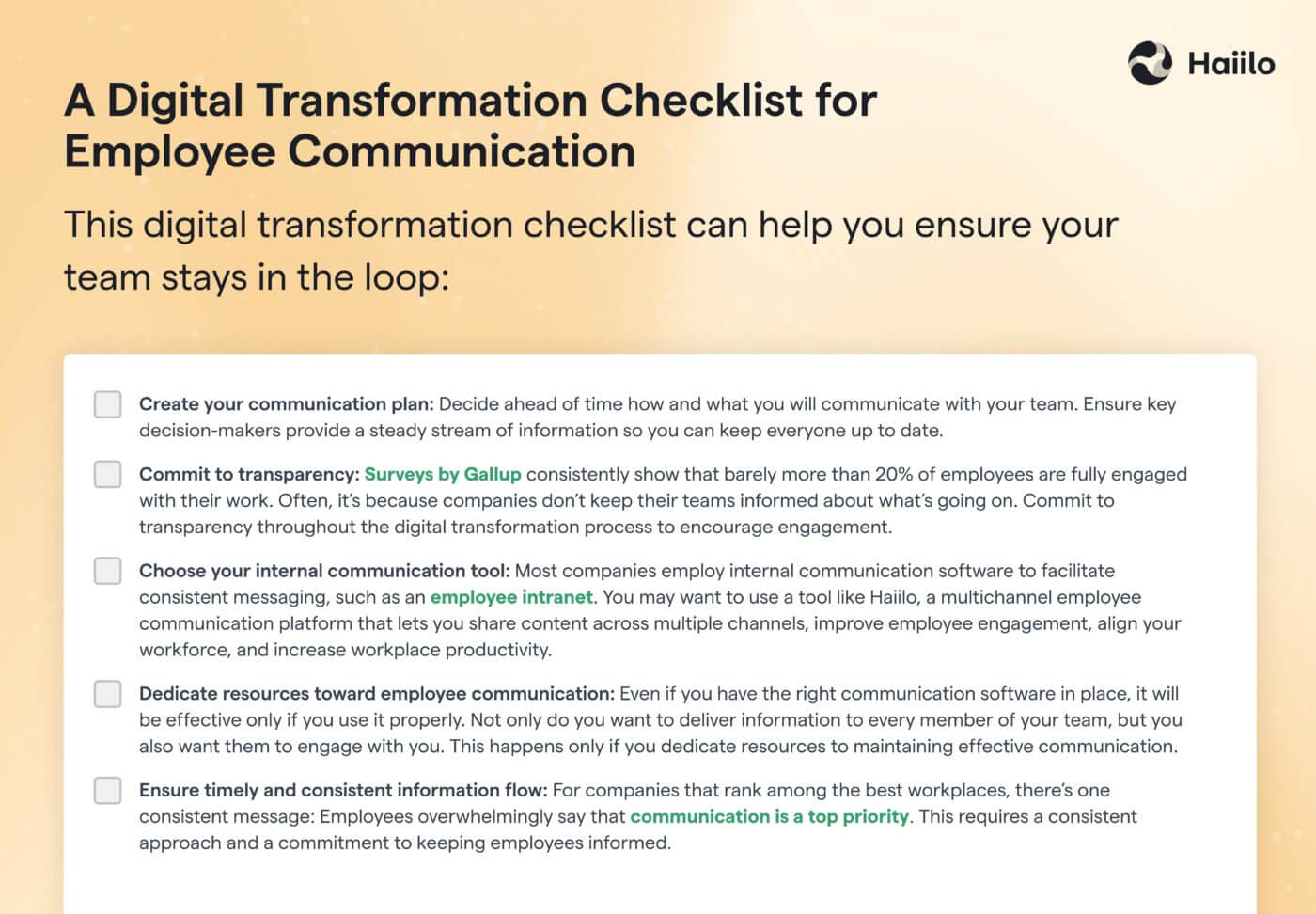
Digital transformation is easy with our simple checklist. Get it now!
Find
your
flow
Bring communication, knowledge, and tools into one calm place — and help your people find their flow.